




-320.webp)
-320.webp)

Hand-Knotted Construction
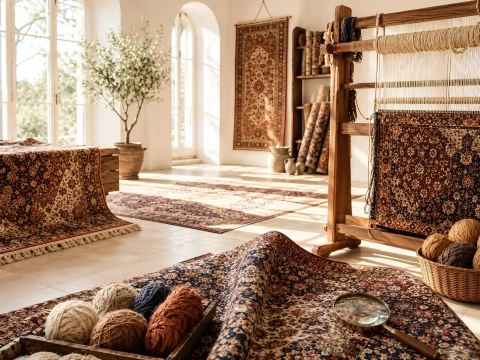
Individual knots can be identified on the reverse. The fringes are formed by the foundation warp, which is a characteristic feature of traditionally hand-knotted rugs.
 Free shipping & returns
 31-day return policy
Free shipping & returns
31-day return policy
Kostenloser Versand & Rückversand
31 Tage Rückgaberecht
Free shipping & returns
31-day return policy
Free shipping & returns
31-day return policy
Free Shipping & Returns
31-Day Return Policy
31-day return policy
Free shipping & returns
31-day return policy
Kostenloser Versand & Rückversand
31 Tage Rückgaberecht
Free shipping & returns
31-day return policy
Free shipping & returns
31-day return policy
Free Shipping & Returns
31-Day Return Policy

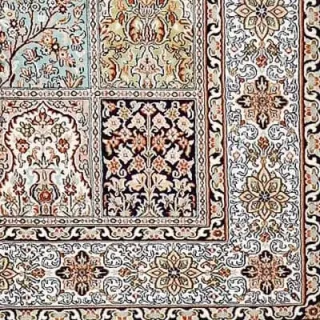
A refined lustre, precisely drawn ornament and a smooth surface give these rugs their exceptionally elegant and precious appearance. Hand-knotted Kashmir silk rugs have a pile made from 100% silk, while a strong cotton warp forms the stable foundation. This construction allows delicate floral vines, medallions and traditional garden-inspired motifs to be rendered with remarkable precision; the silk pile also shifts subtly in colour as the light changes. Careful knotting and finishing give every piece its own distinctive character. In quieter living rooms or bedrooms, the luminous surface, intricate details and balanced compositions can be appreciated particularly well.
Kashmir silk rugs are finely hand-knotted Oriental rugs from India, valued for their luminous surface and intricate drawing. In the pieces offered here, the pile is made from 100% silk, while a strong cotton warp forms the stable foundation. The term Kashmir silk refers to the rug tradition and type – it does not mean that the pile is made from cashmere wool.
Fine knotting allows medallions, floral vines, garden-inspired designs and small ornamental details to be rendered with remarkable precision. This guide explains how to assess craftsmanship, what knot density can tell you, where a hand-knotted Kashmir silk rug works best and which details matter when buying online.
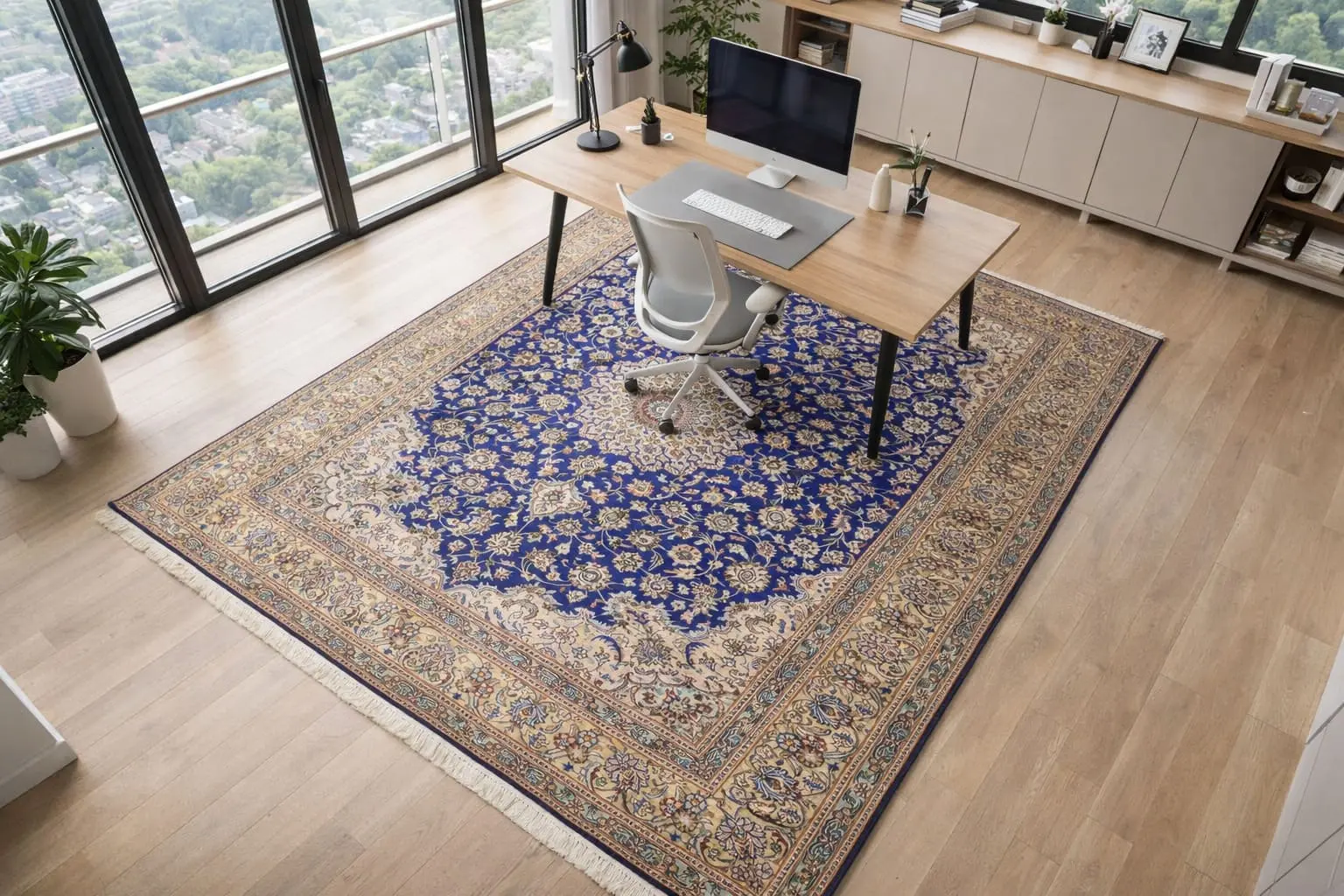
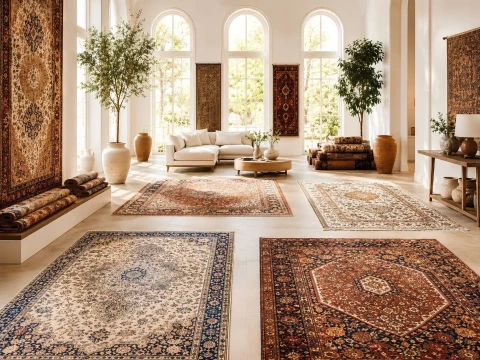
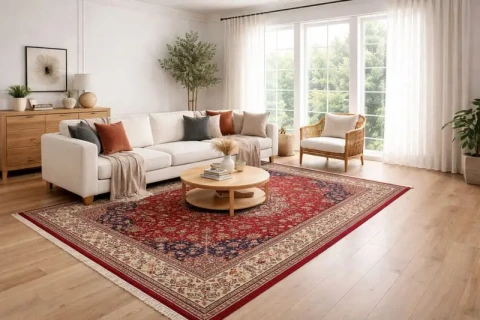
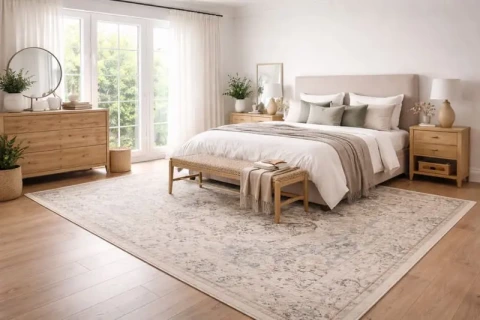
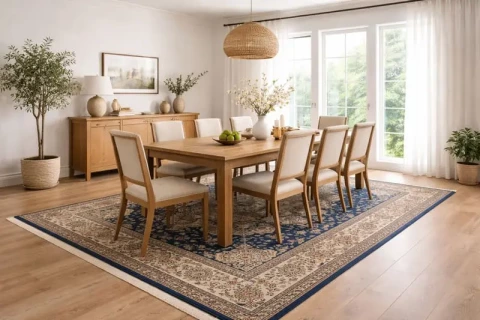
Kashmir silk rugs are particularly well suited to quieter interiors where their fine pile, detailed pattern and subtle changes in colour can be appreciated. Living rooms, bedrooms and formal home offices are ideal settings, especially when the rug has enough visual space around it.
Silk is more delicate than hard-wearing wool, so these rugs are better kept away from constant heavy footfall and demanding everyday use. The right size, balanced colours and thoughtful placement allow the silk lustre and precise design to become part of the room rather than compete with it.
On a hand-knotted Kashmir silk rug, the construction can be examined from the reverse: the knot structure remains visible, the pattern can be followed through the foundation and the fringes continue from the warp rather than being sewn on afterwards. Clean edges, even knotting, crisp contours and the smooth, light-responsive silk pile are further signs of careful workmanship.
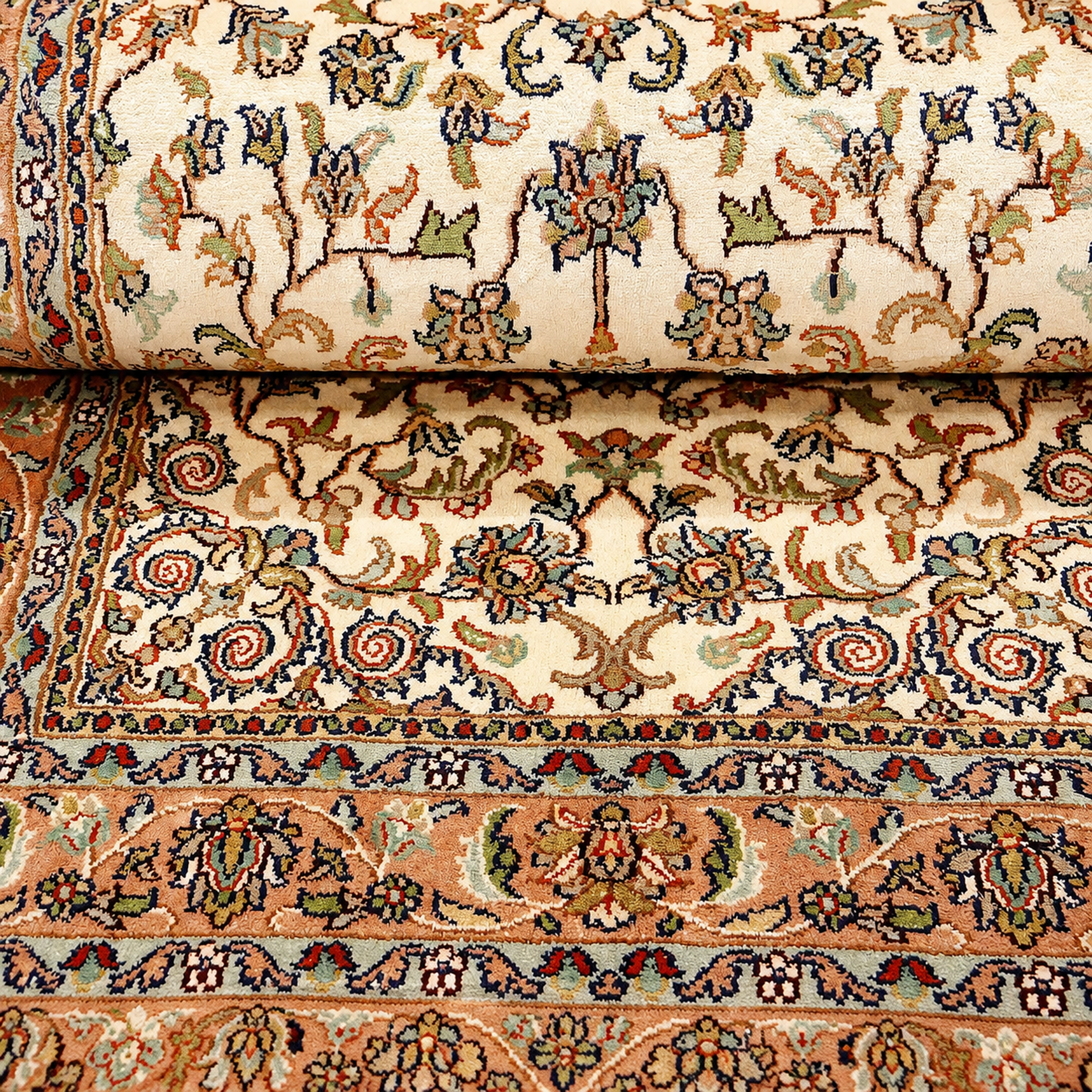
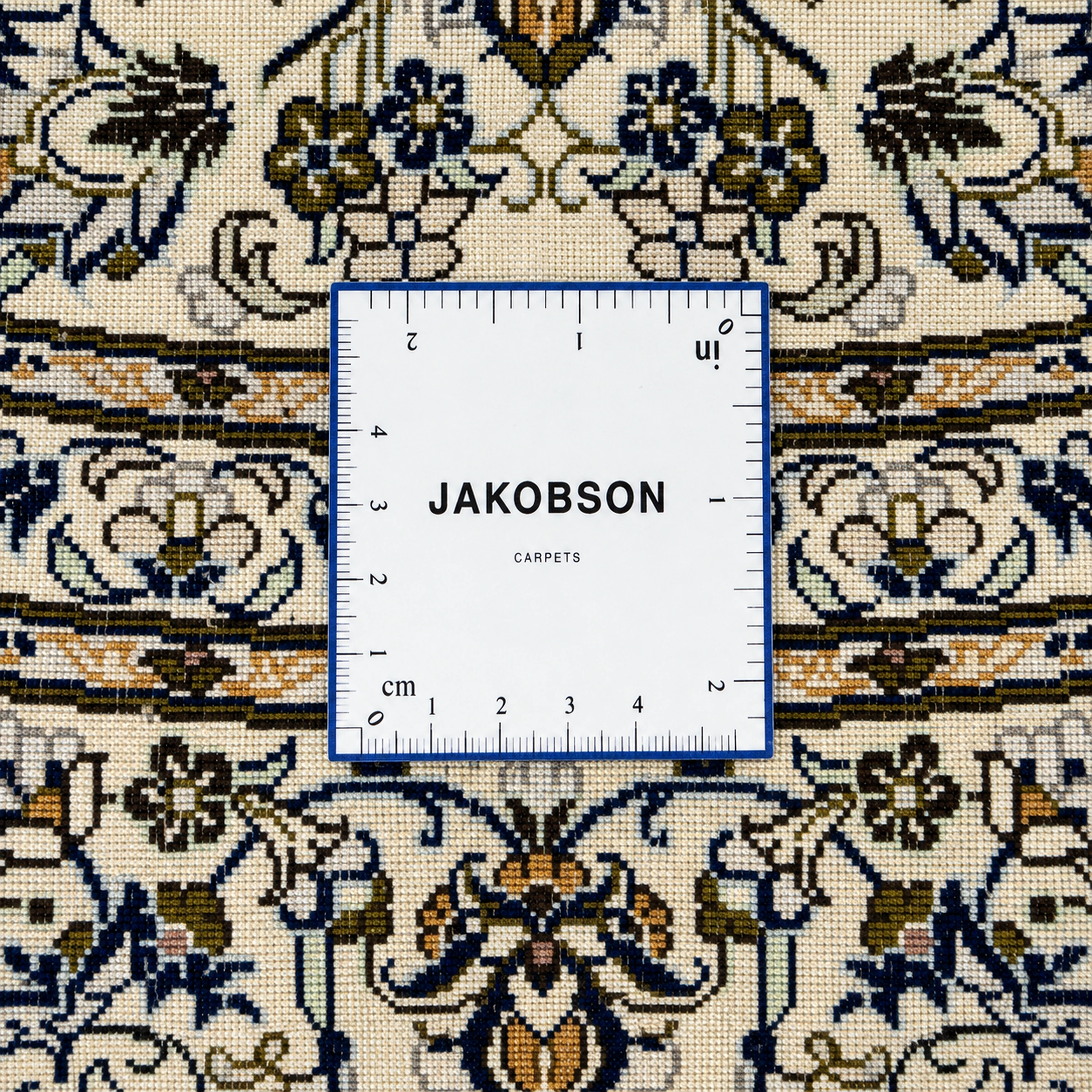
Individual knots can be identified on the reverse. The fringes are formed by the foundation warp, which is a characteristic feature of traditionally hand-knotted rugs.
A fine silk pile creates the smooth, luminous surface, while the cotton warp provides a stable foundation. This combination supports both precise drawing and a refined handle.
Fine, consistent knotting allows borders, medallions, flowering vines and small ornaments to be drawn cleanly, with controlled curves and clearly defined transitions.
Knot density describes how many knots are tied within one square metre. A finer knot structure can reproduce smaller ornaments, flowing lines and complex floral details with greater precision. It is therefore a useful quality indicator, but it should never be considered in isolation.
The Kashmir silk qualities currently offered by Jakobson Carpets typically fall around 450,000 to 500,000 knots per square metre. Together with the fine silk pile, this supports a clear, detailed design and an especially refined surface.
Overall quality also depends on the consistency of the knotting, the materials, edge finishing, balance of the design and the condition of the individual rug. A high knot count alone does not make a rug exceptional.
A typical range for the Kashmir silk qualities currently offered – best assessed together with materials, craftsmanship and condition.
Silk reacts visibly to both light and viewing direction, so the same rug may appear lighter, deeper or more luminous as you move through the room. In calm, well-balanced interiors, a finely patterned Kashmir silk rug can create an elegant focal point without making the space feel heavy or overly formal.
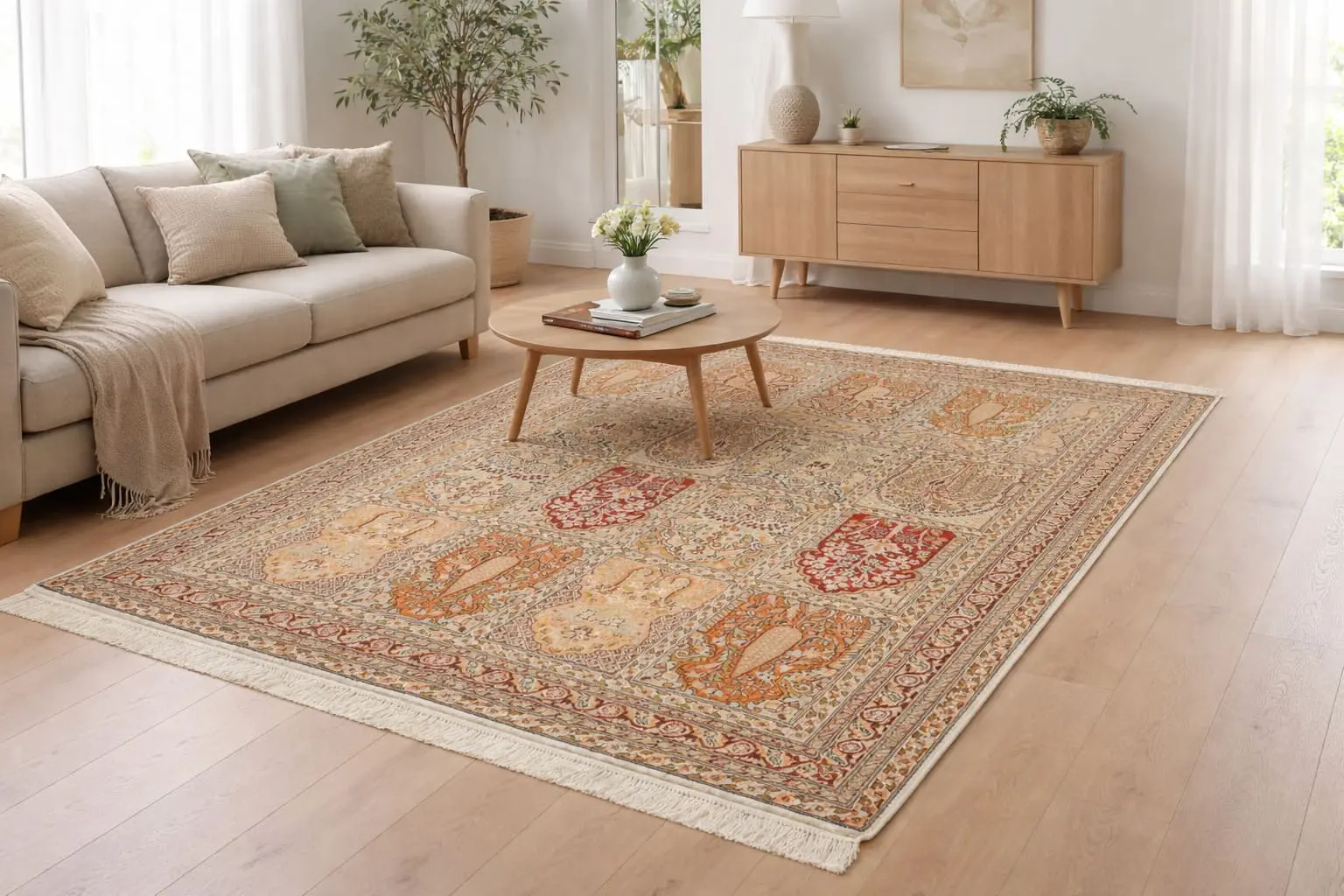
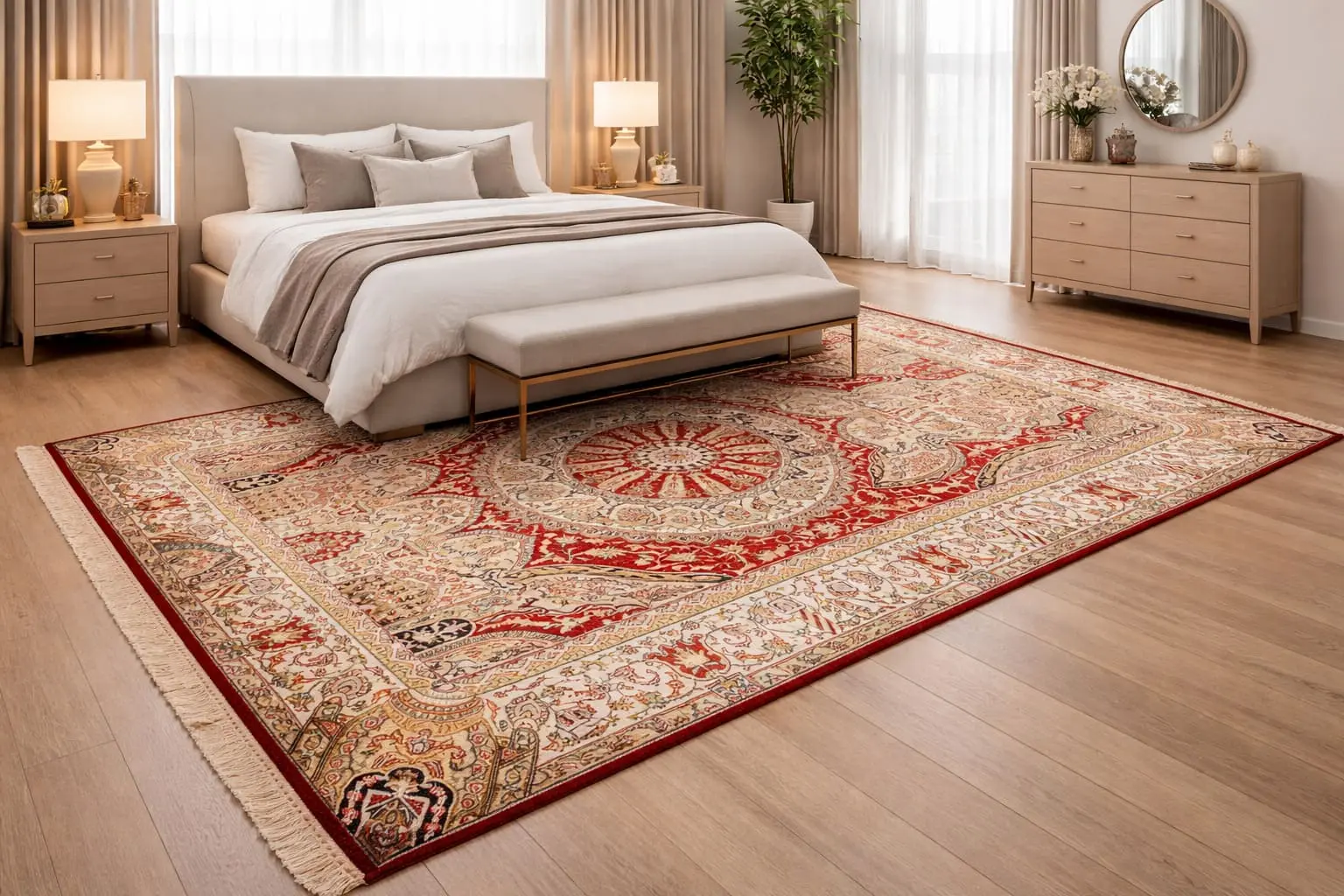
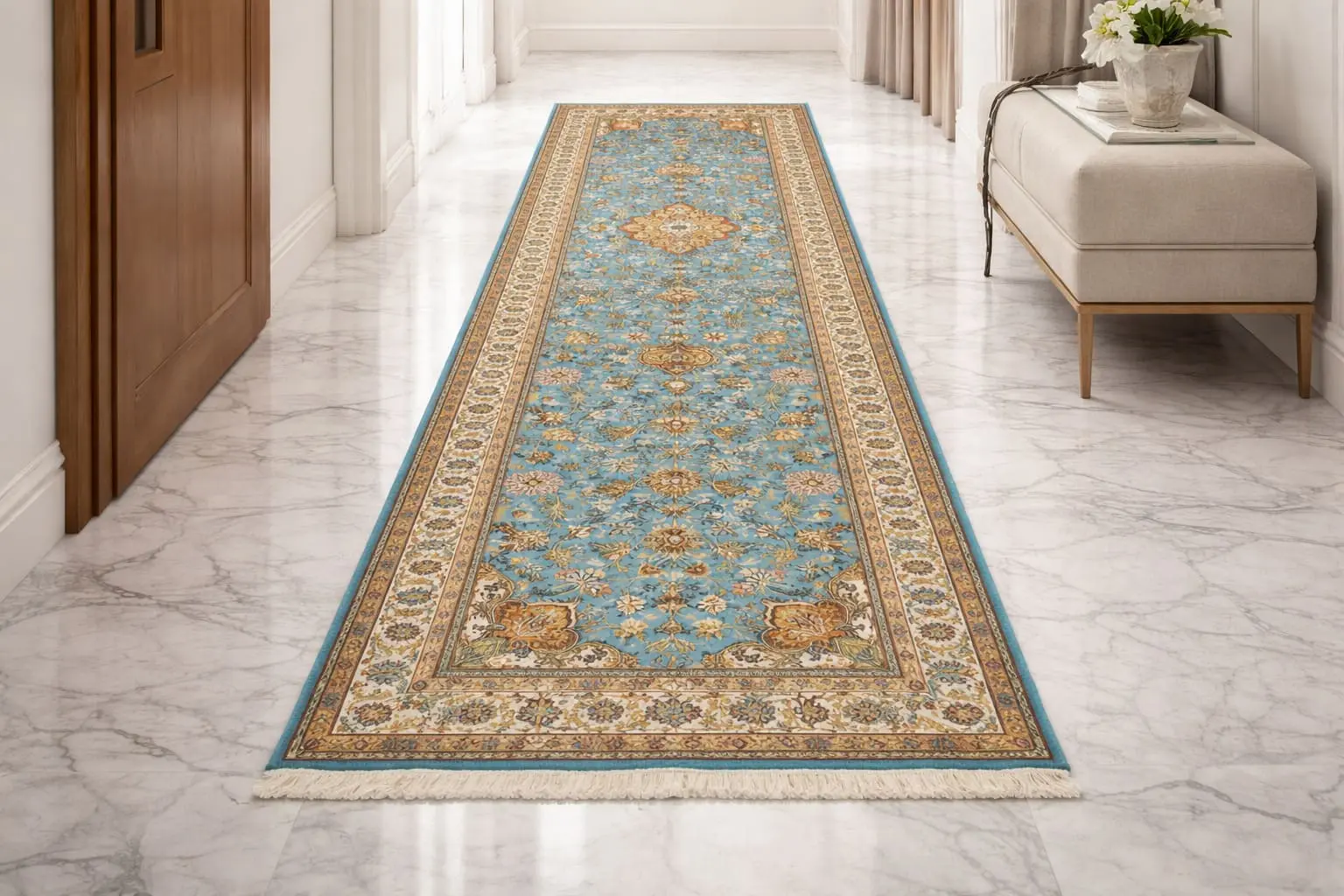
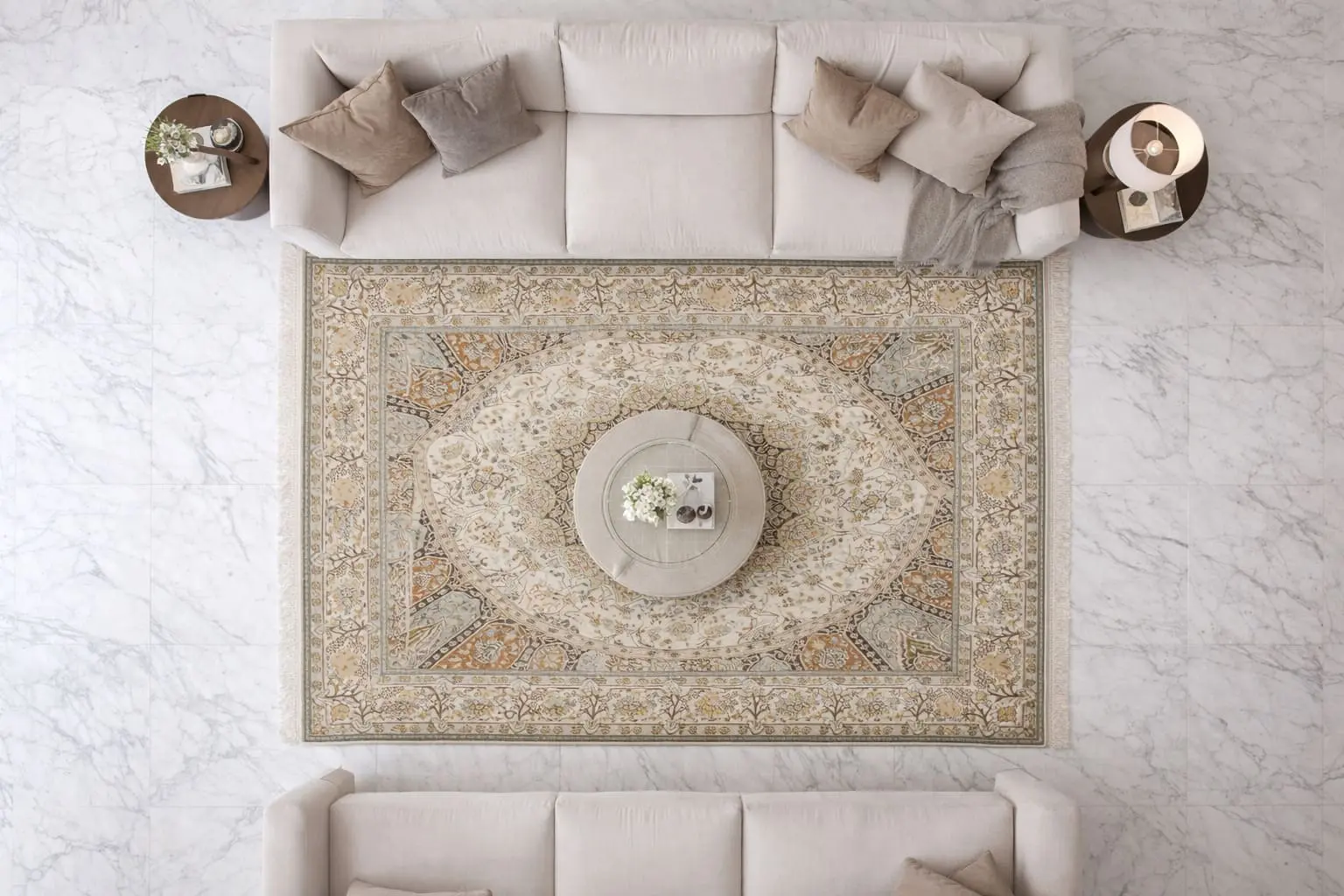
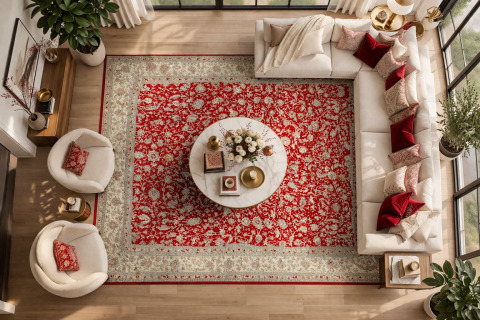
In a quieter living room, a Kashmir silk rug can visually anchor the seating area. Its lustre is especially attractive in soft daylight and changes subtly as the viewing angle shifts.
The smooth pile, intricate drawing and understated sheen work particularly well in calm bedrooms with natural materials, soft lighting and a restrained interior palette.
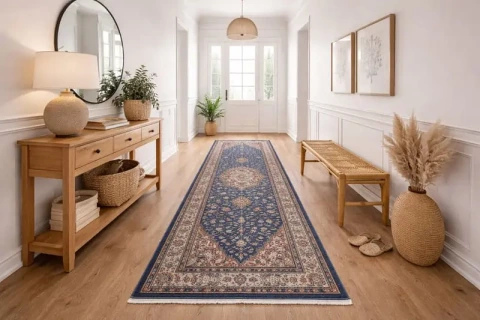
In a formal home office or a lightly used hallway, Kashmir silk can add a distinctive, refined accent. For heavily travelled routes, a robust wool rug is usually the more practical choice.
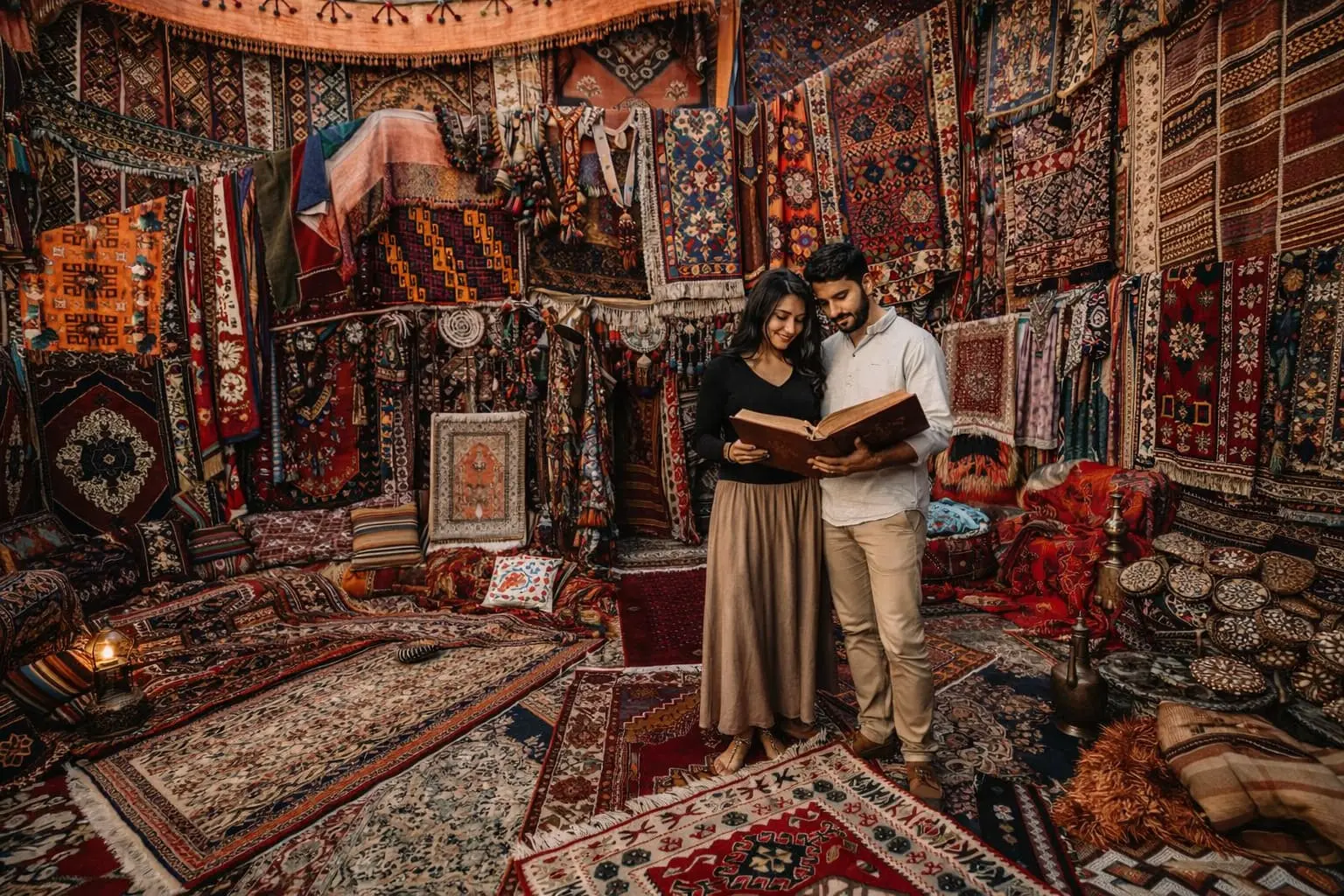
Kashmir's rug-making tradition developed over centuries through a meeting of local craftsmanship with Persian, Central Asian and later Mughal artistic influences. This heritage is reflected in the curving vines, floral compositions, medallions and garden-inspired designs still associated with fine Kashmir rugs today.
Srinagar remains closely linked with Kashmiri textile and rug craftsmanship. In finely knotted silk rugs, the combination of intricate drawing and a light-responsive surface gives traditional ornament a particularly delicate and sophisticated character.
When choosing a Kashmir silk rug, look beyond colour and pattern. Check the pile and warp materials, knot density, construction, origin, exact dimensions, condition and the way the room will be used. At Jakobson Carpets, these details are listed for each available one-of-a-kind piece so that you can compare individual rugs transparently.
For a broader comparison of fibres, visit our rug material guide. You can also explore our full collection of silk rugs or compare Kashmir silk with Persian Qom silk rugs. Further practical advice is available in our rug buying guide and our guide to rug care and cleaning.
Assess the rug in your own home and see how its size, colours and silk lustre work with your actual furniture and lighting – without additional shipping costs.
You have time to experience the rug in the room and judge its proportions, colour shifts and overall effect under real everyday lighting conditions.
Our three-year warranty applies to hand-knotted rugs in accordance with the stated warranty terms.
Clear answers on materials, hand-knotting, knot density, origin, room suitability and care.
In the Kashmir silk rugs offered by Jakobson Carpets, the pile is made from 100% silk and the warp from cotton. Kashmir refers to the rug tradition and type; it does not mean that the pile contains cashmere wool.
The knot structure can be examined on the reverse, where the design remains visible through the foundation. The fringes continue from the warp rather than being sewn on afterwards, while finer pieces also show even knotting, clean edges and precise pattern definition.
The Kashmir silk qualities currently offered by Jakobson Carpets typically fall around 450,000 to 500,000 knots per square metre. Knot density helps indicate how finely a design can be rendered, but materials, craftsmanship and condition are equally important.
The Kashmir silk rugs in this collection originate from India. The wider Kashmiri rug tradition has been shaped by Persian, Central Asian and Mughal influences, with Srinagar long associated with fine textile and rug craftsmanship.
Our Kashmir silk rugs are Indian rugs with a silk pile on a cotton warp. Qom silk rugs are Persian rugs from Iran; in our pure Qom silk qualities, both pile and warp are made from silk, and the knot density can be substantially higher.
They are especially suitable for quieter living rooms, bedrooms and formal home offices. Because silk is more delicate than robust wool, areas exposed to constant heavy footfall are generally less suitable.
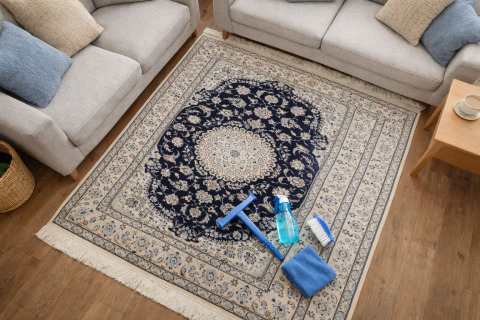
Vacuum gently and regularly without an aggressive rotating brush. Avoid excessive moisture, hard rubbing and unsuitable cleaning products. For deeper soiling, professional cleaning by a specialist experienced with high-quality hand-knotted rugs is recommended.