




-320.webp)
-320.webp)

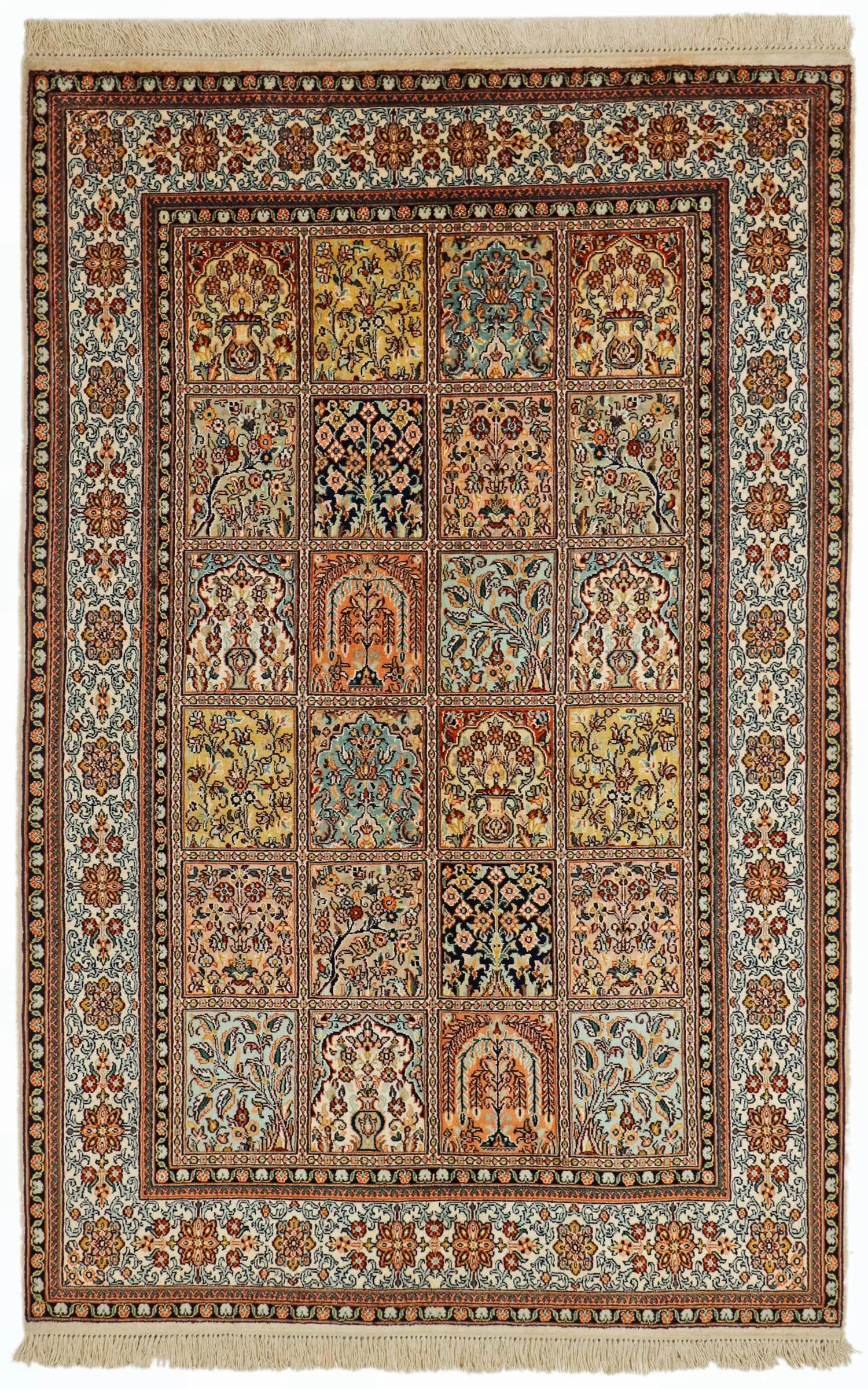
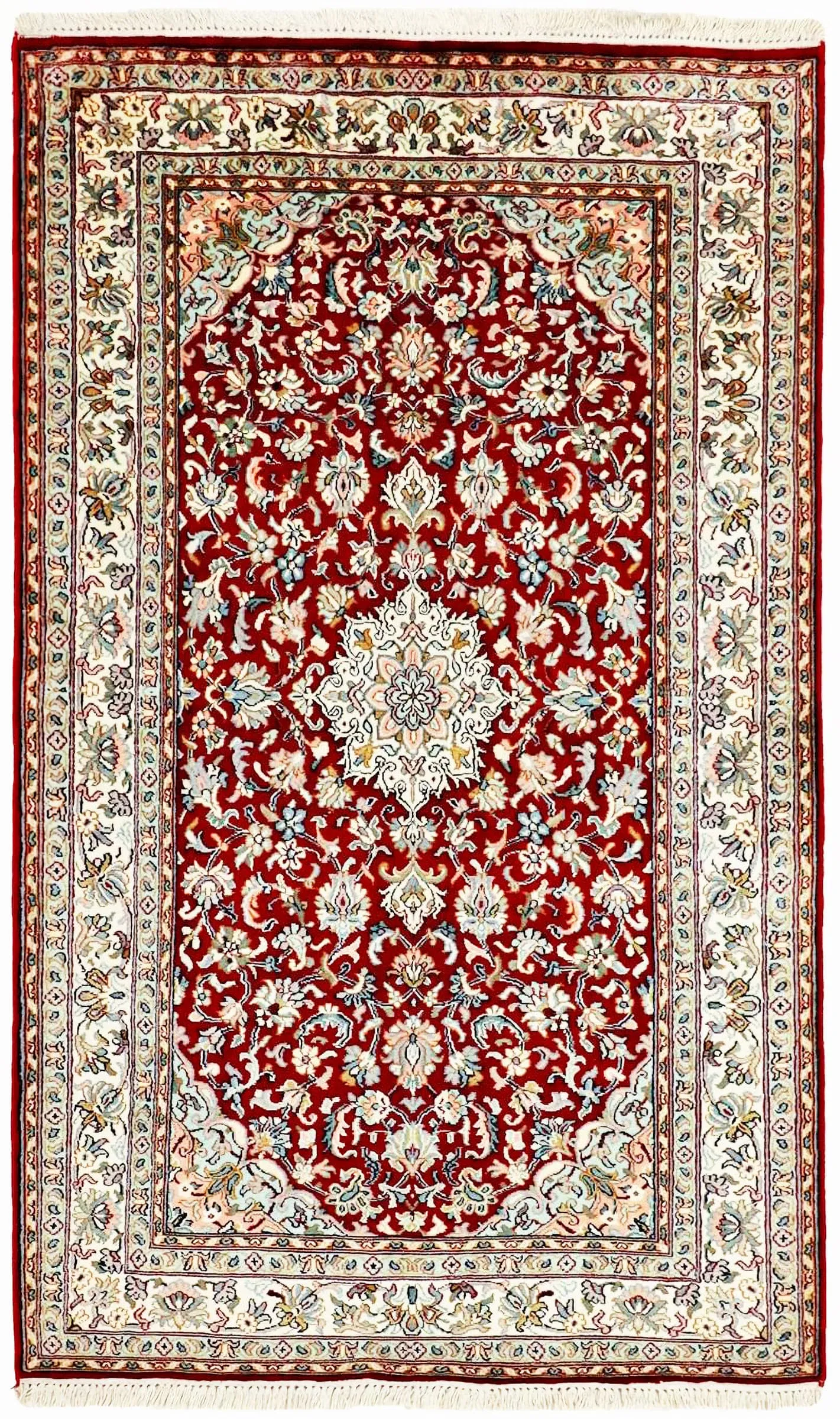
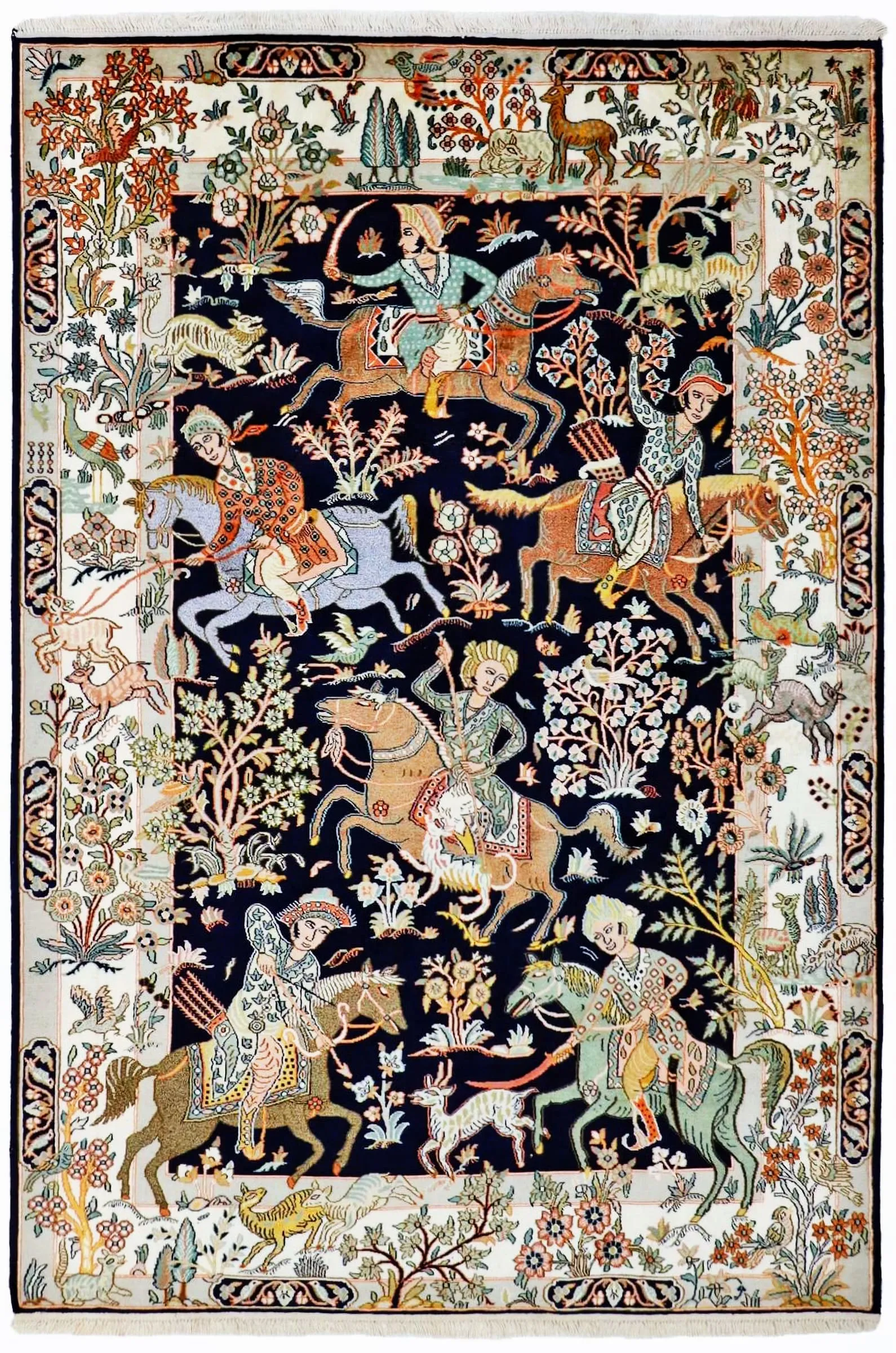
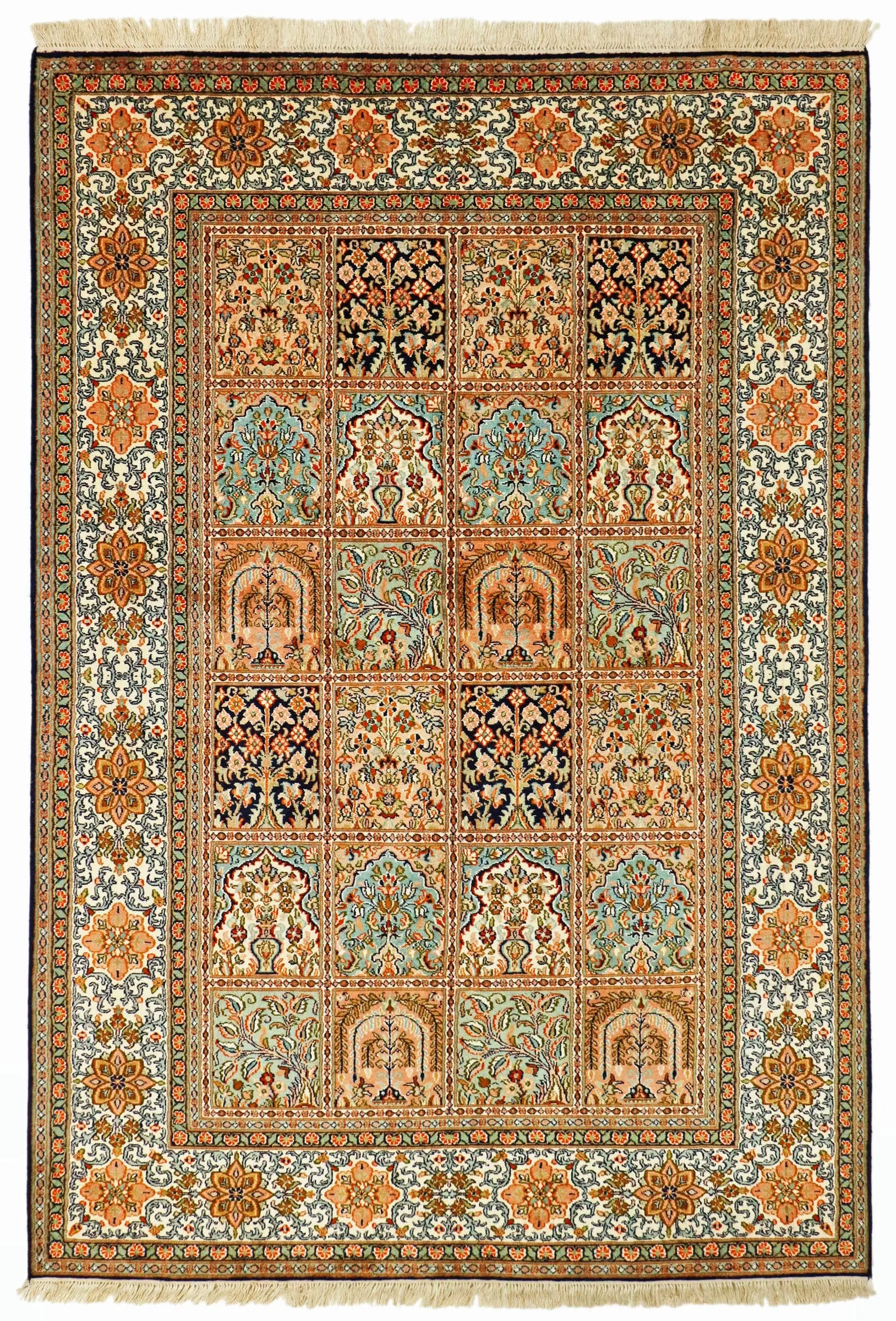
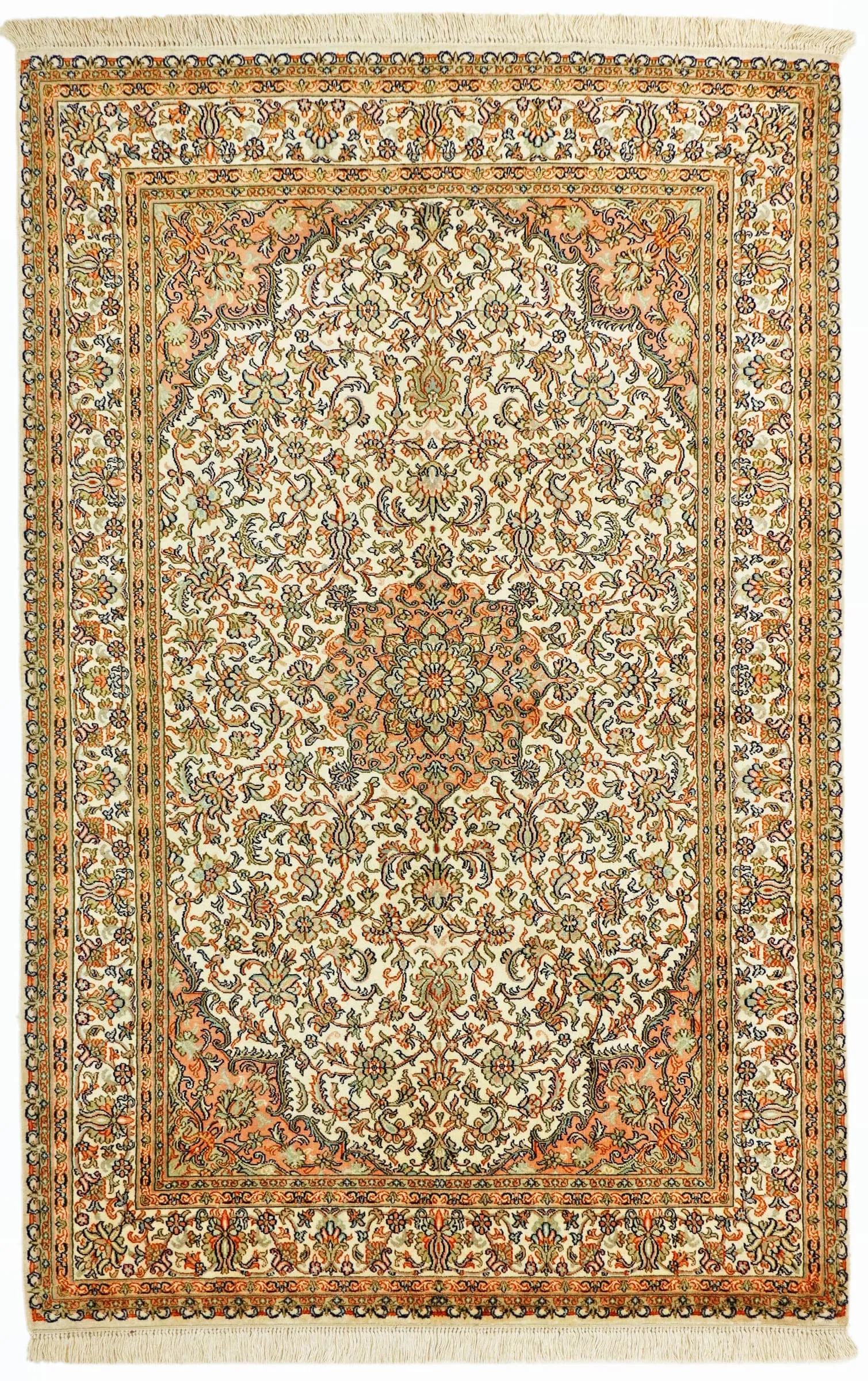
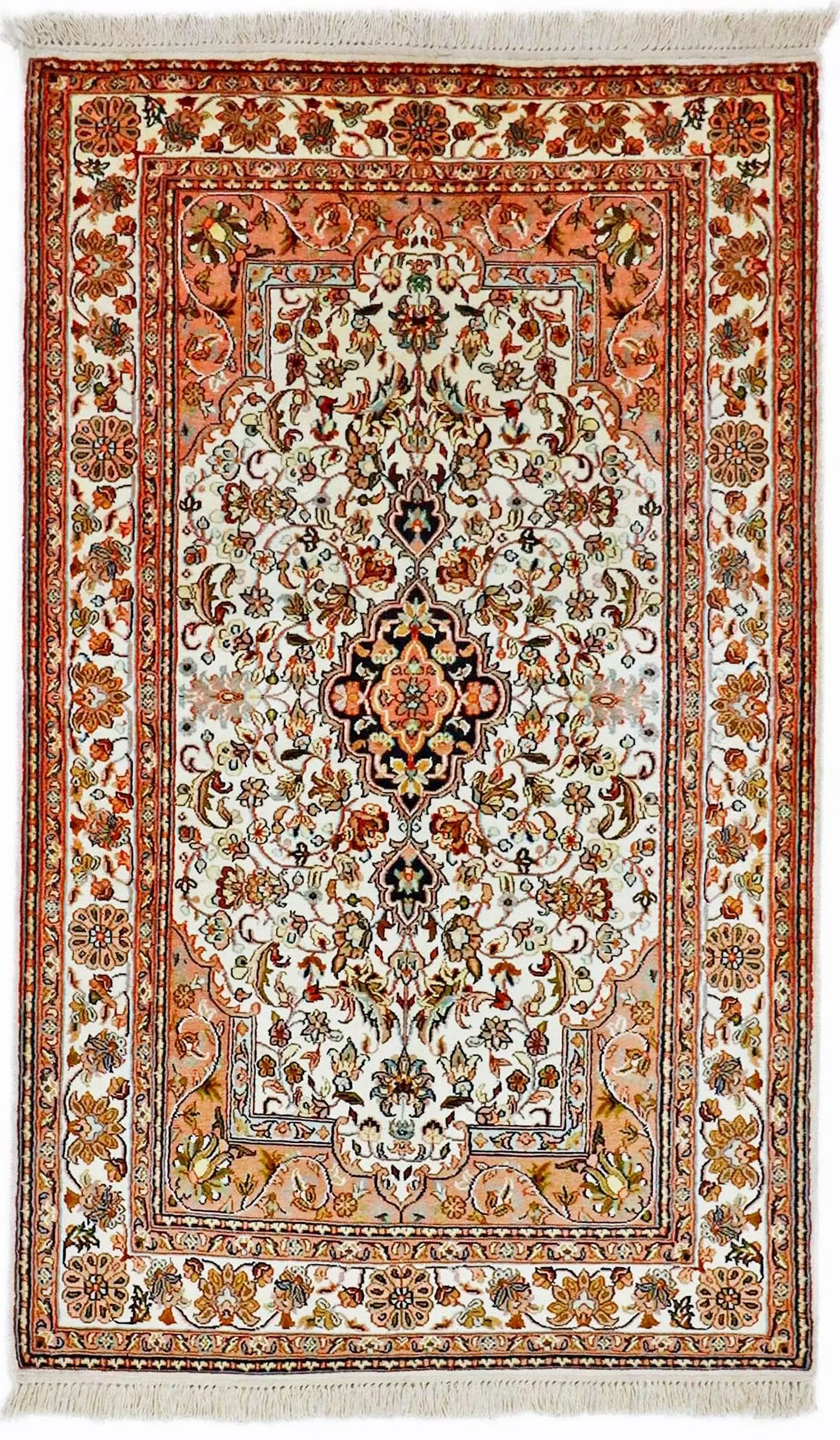
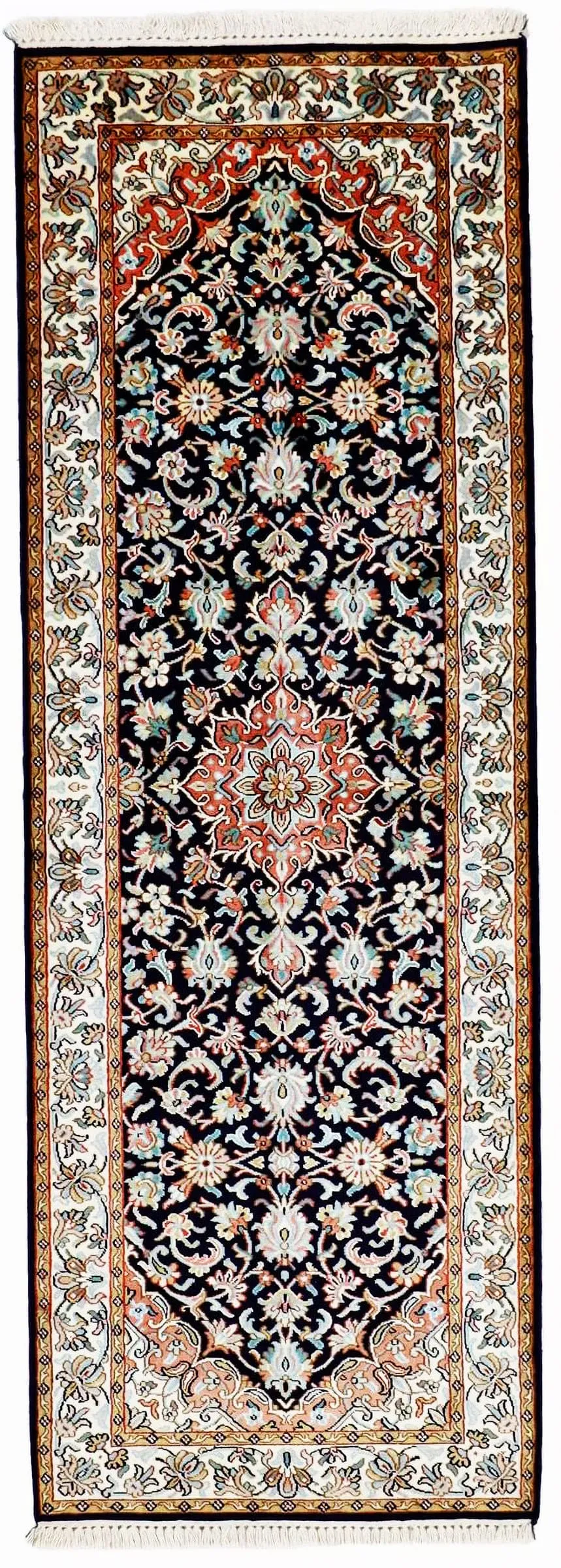
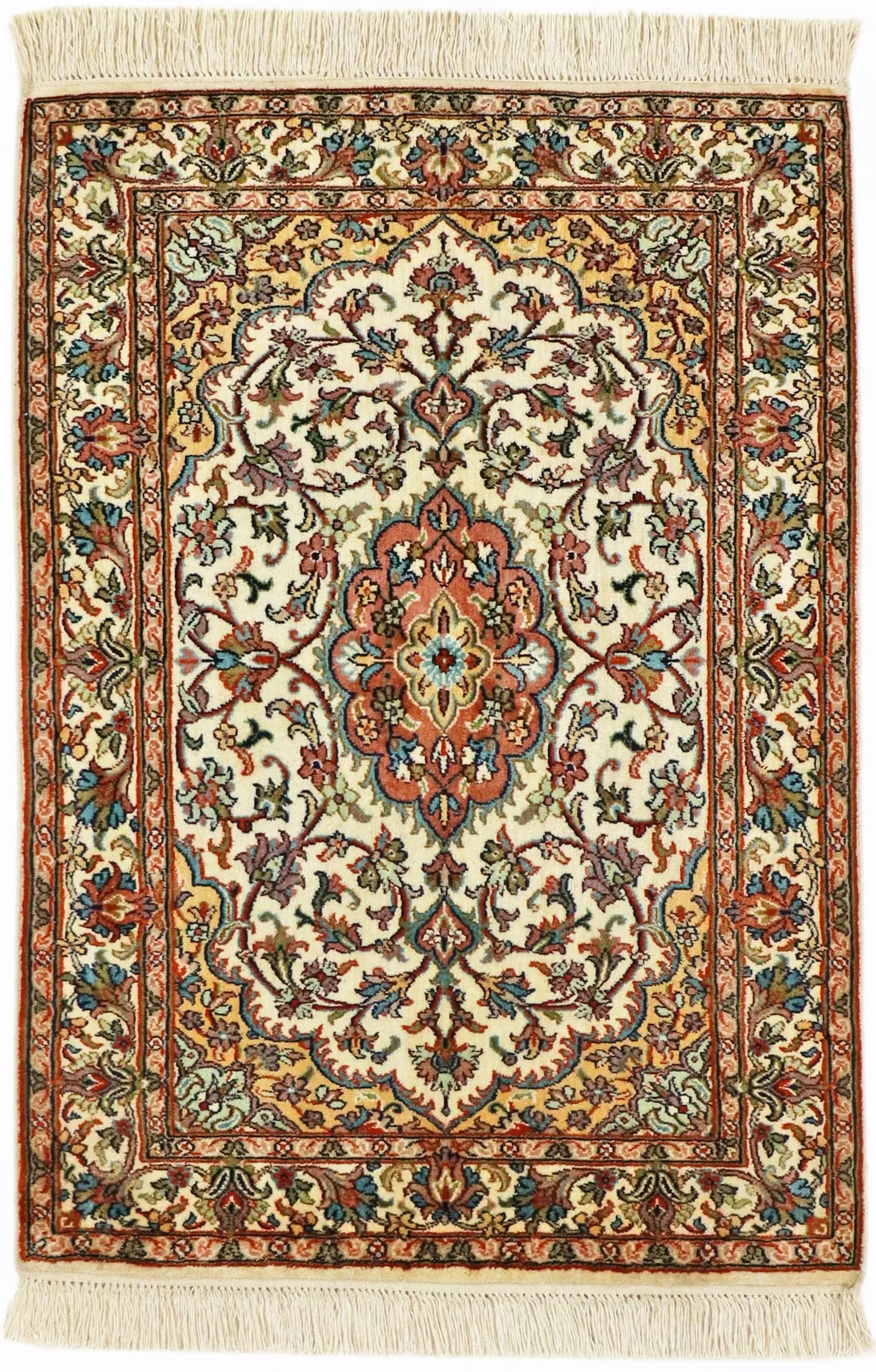
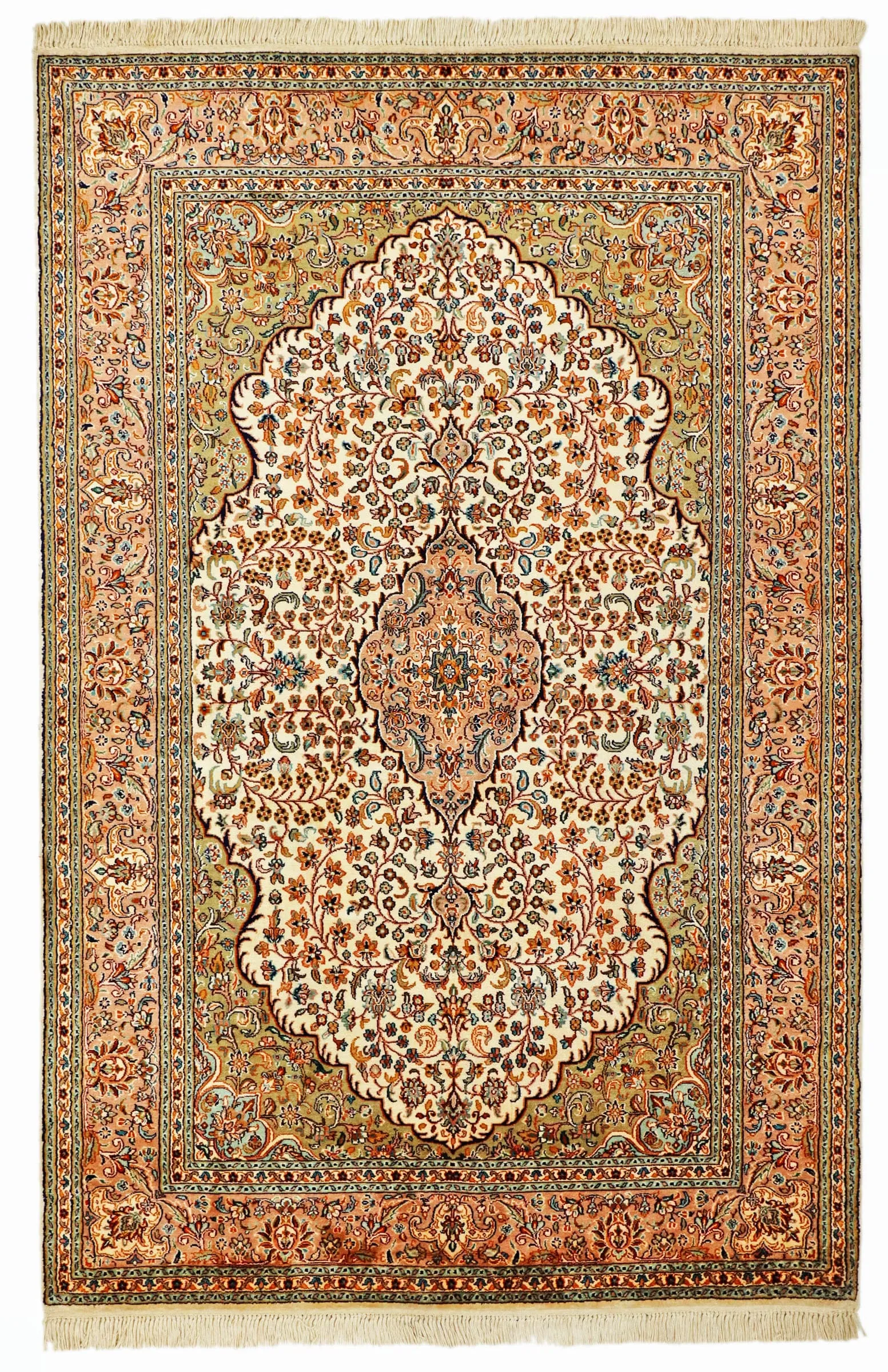
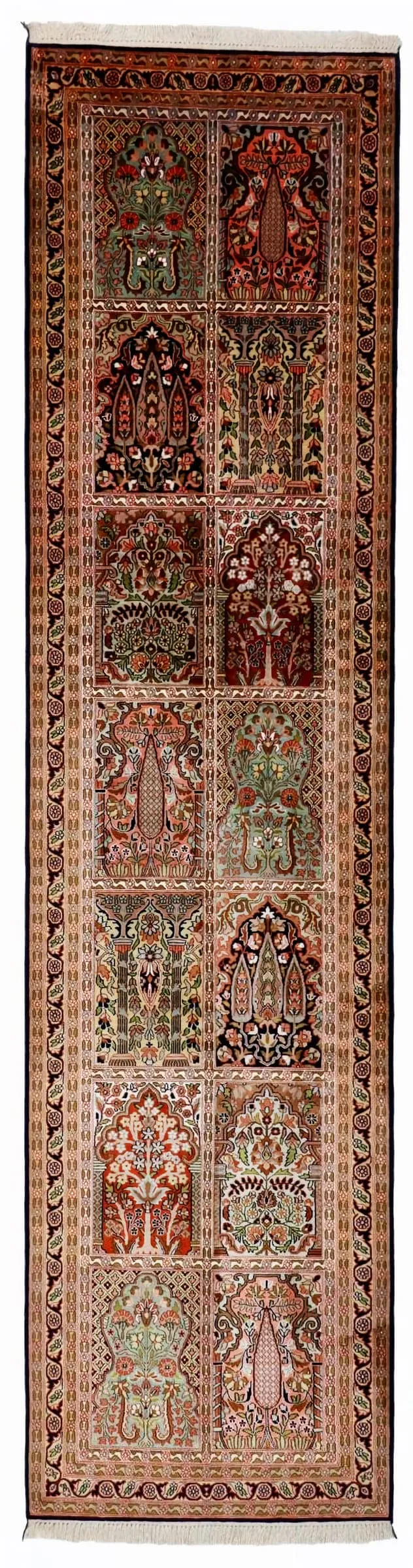
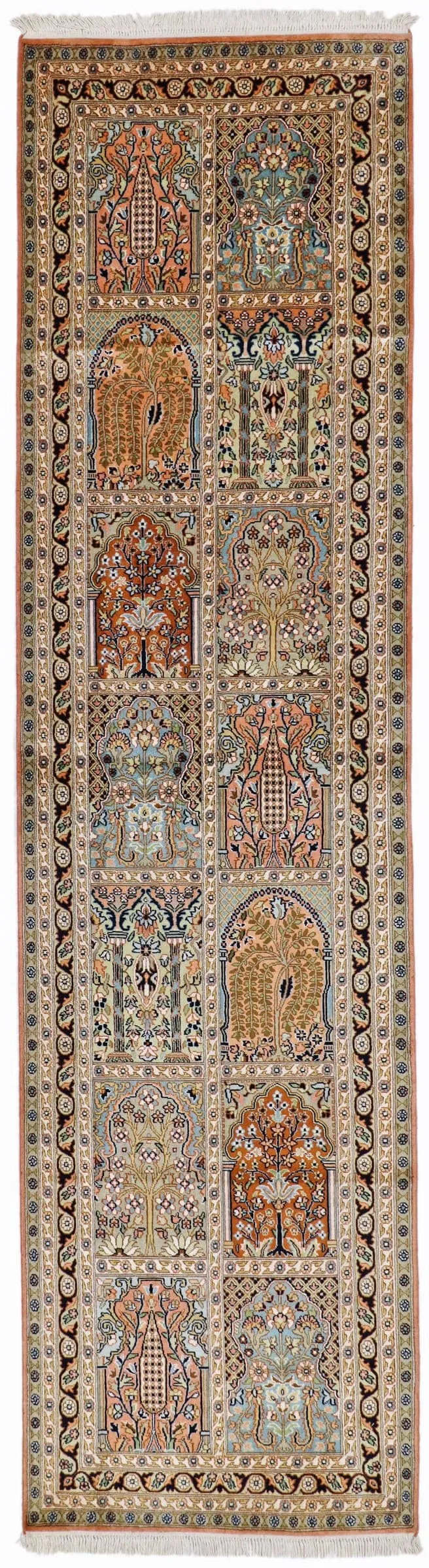
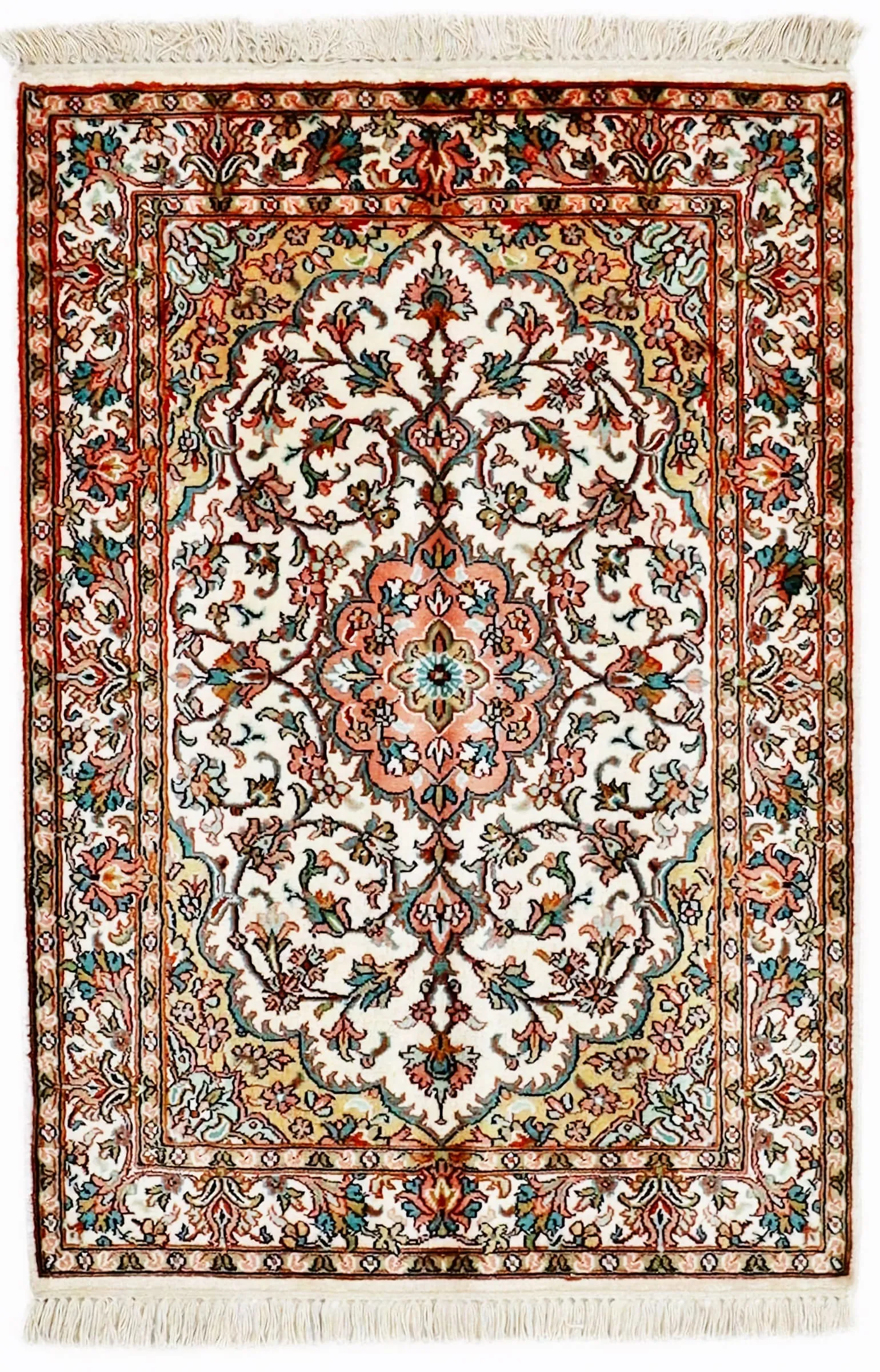
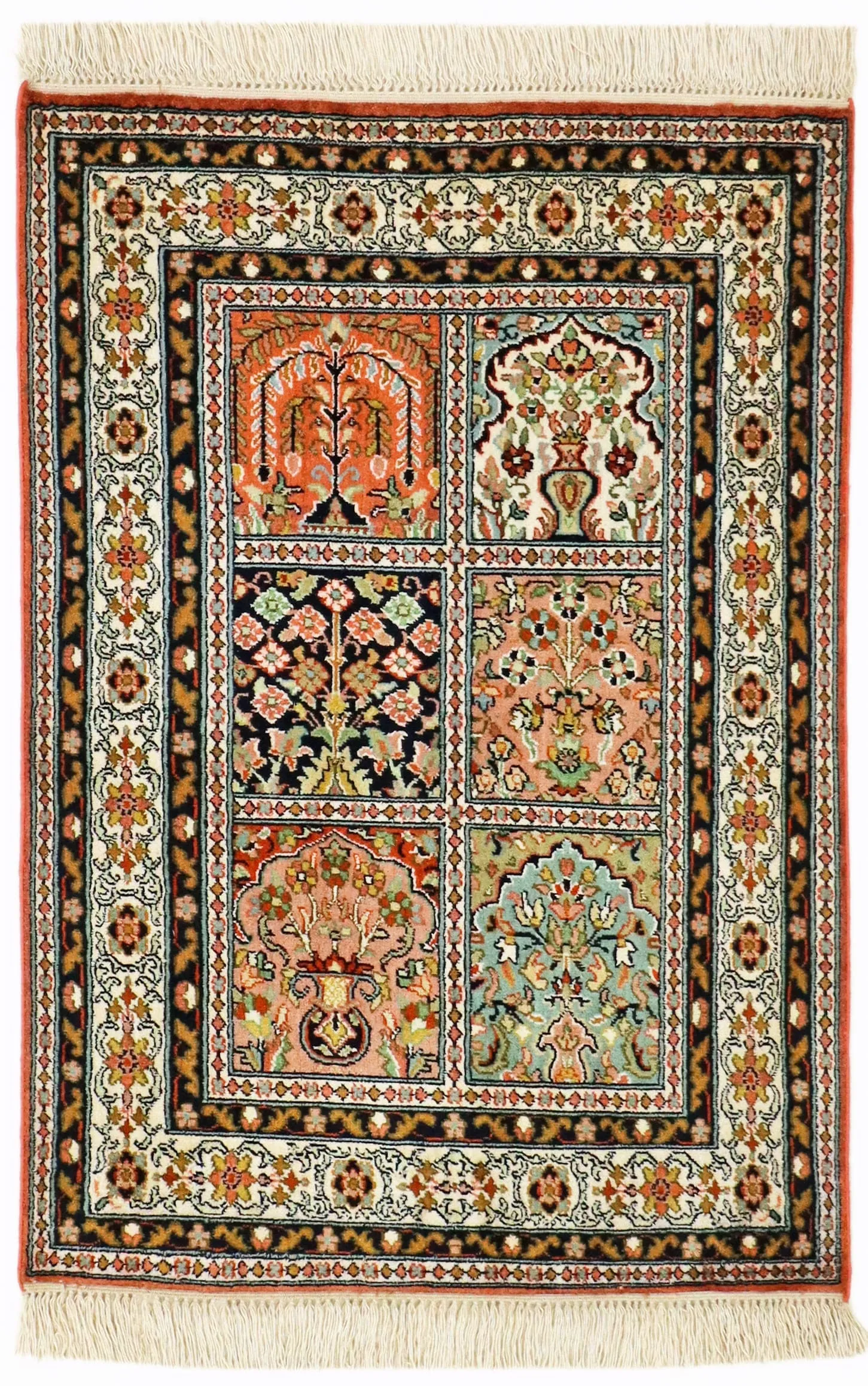
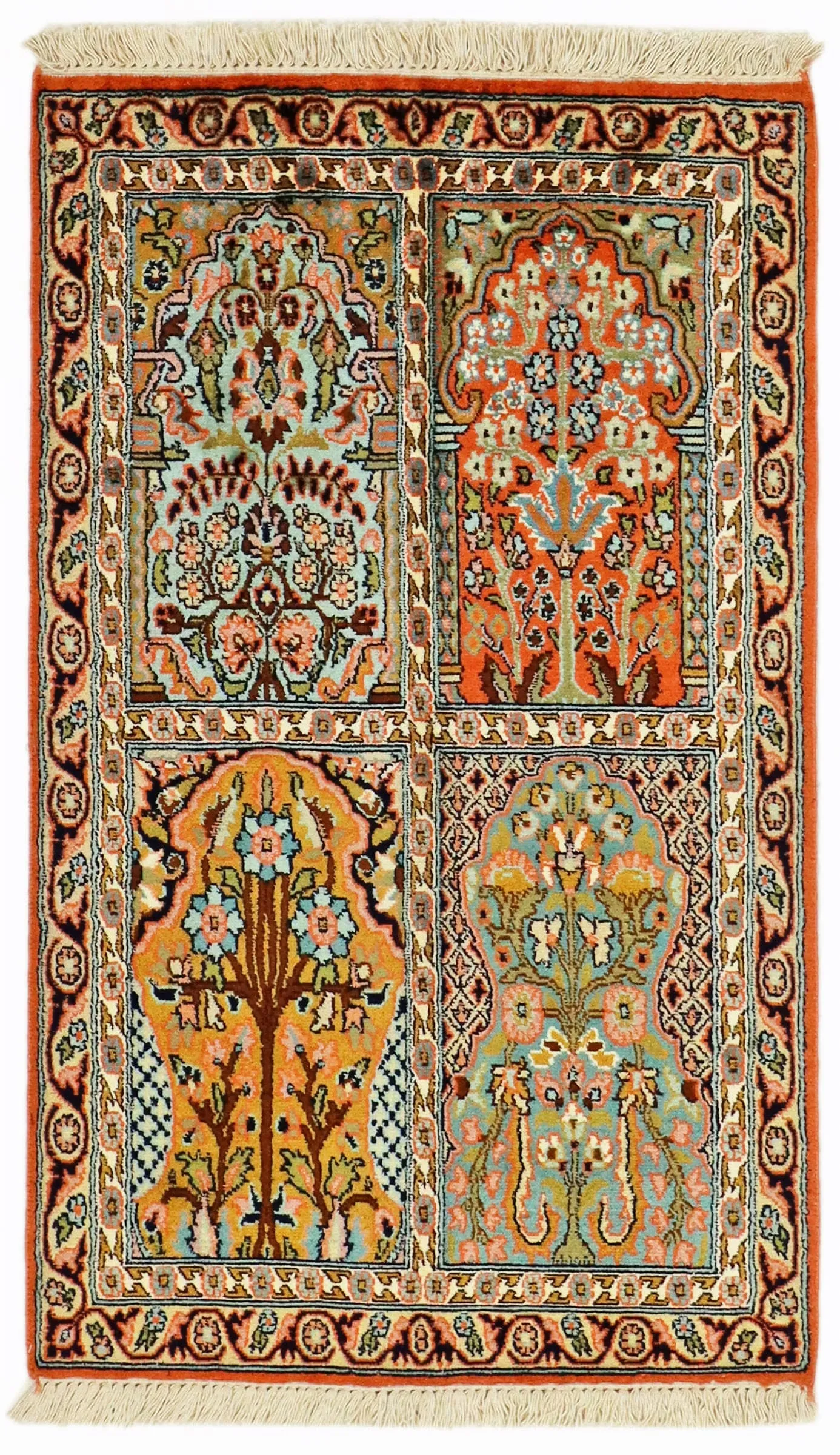
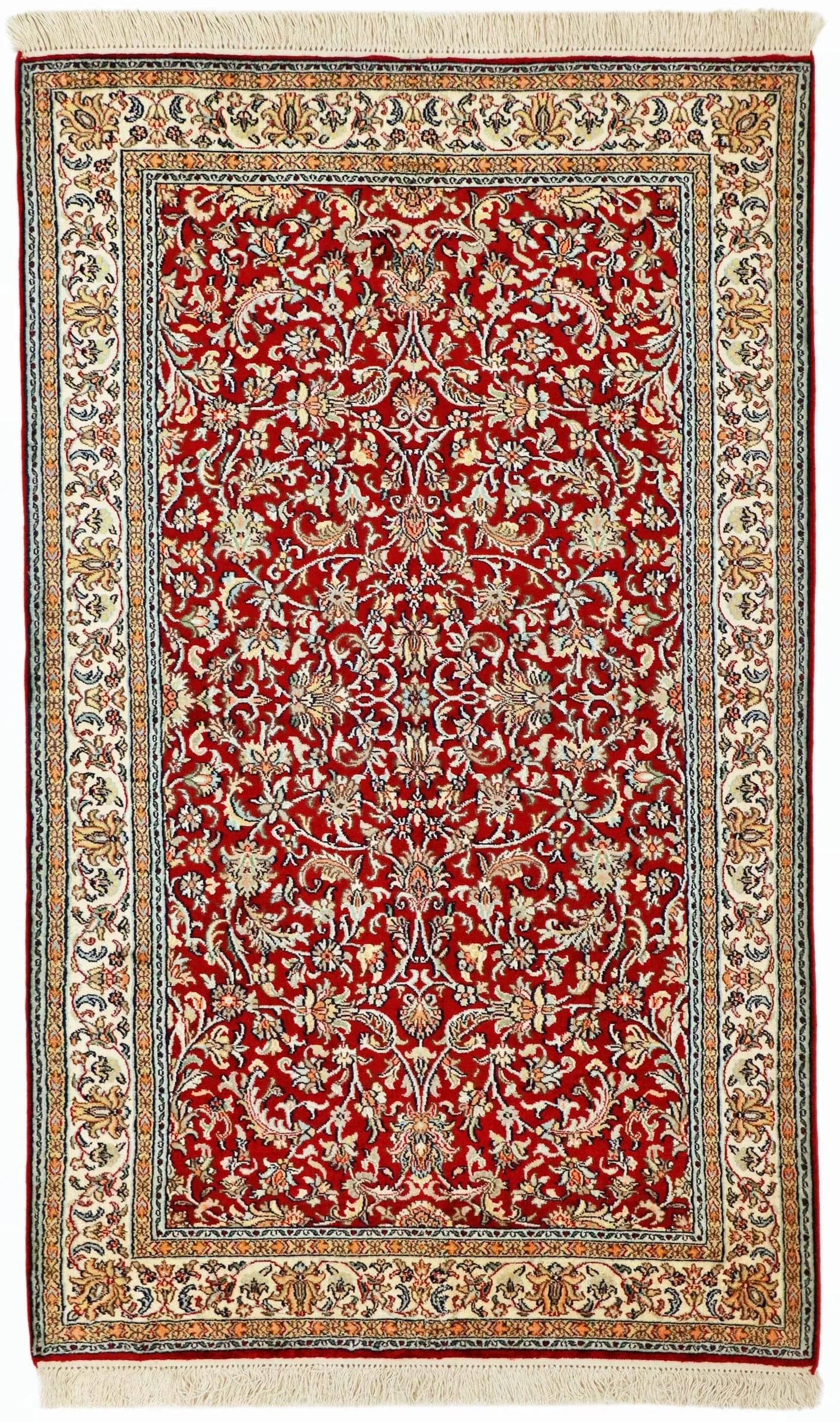
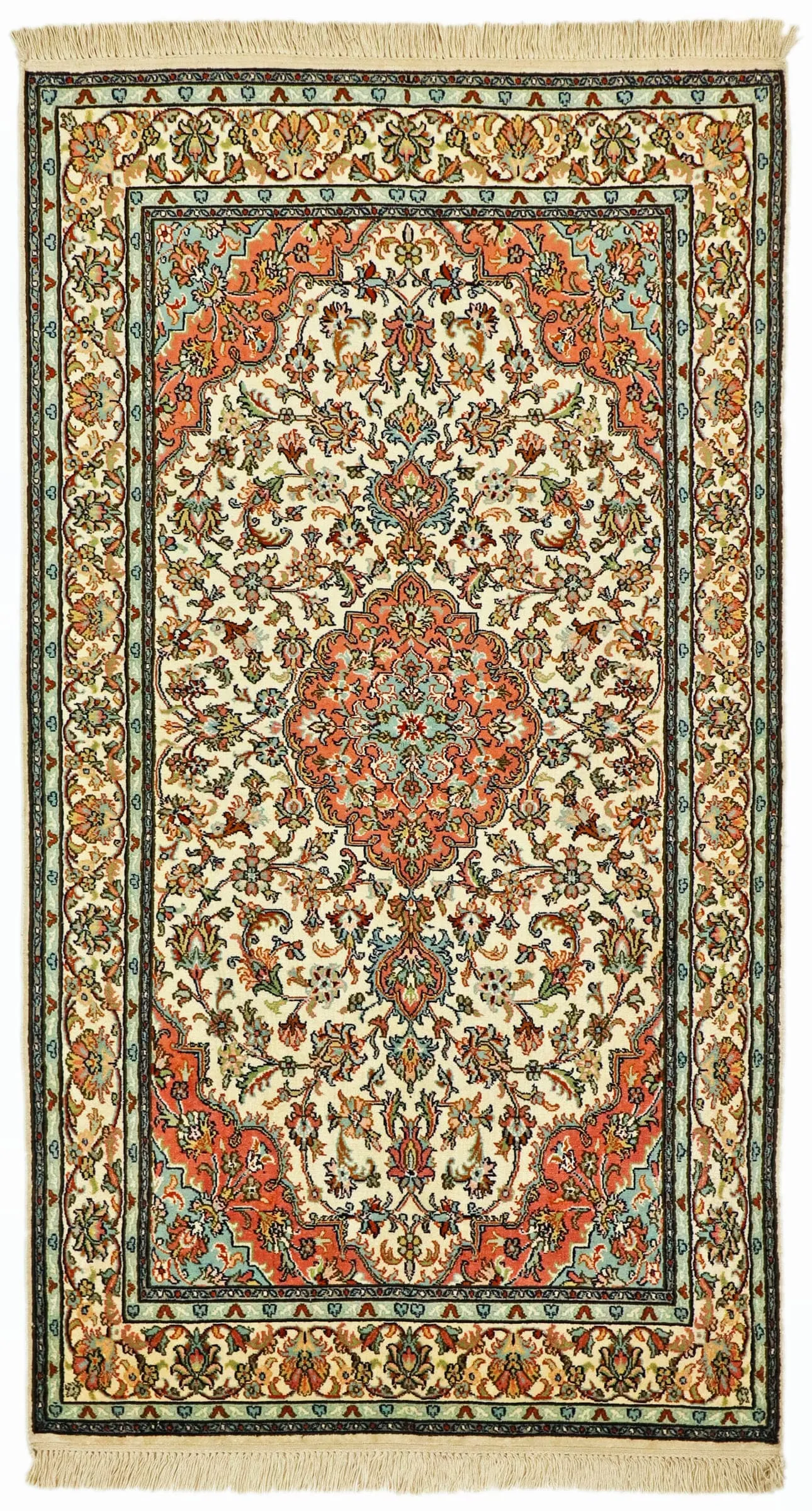
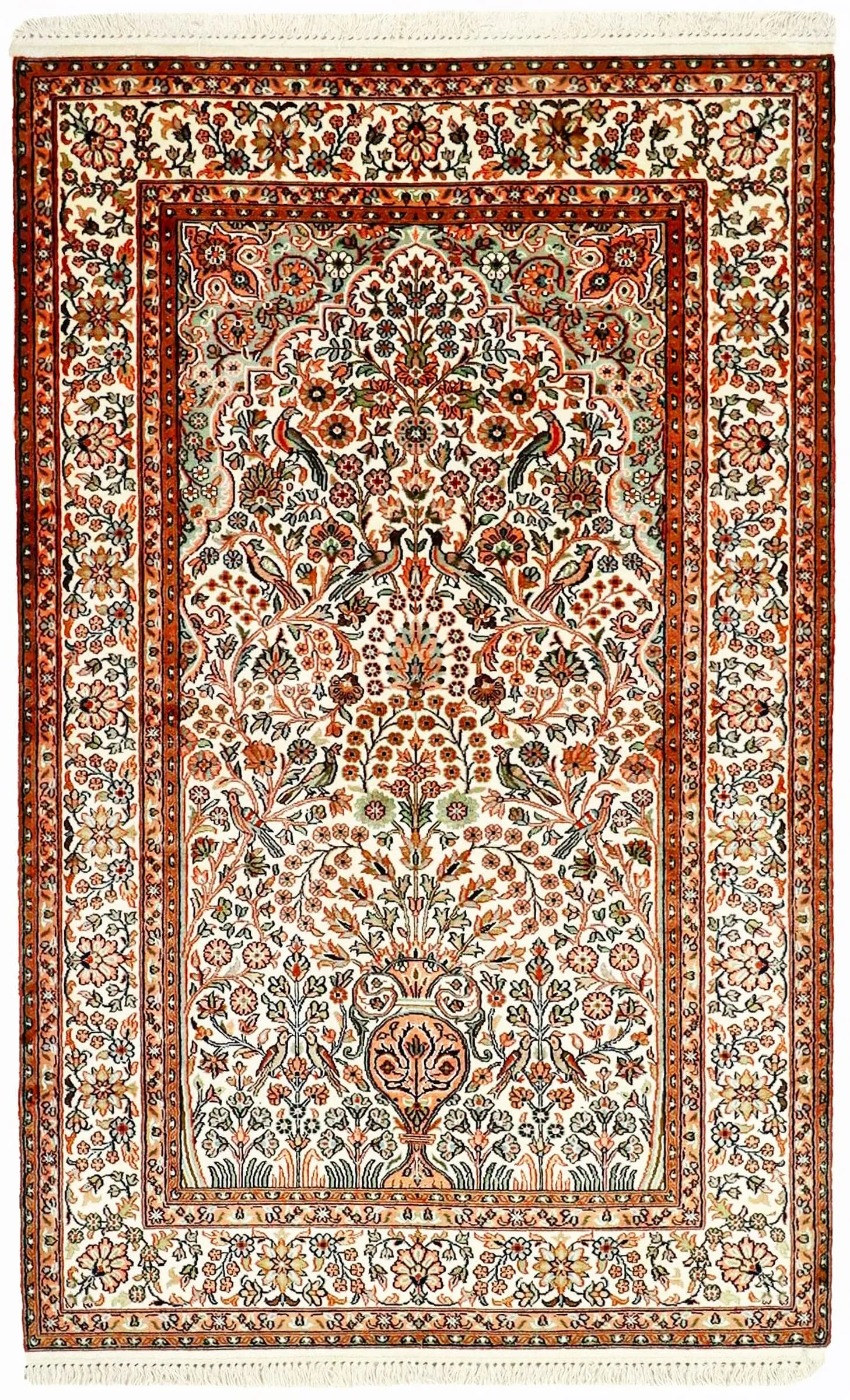
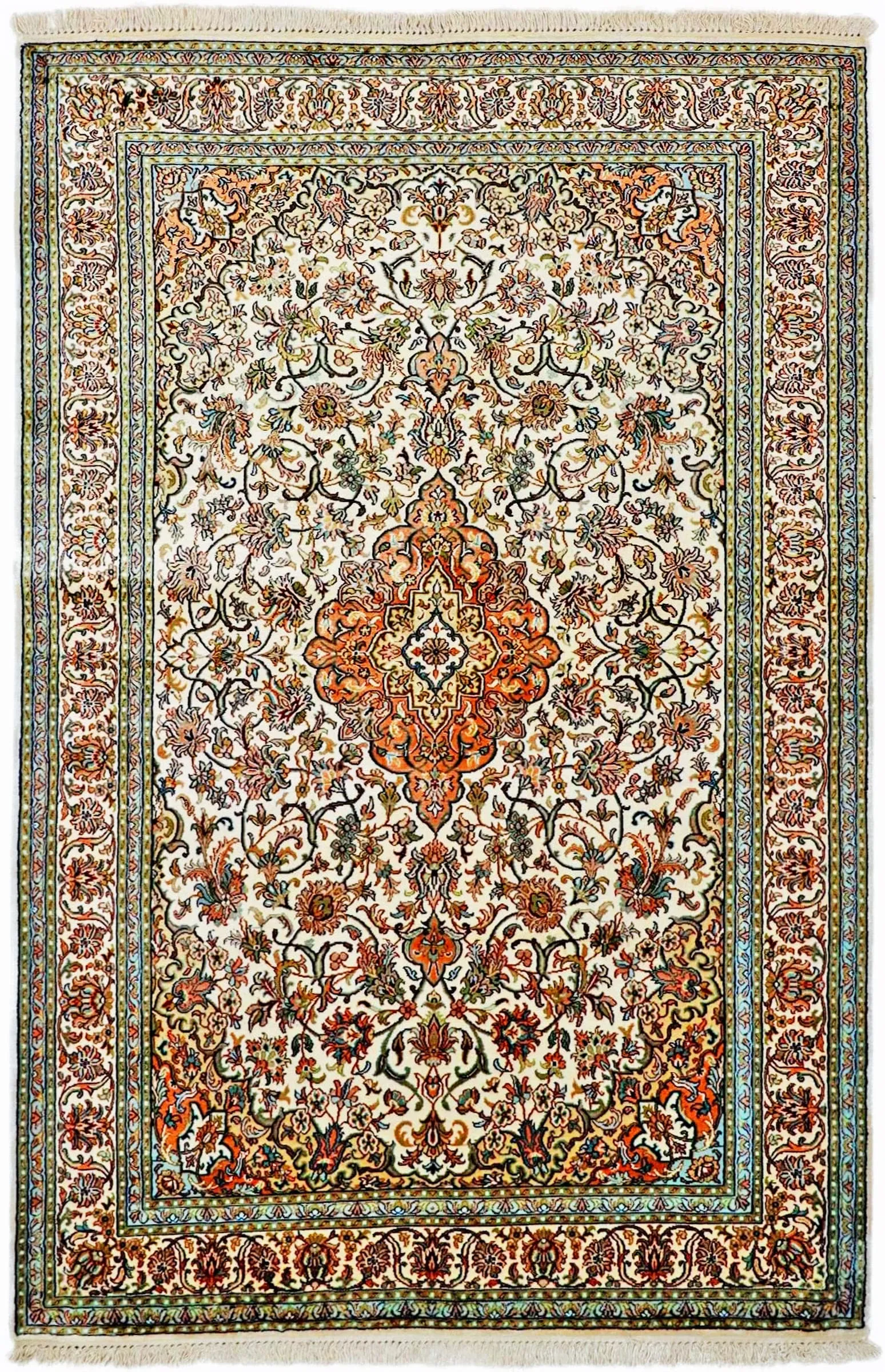
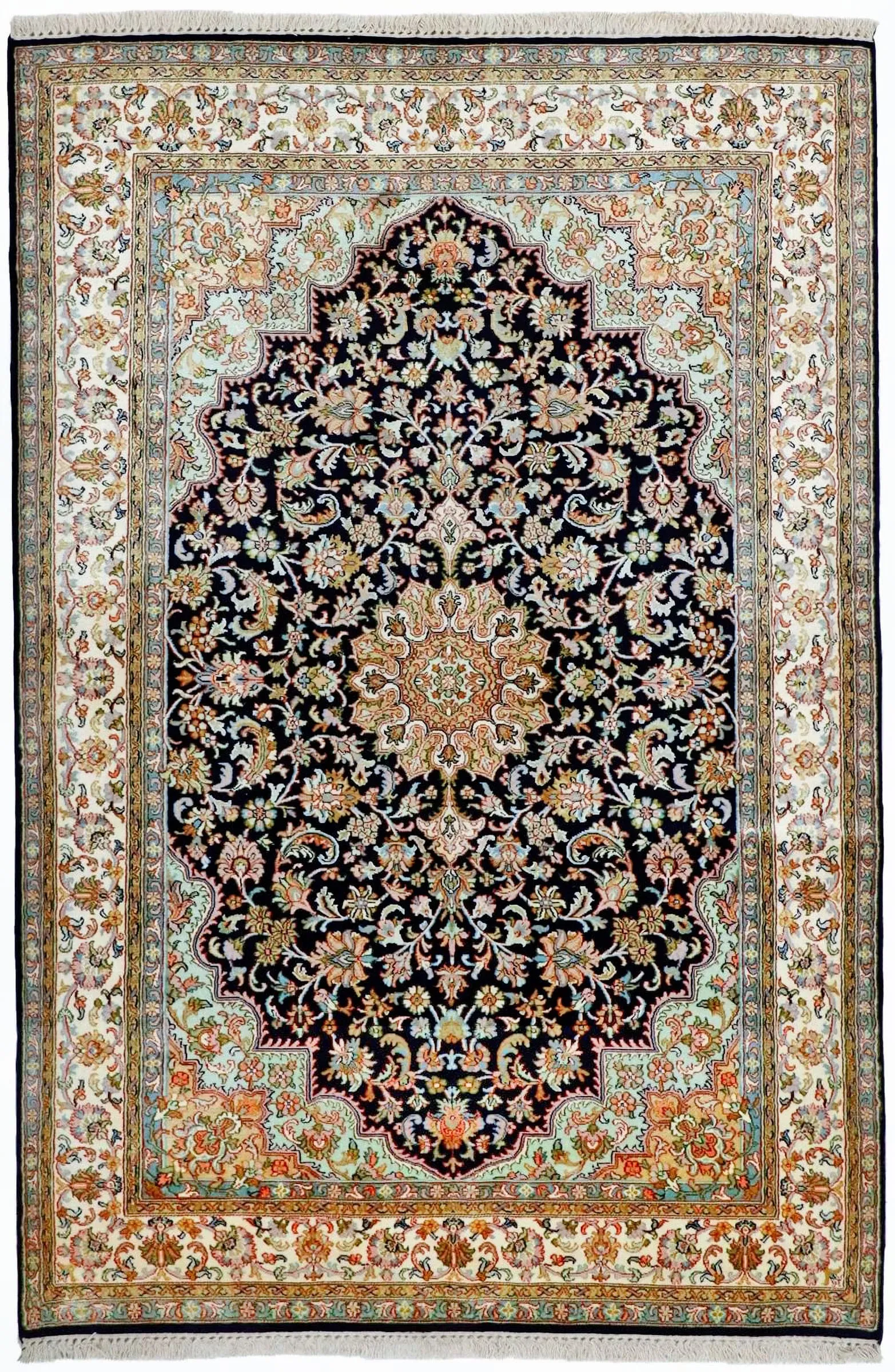
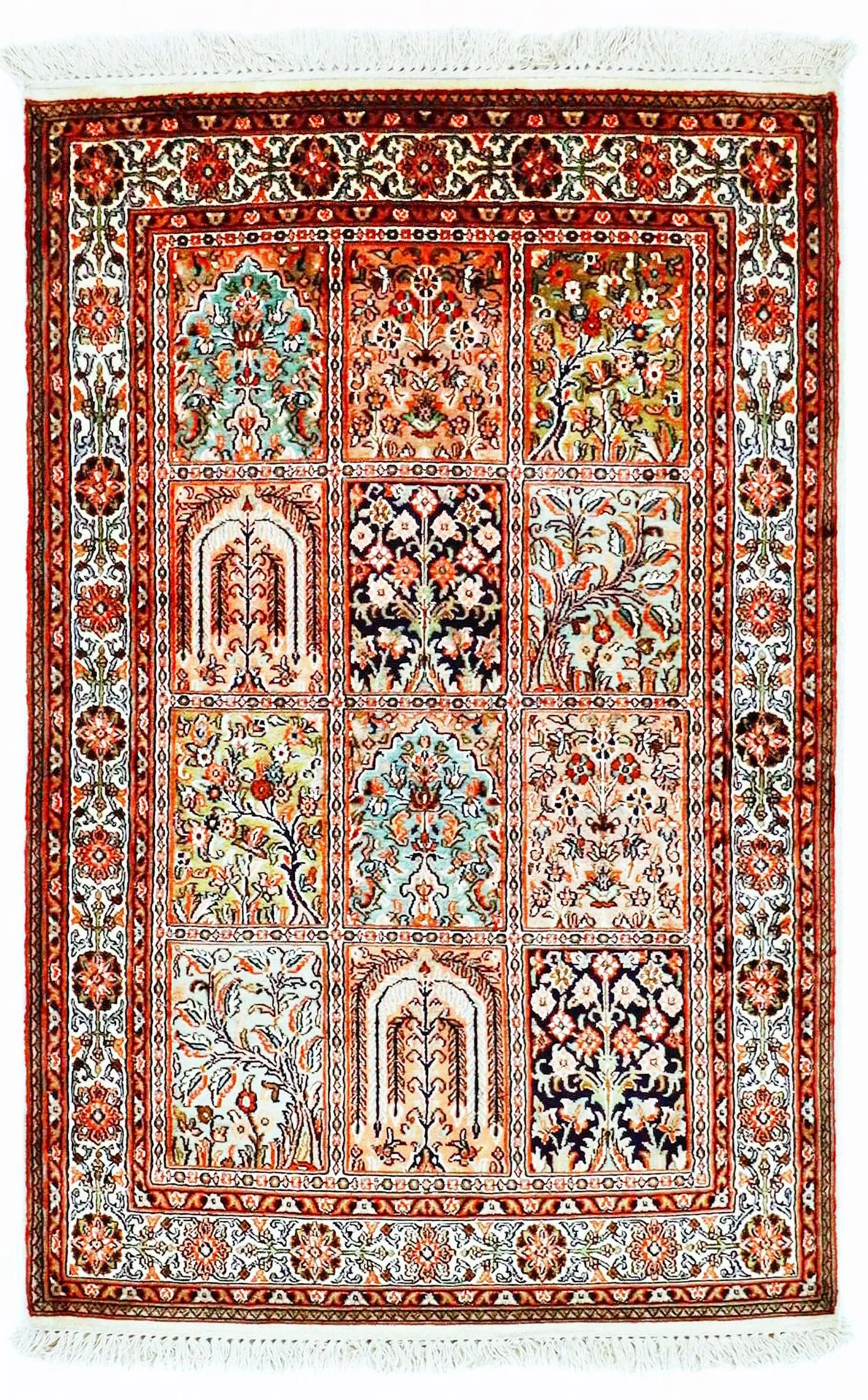
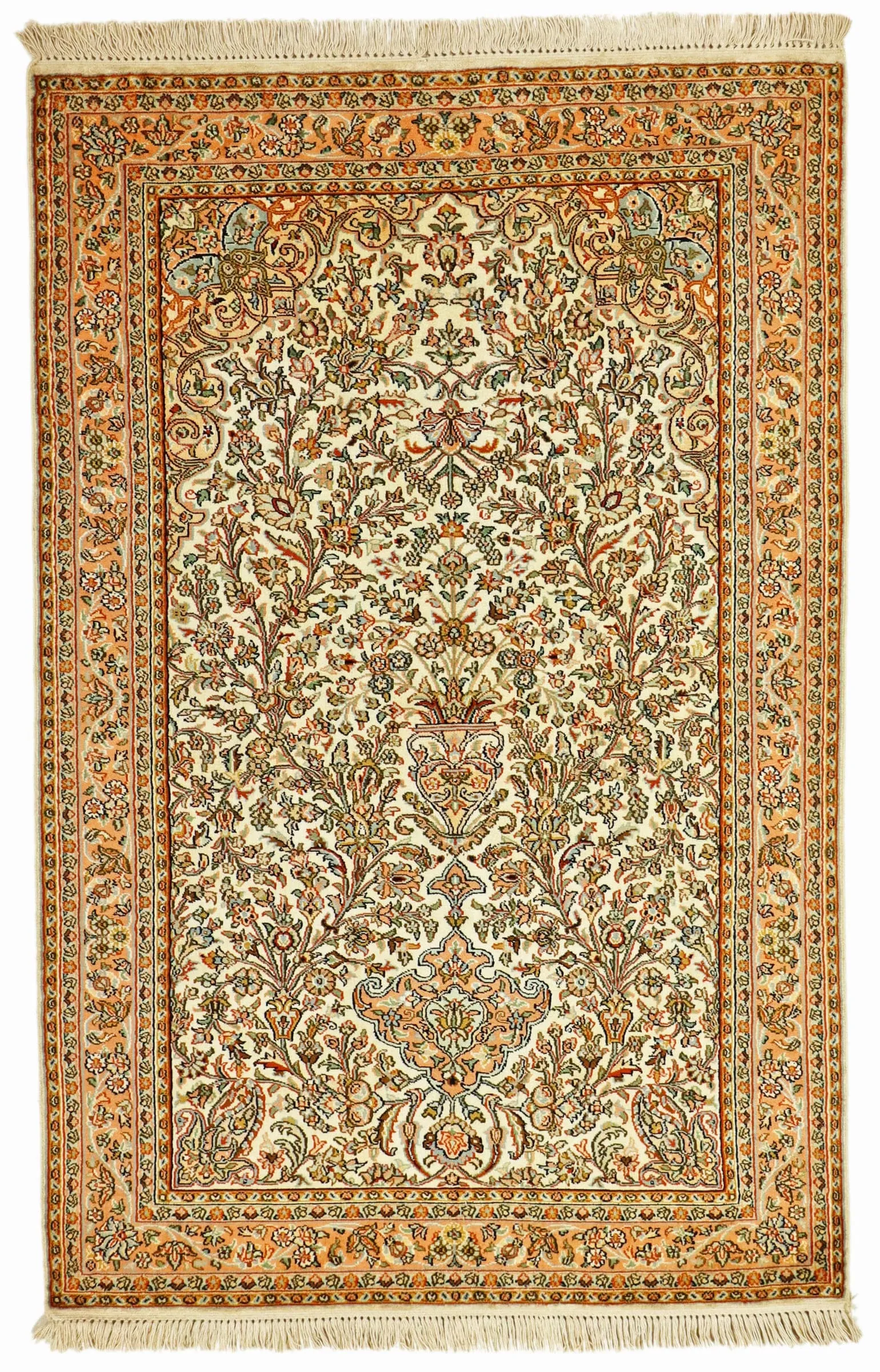
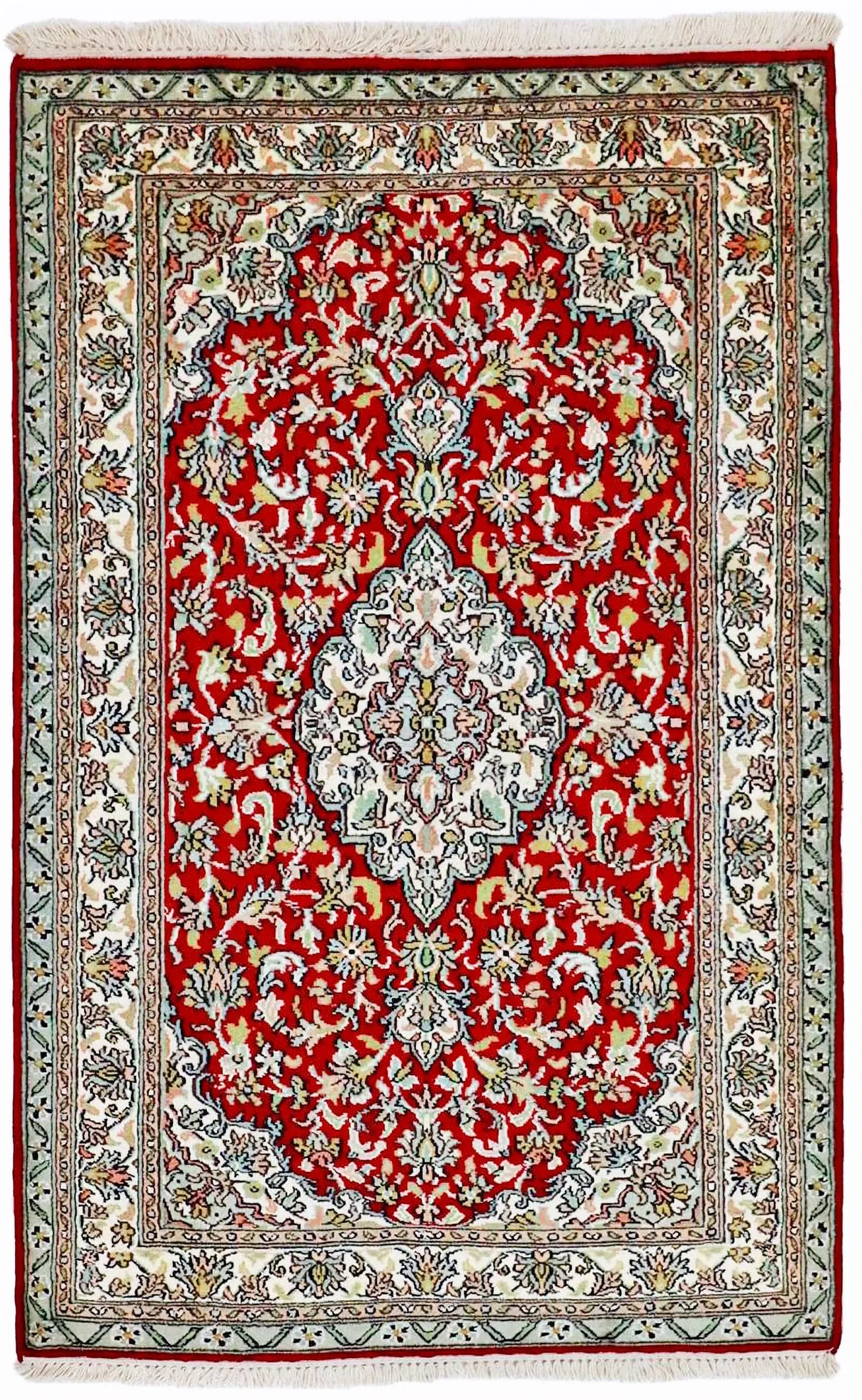
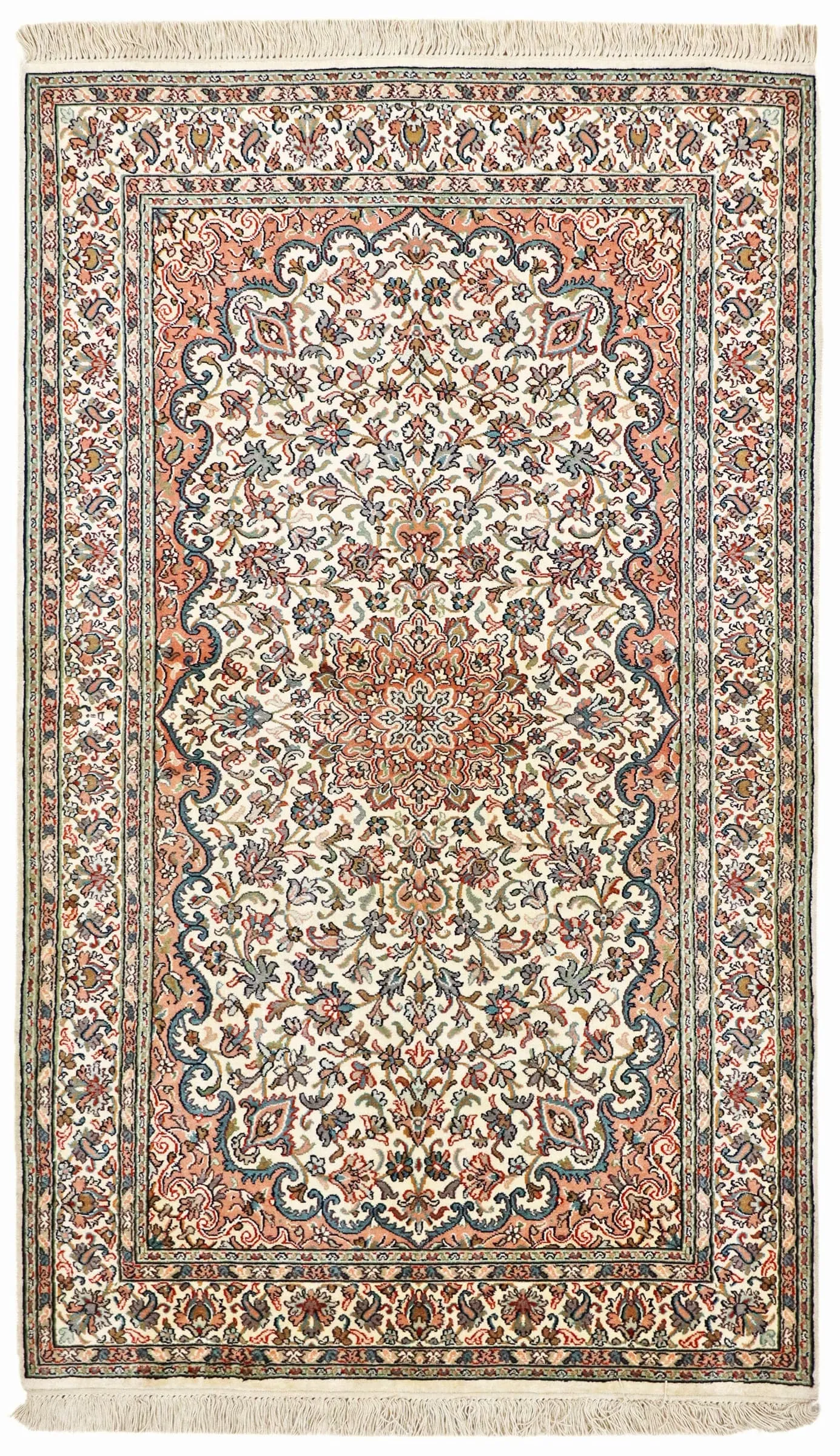
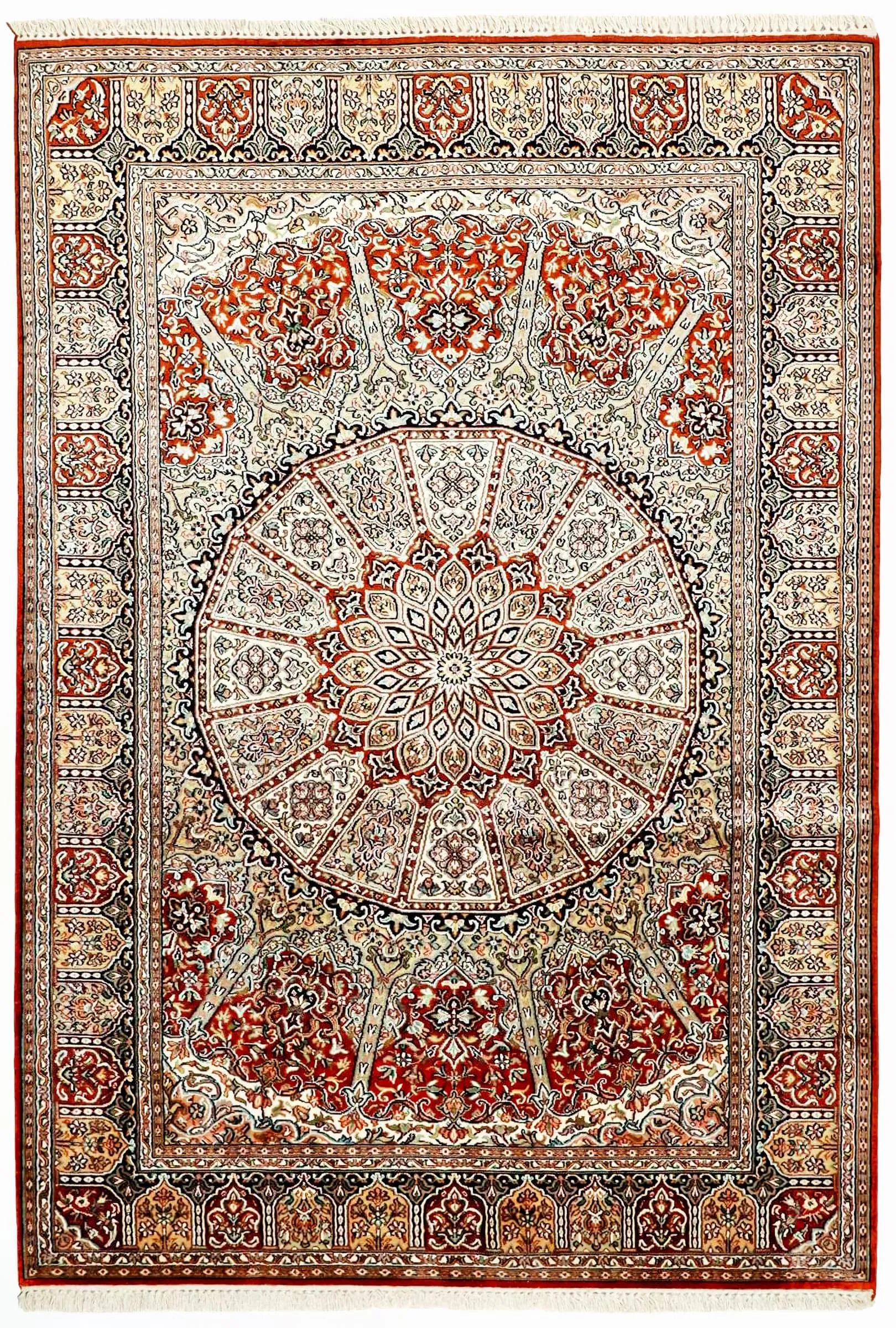
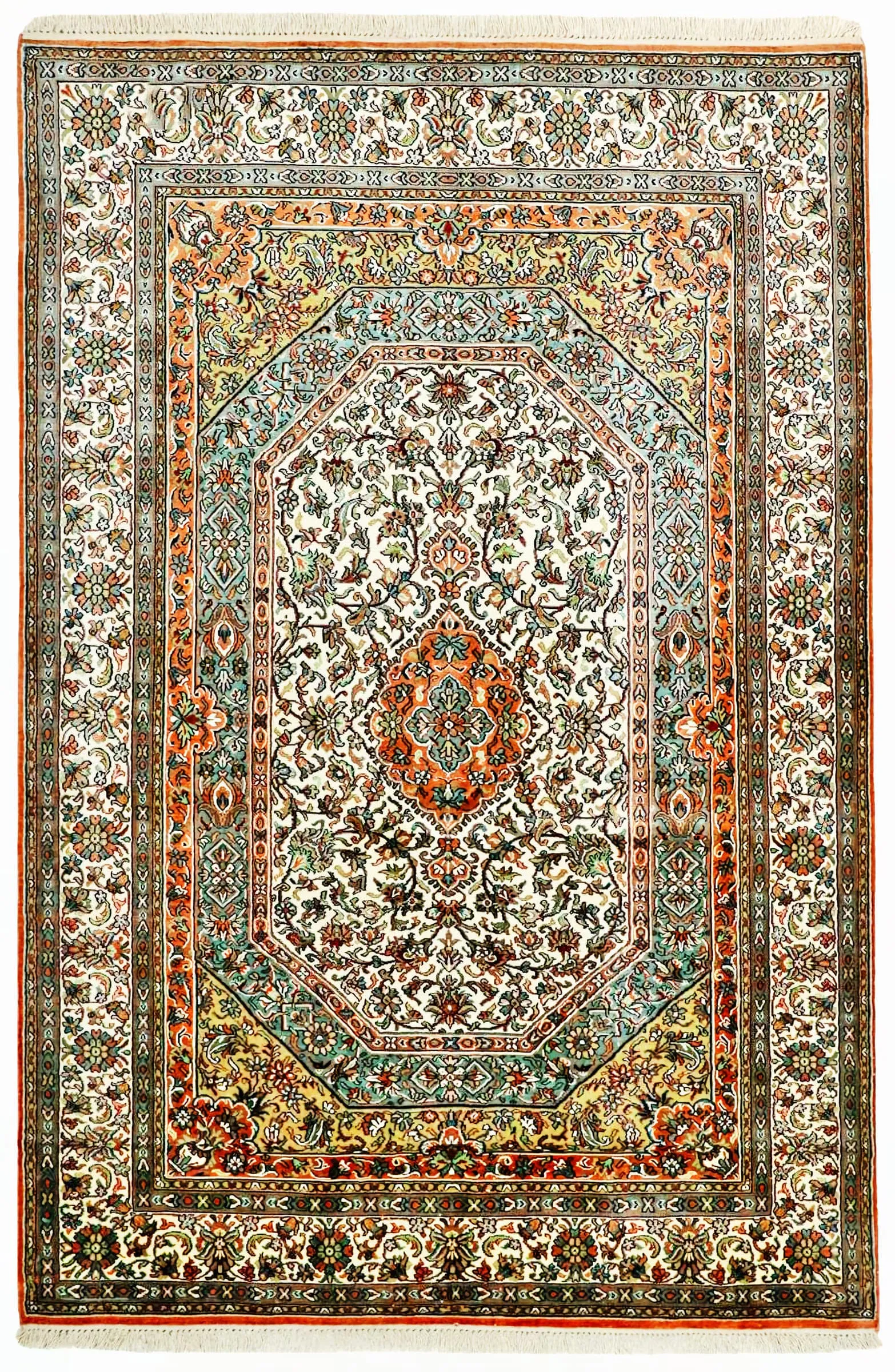
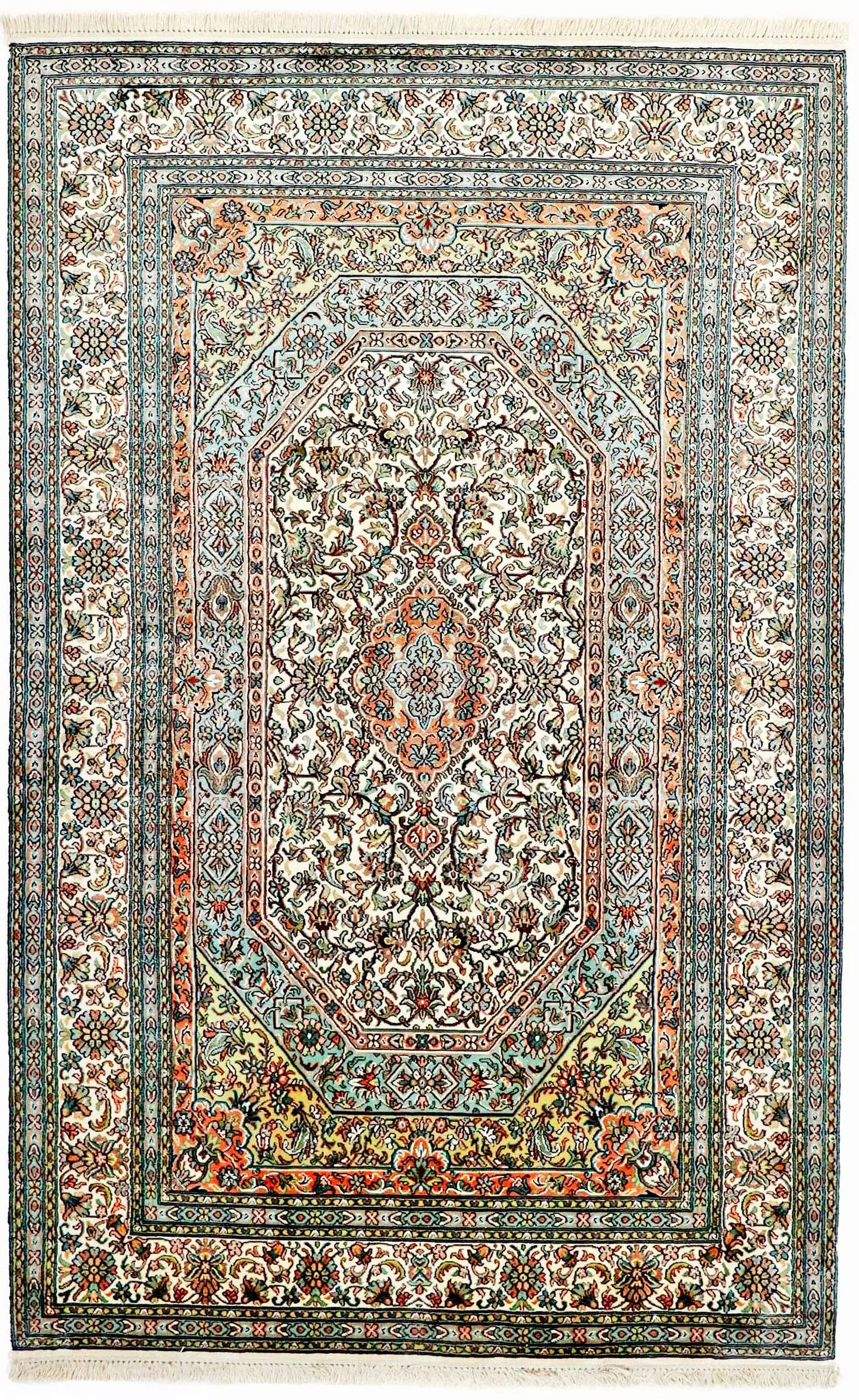
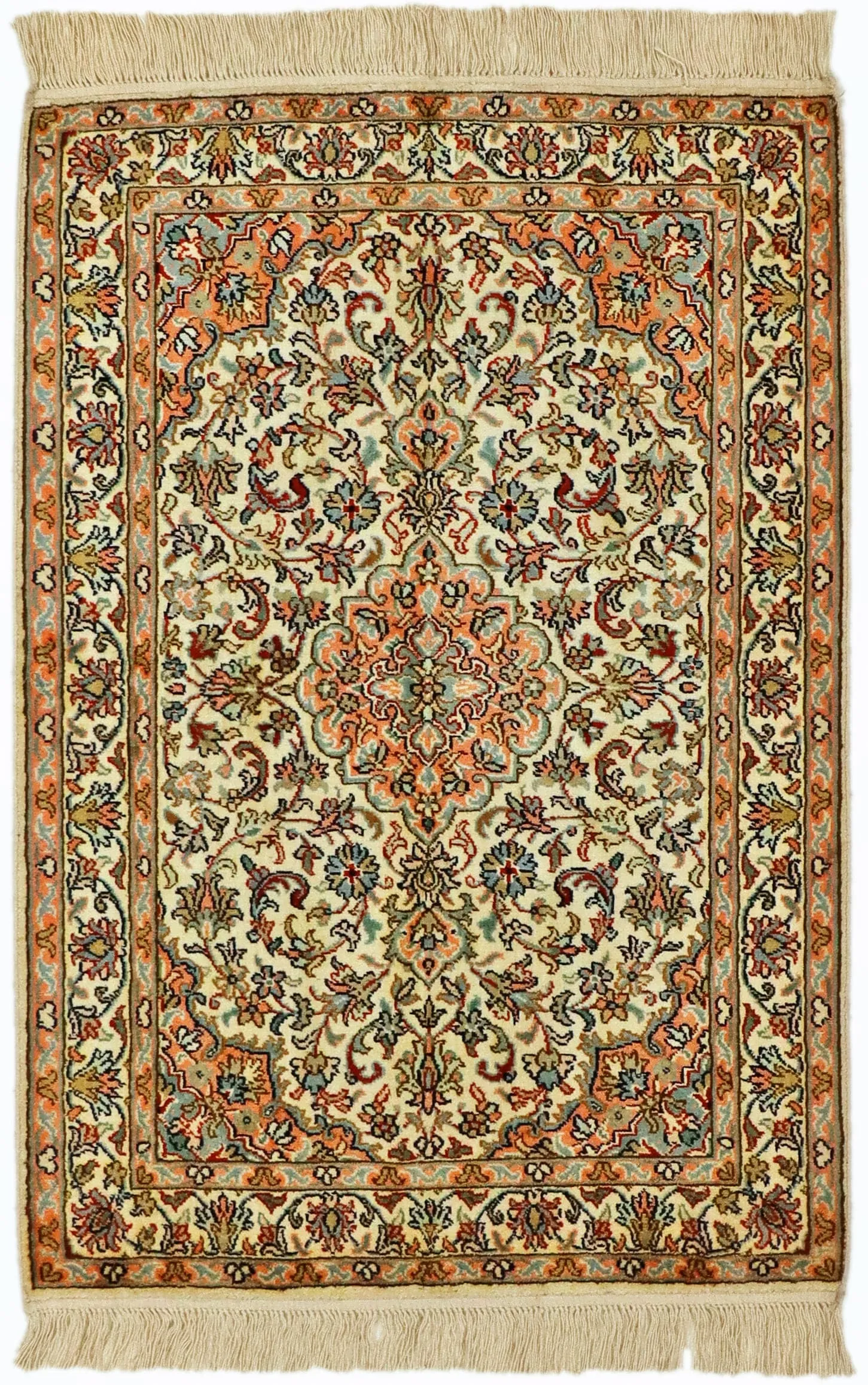
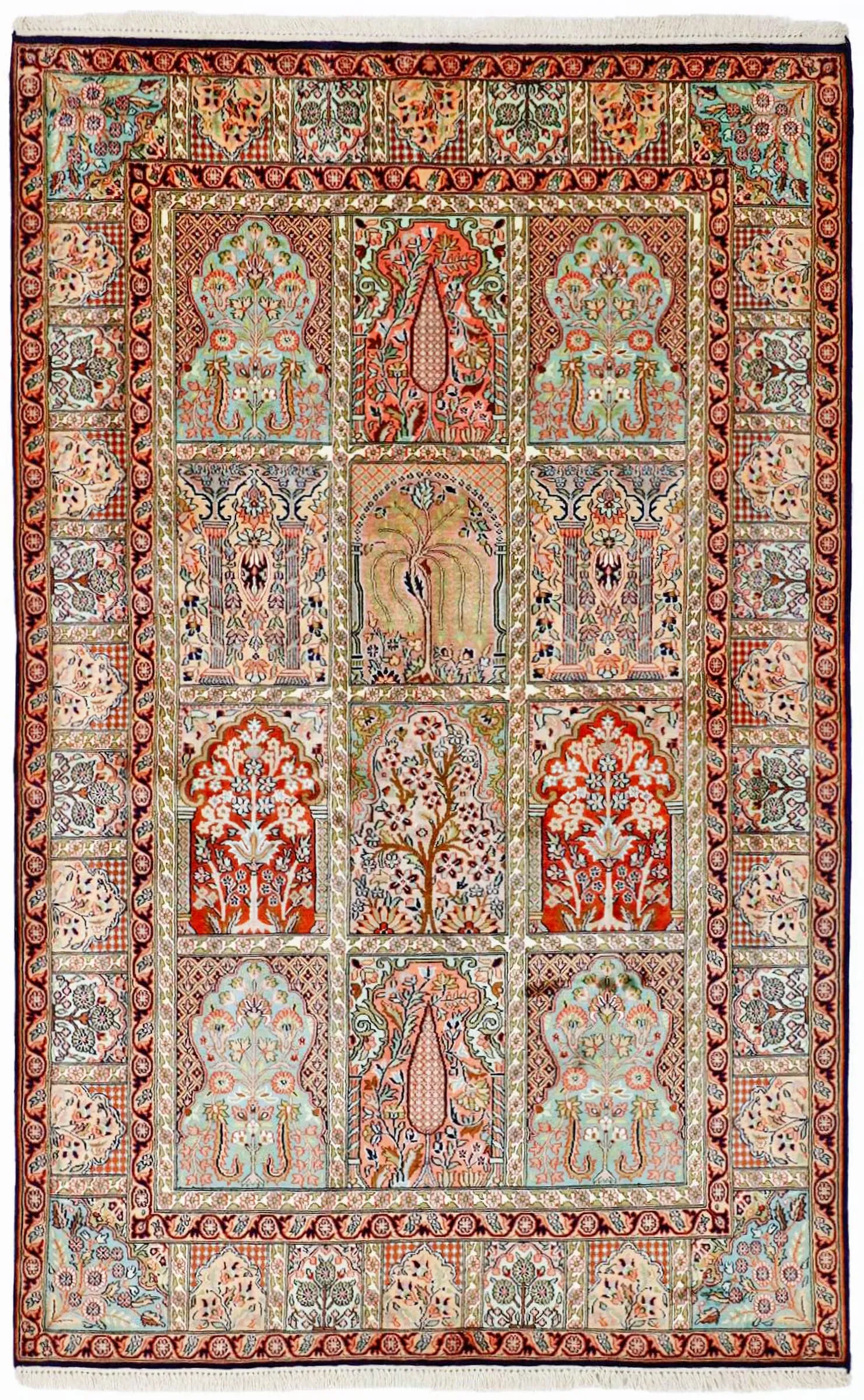
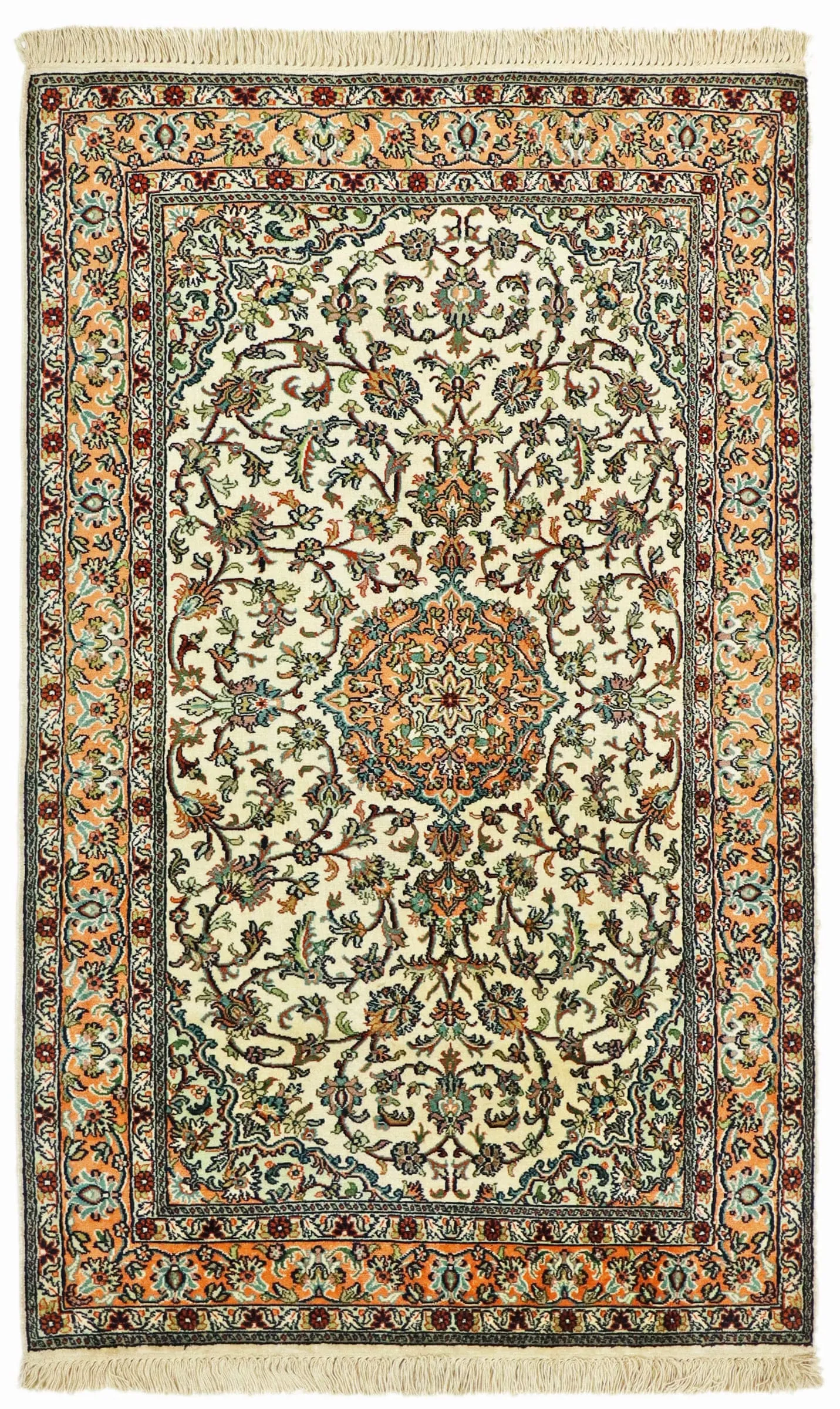
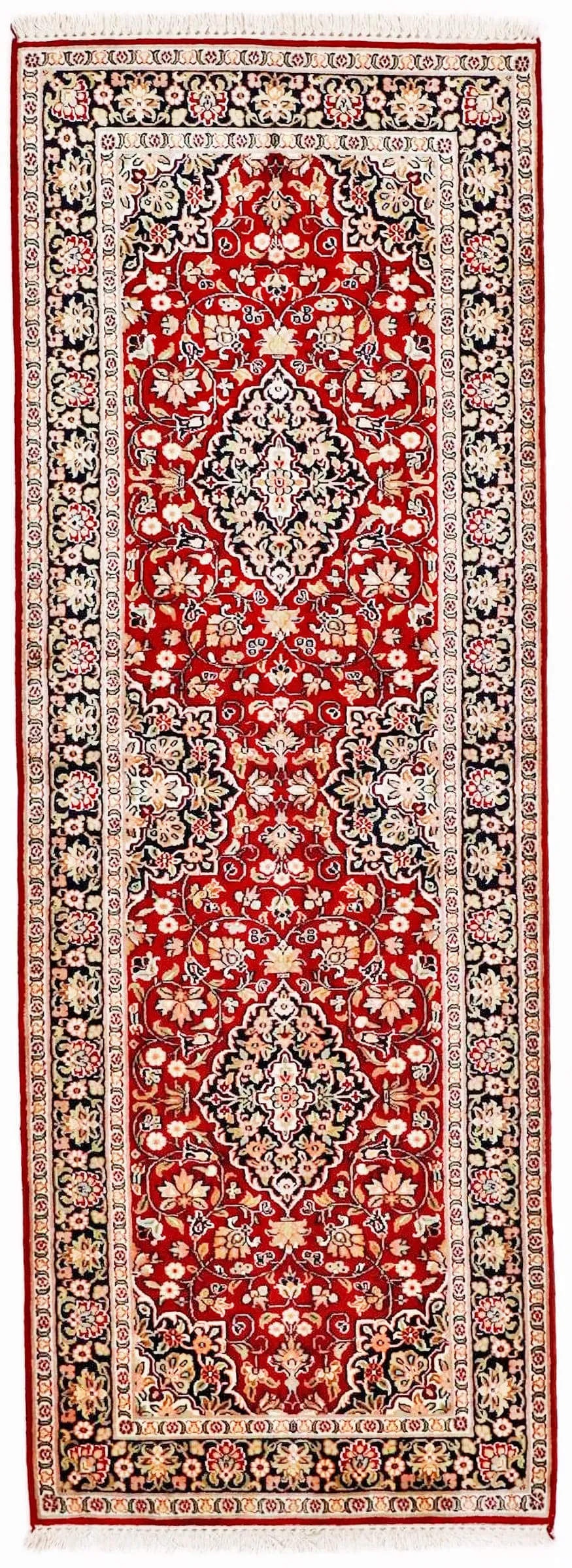
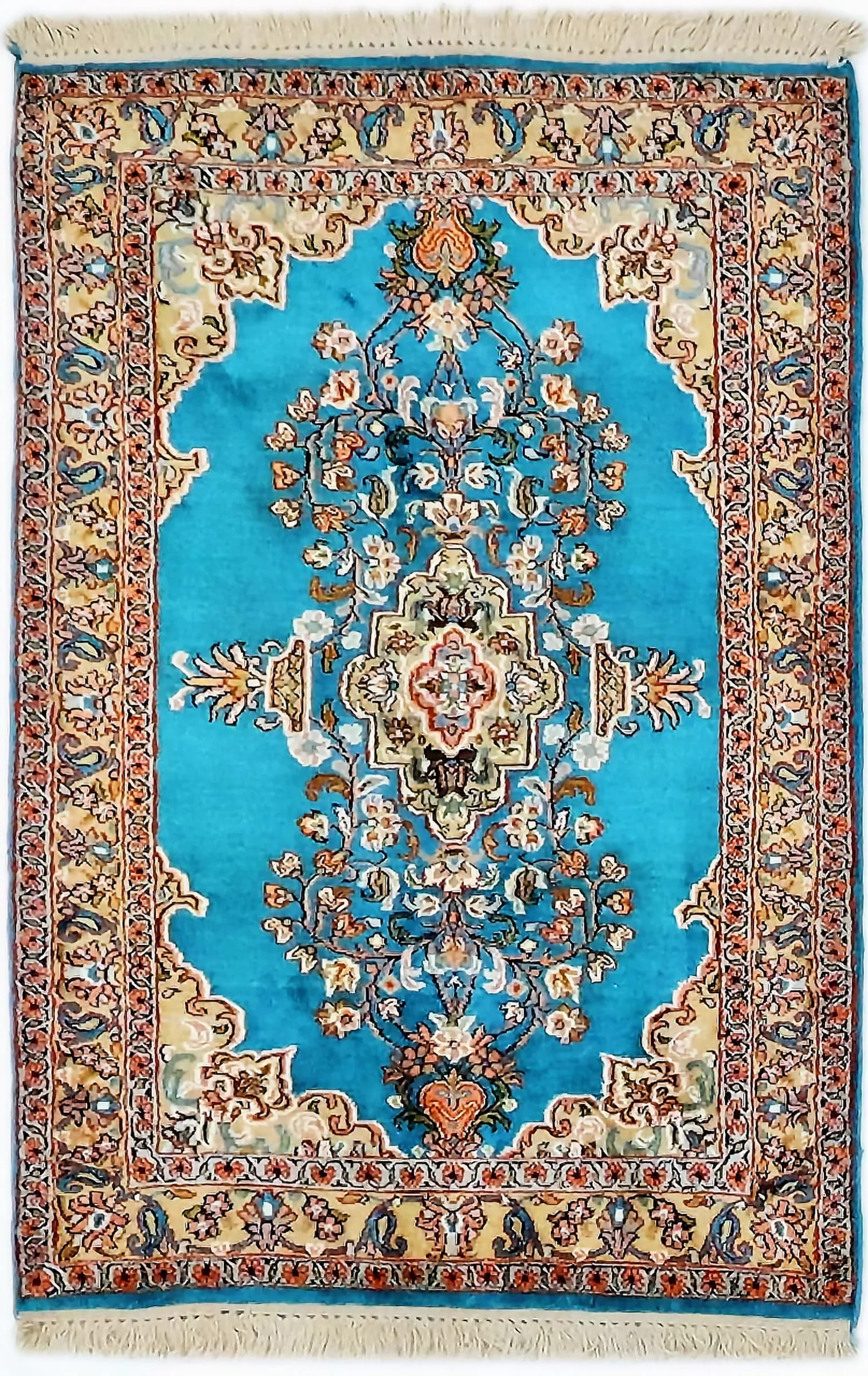
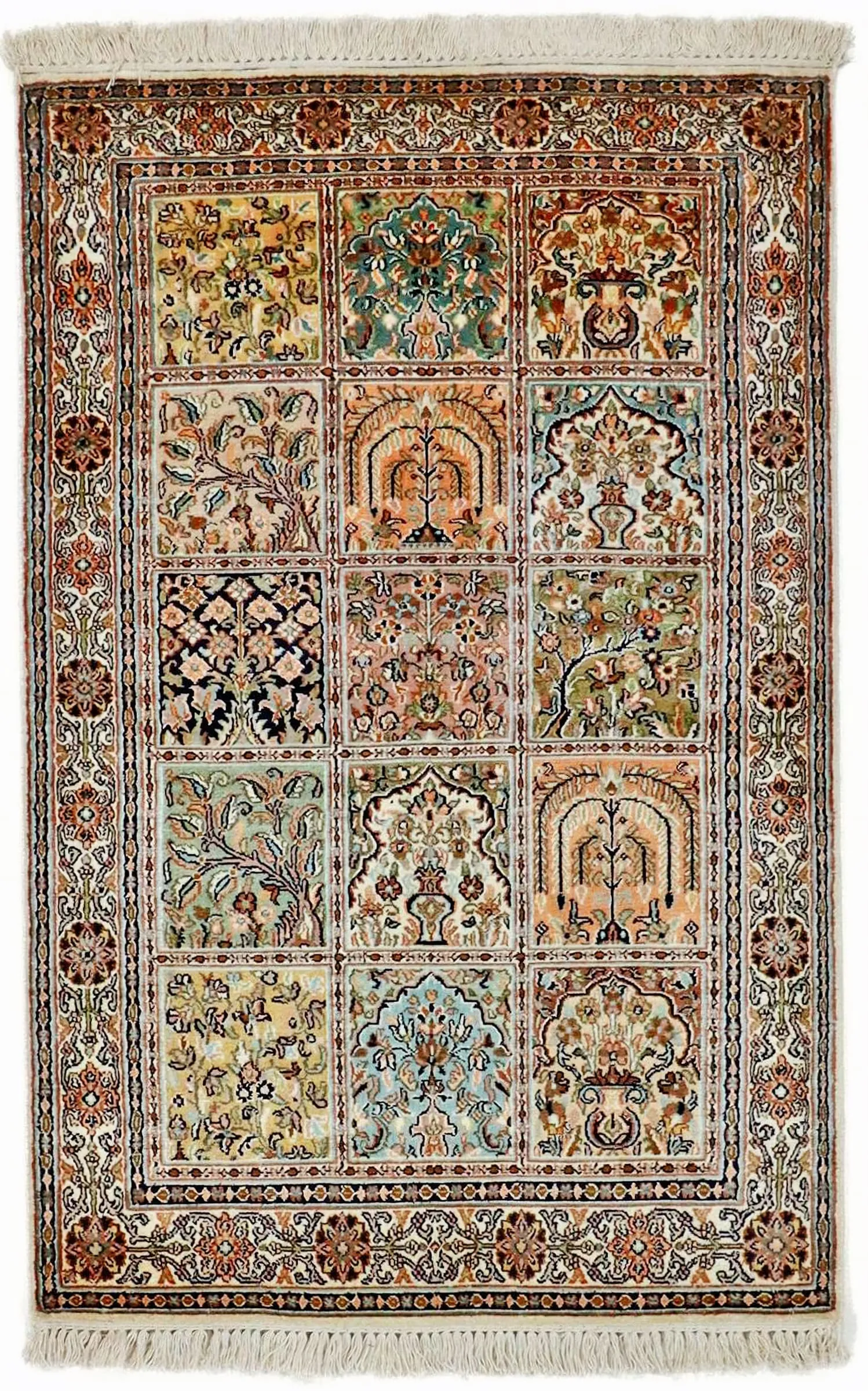
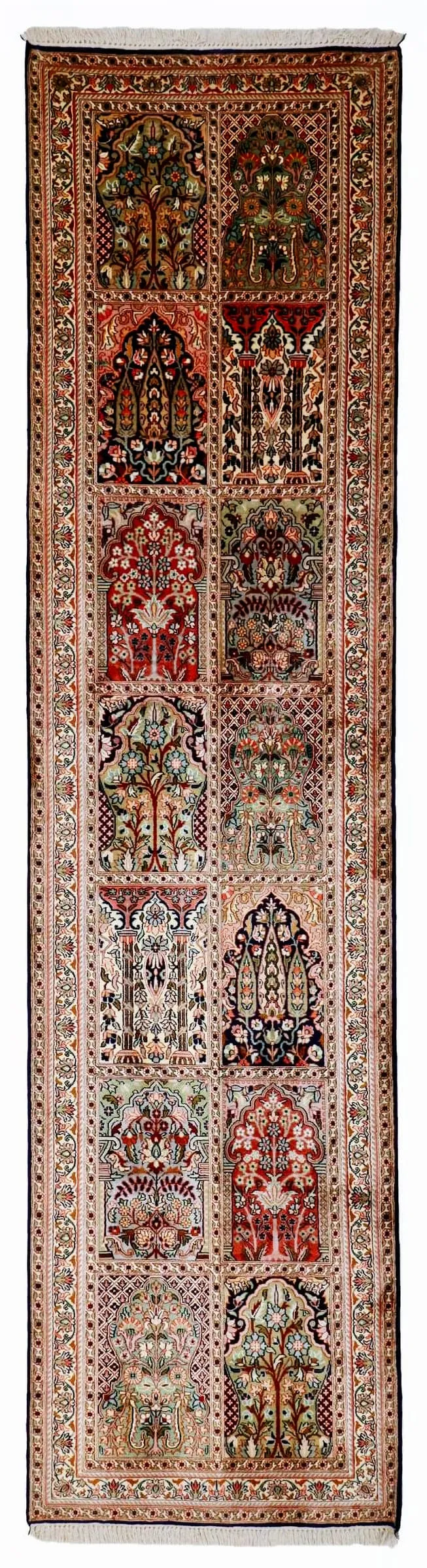
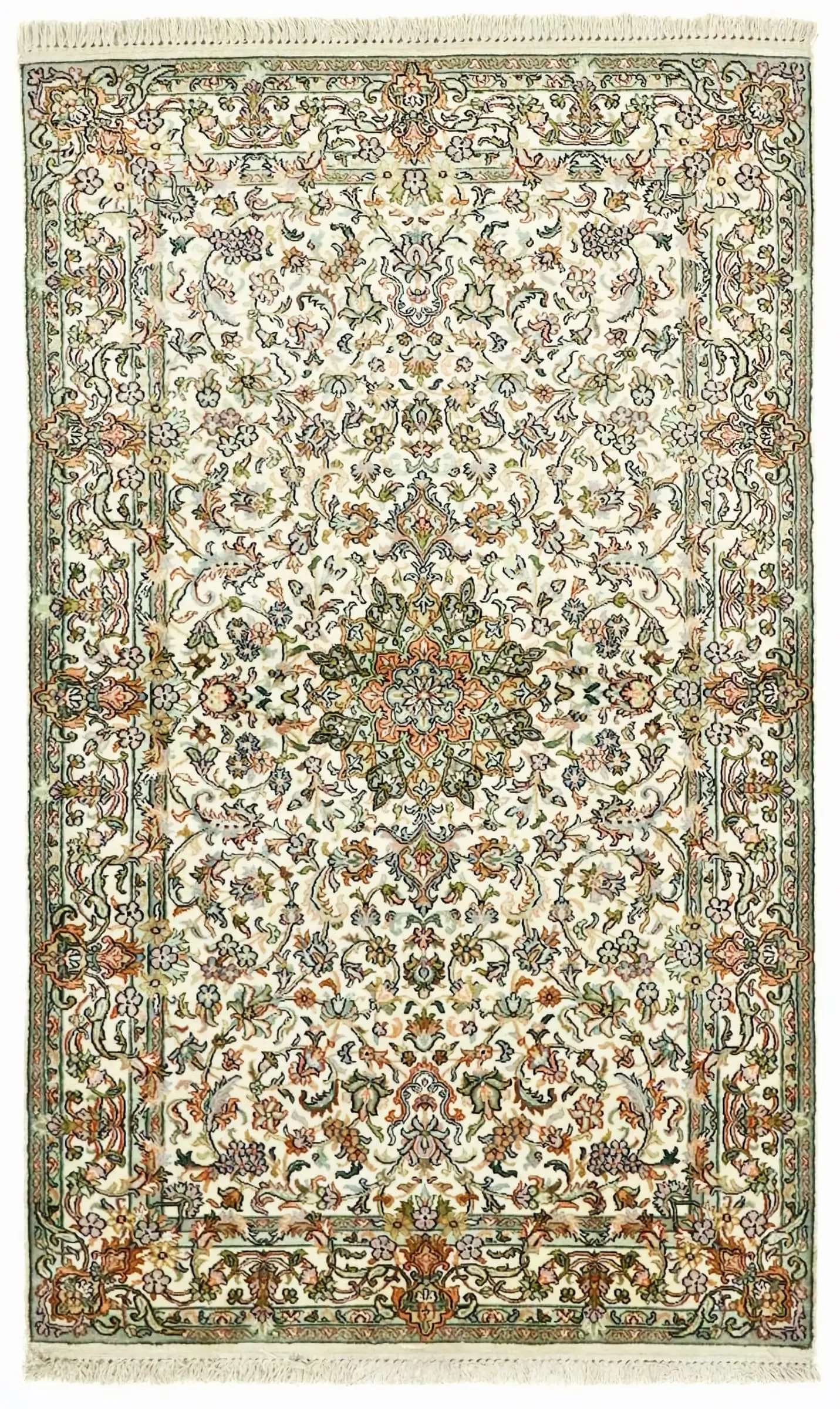
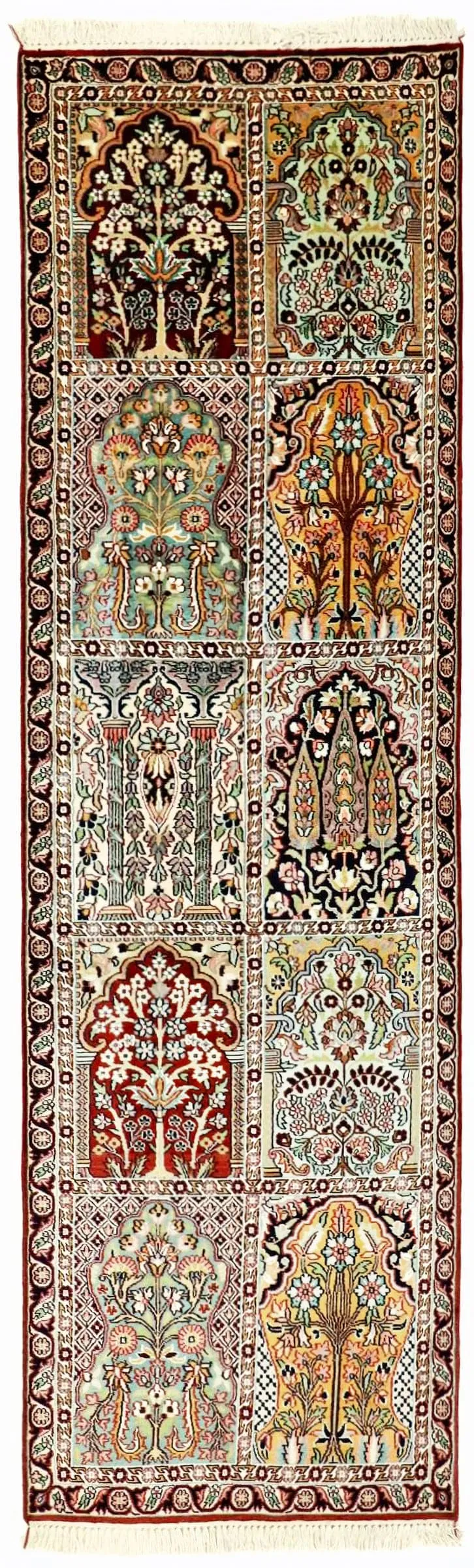
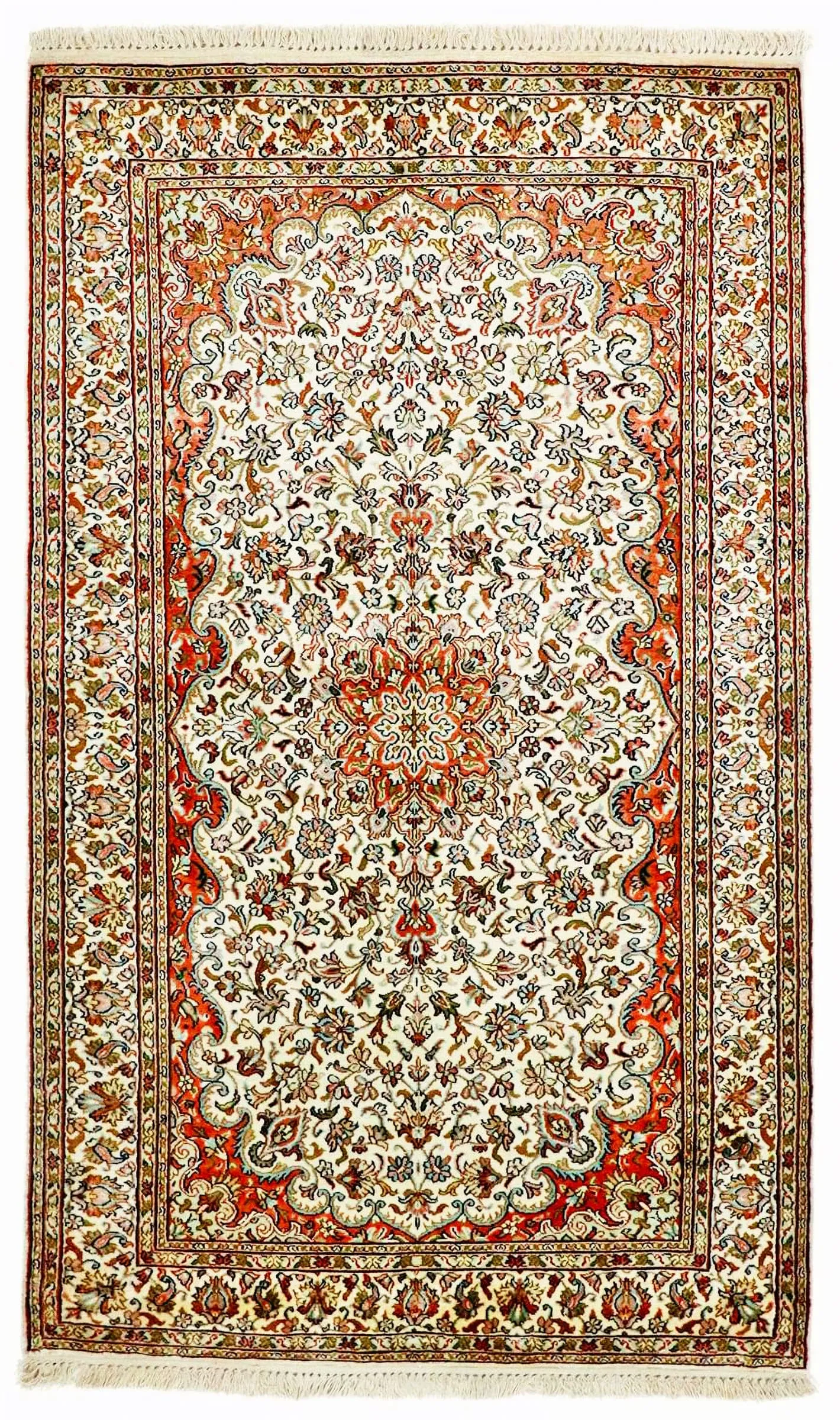
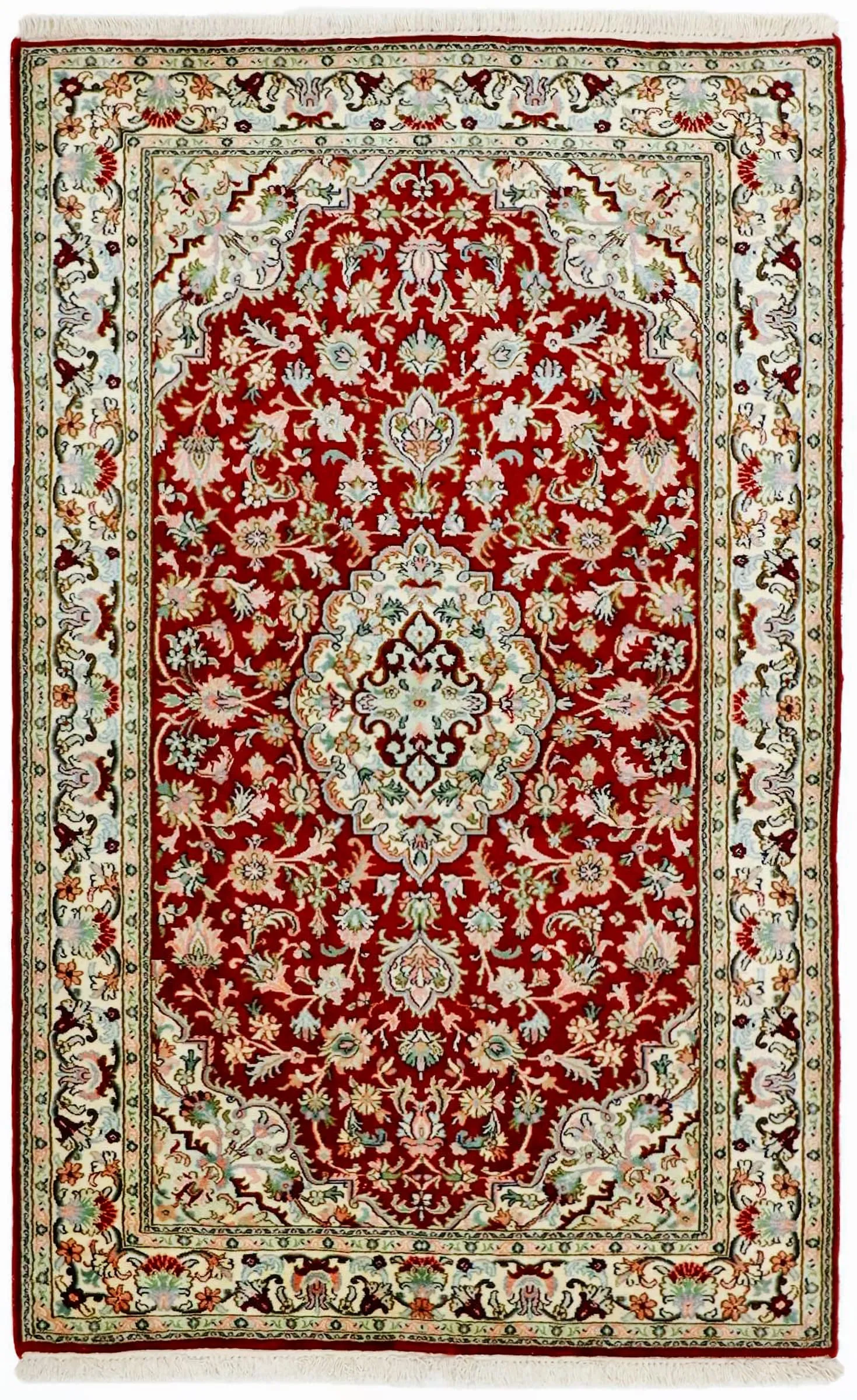
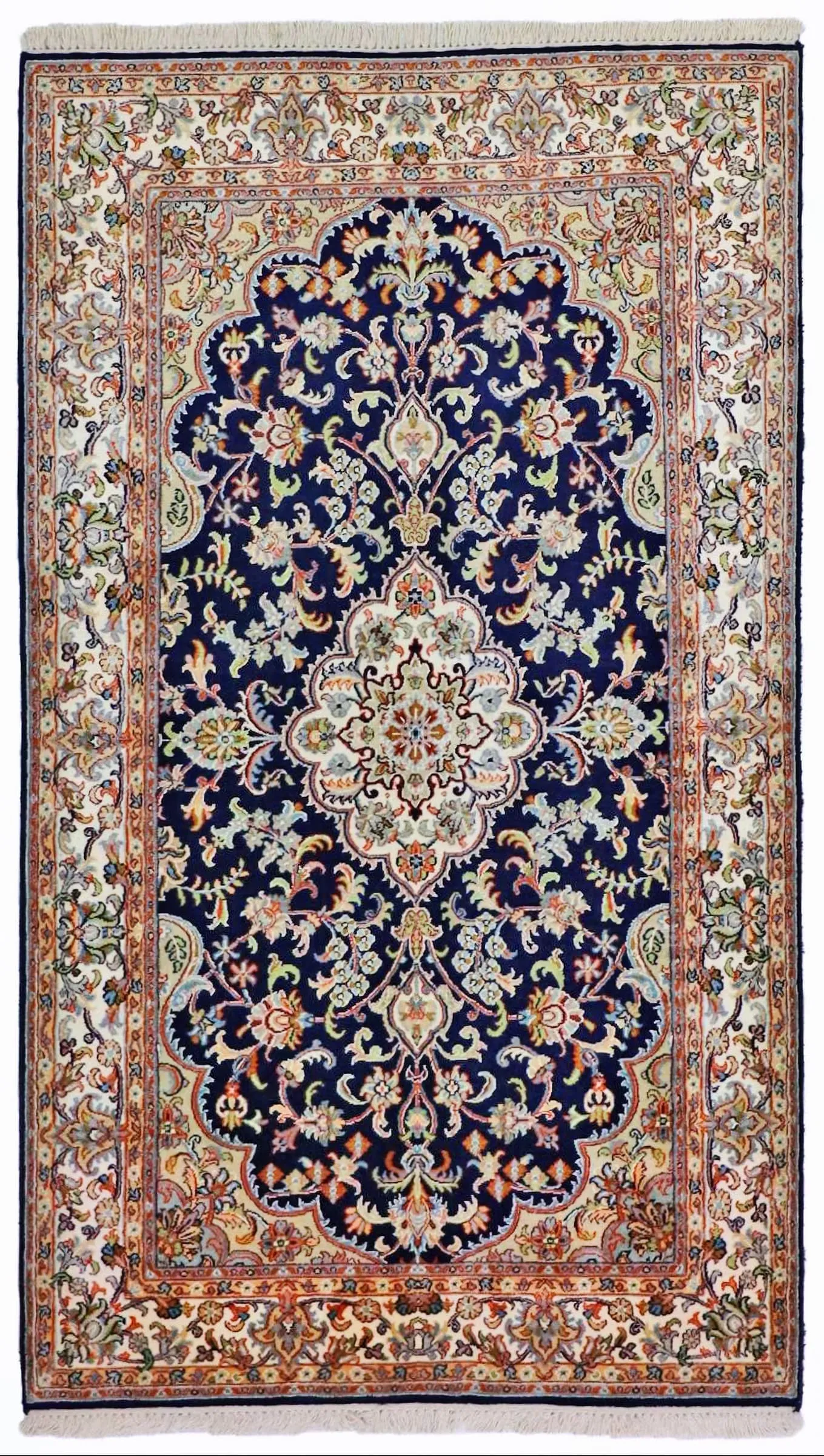
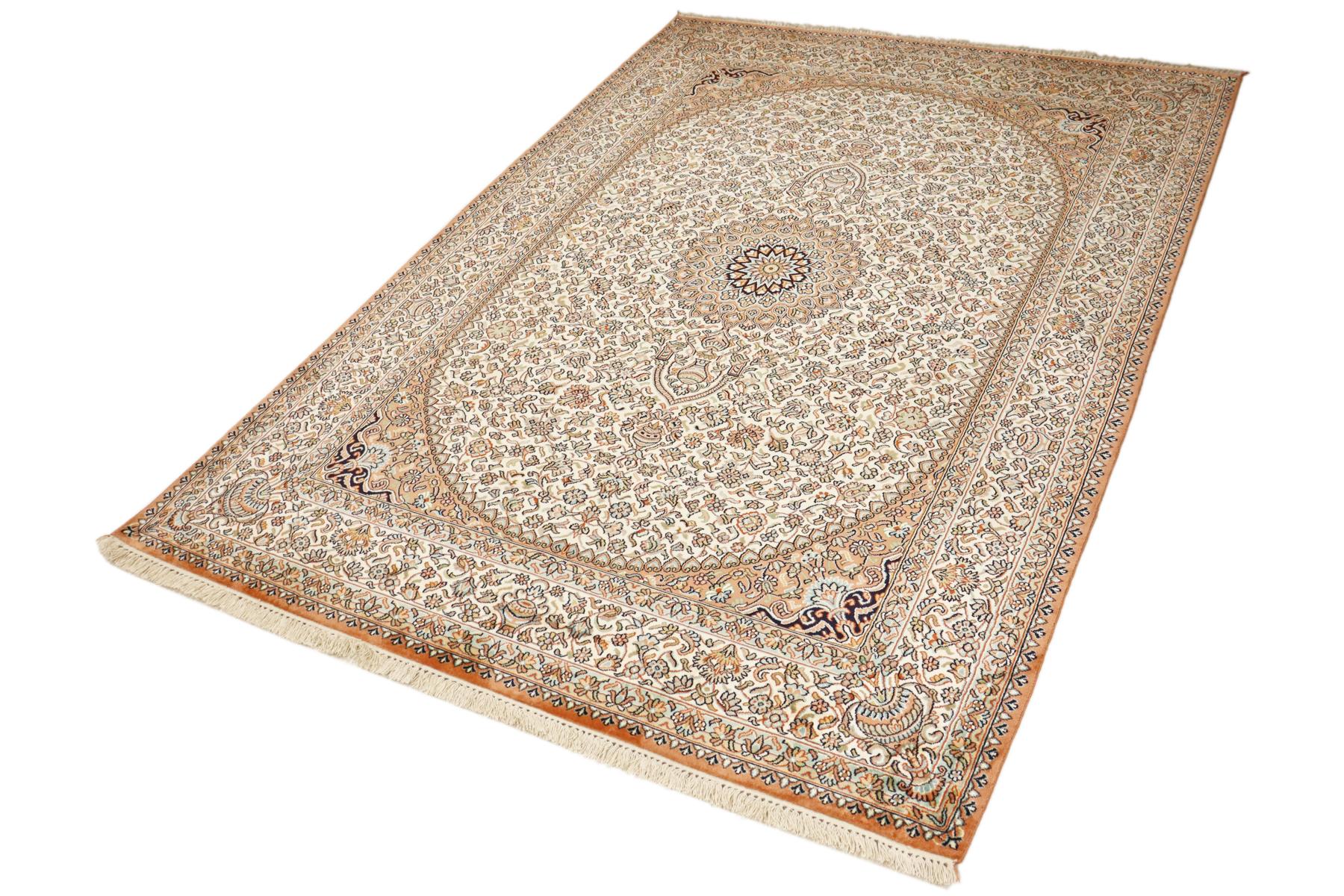
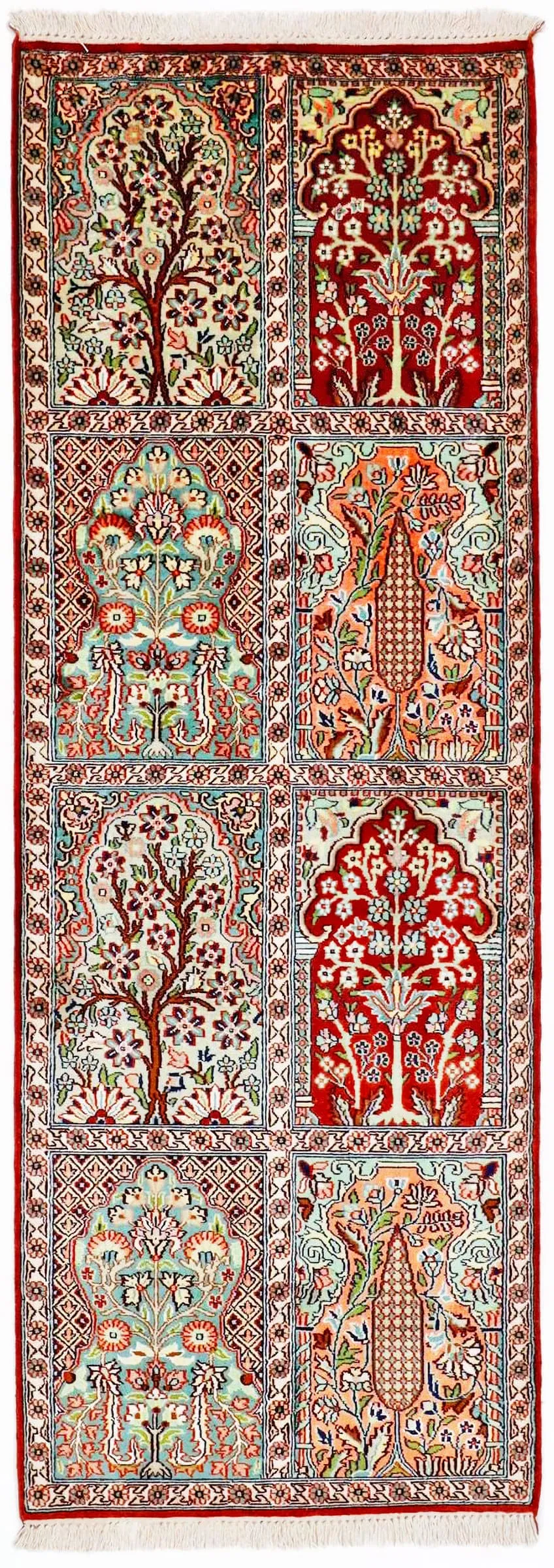
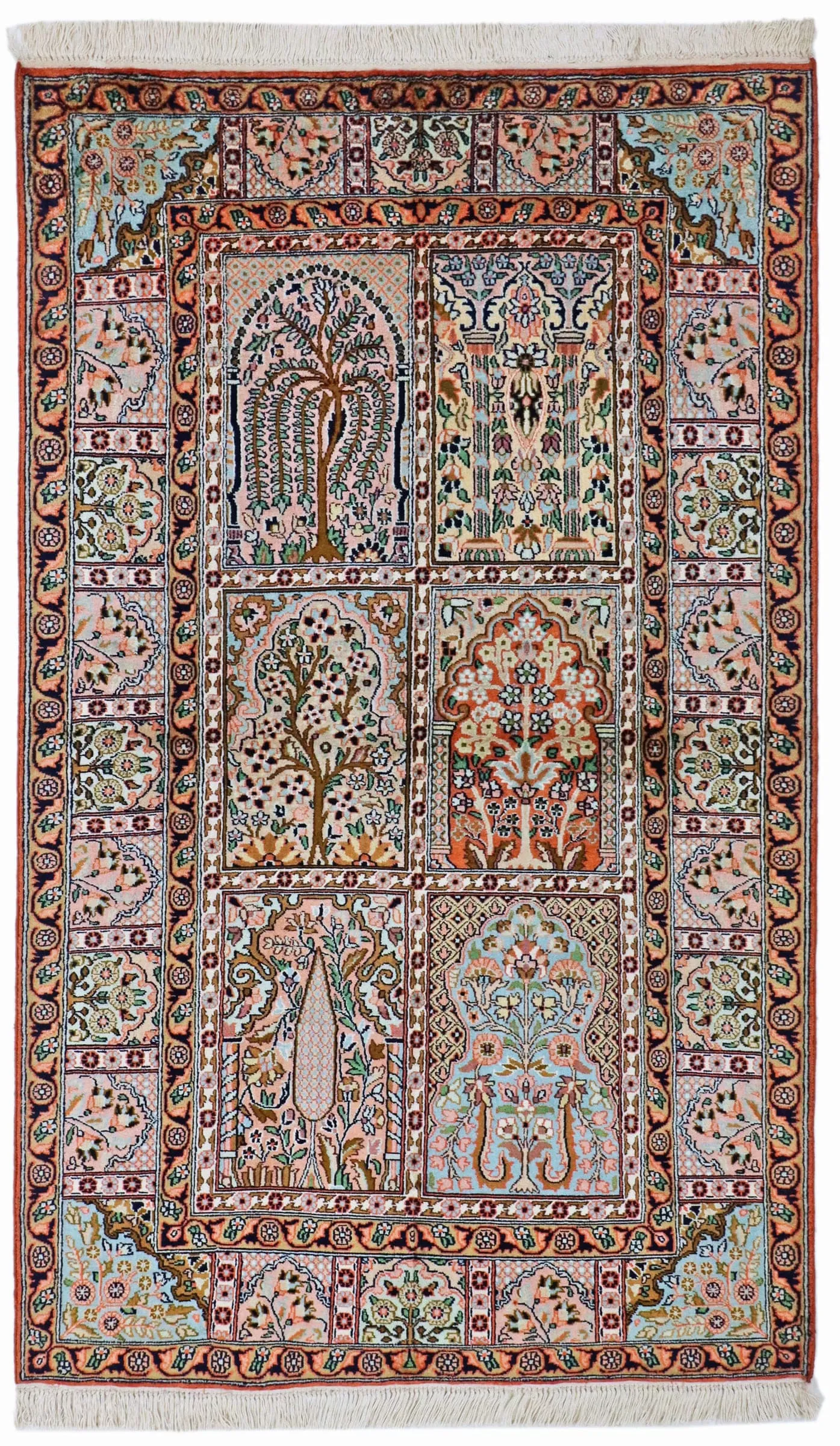
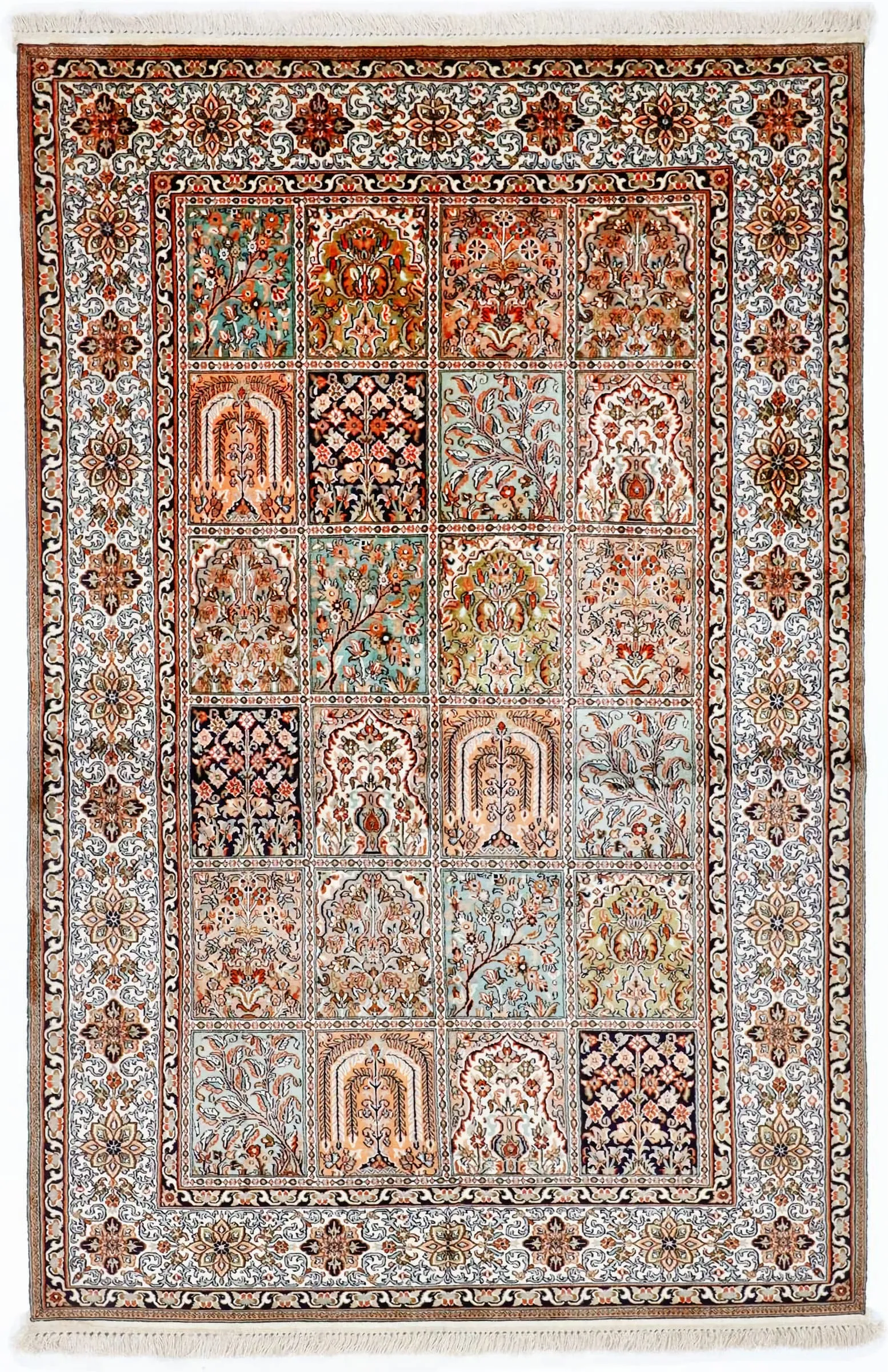
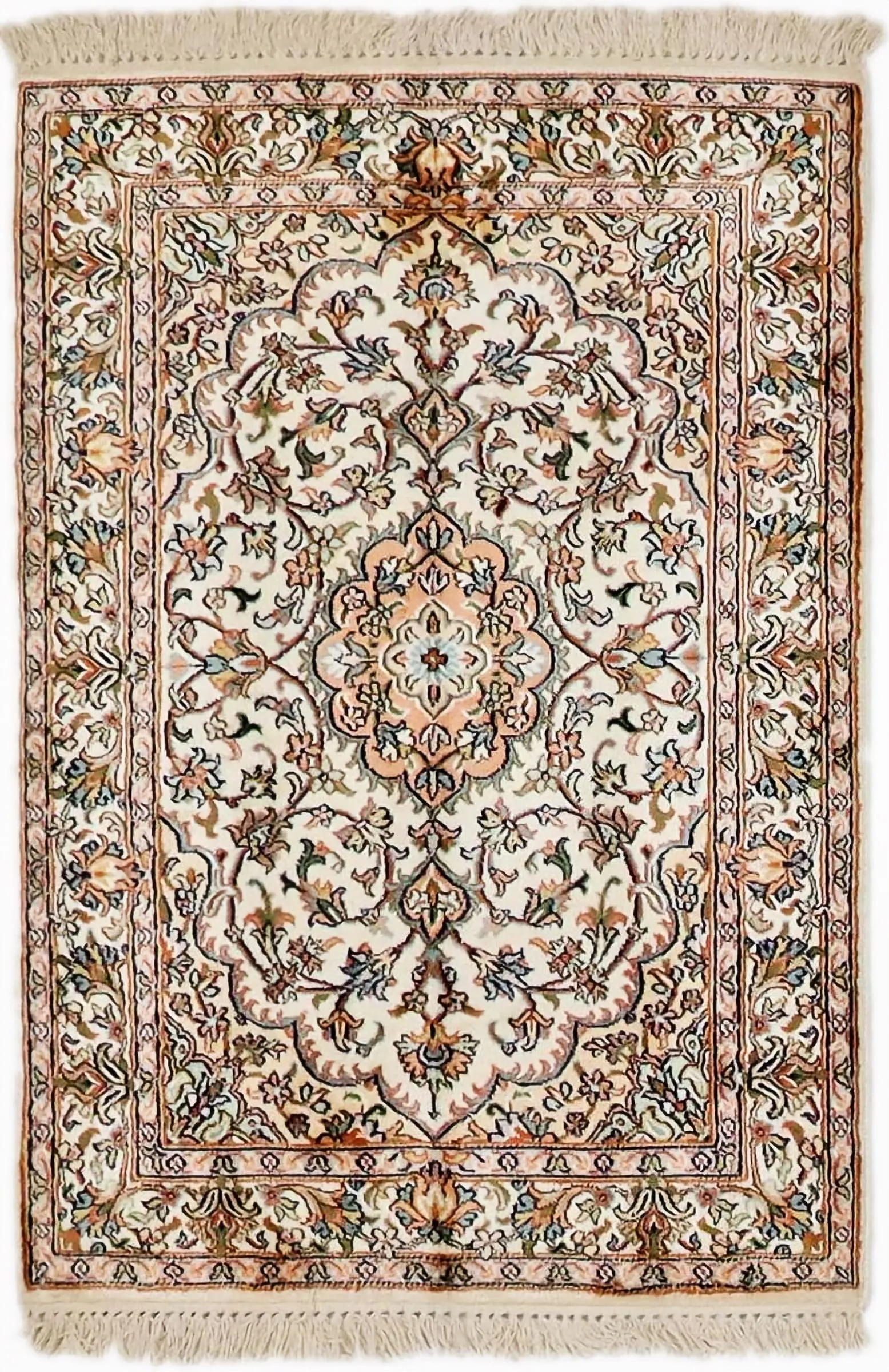
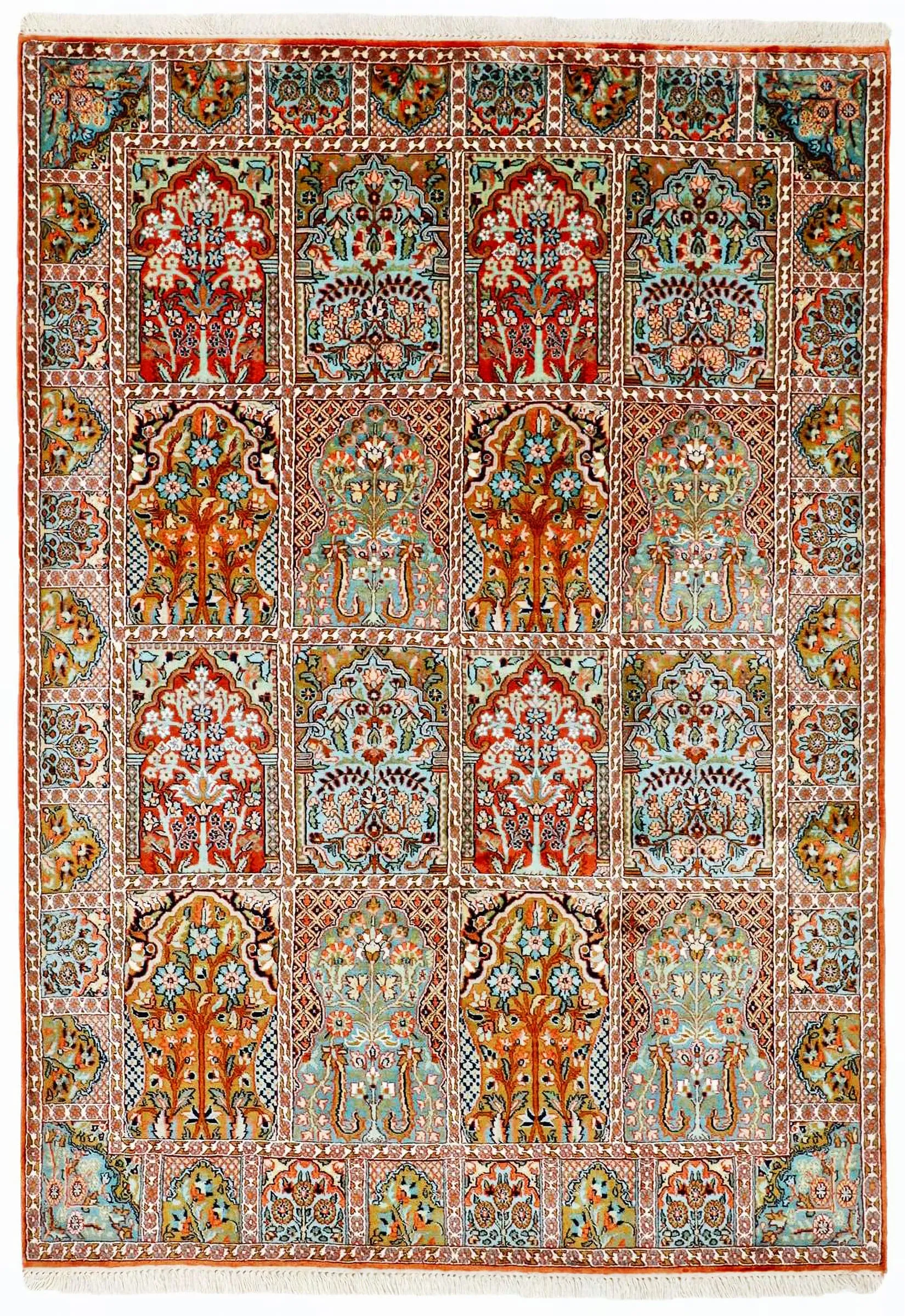
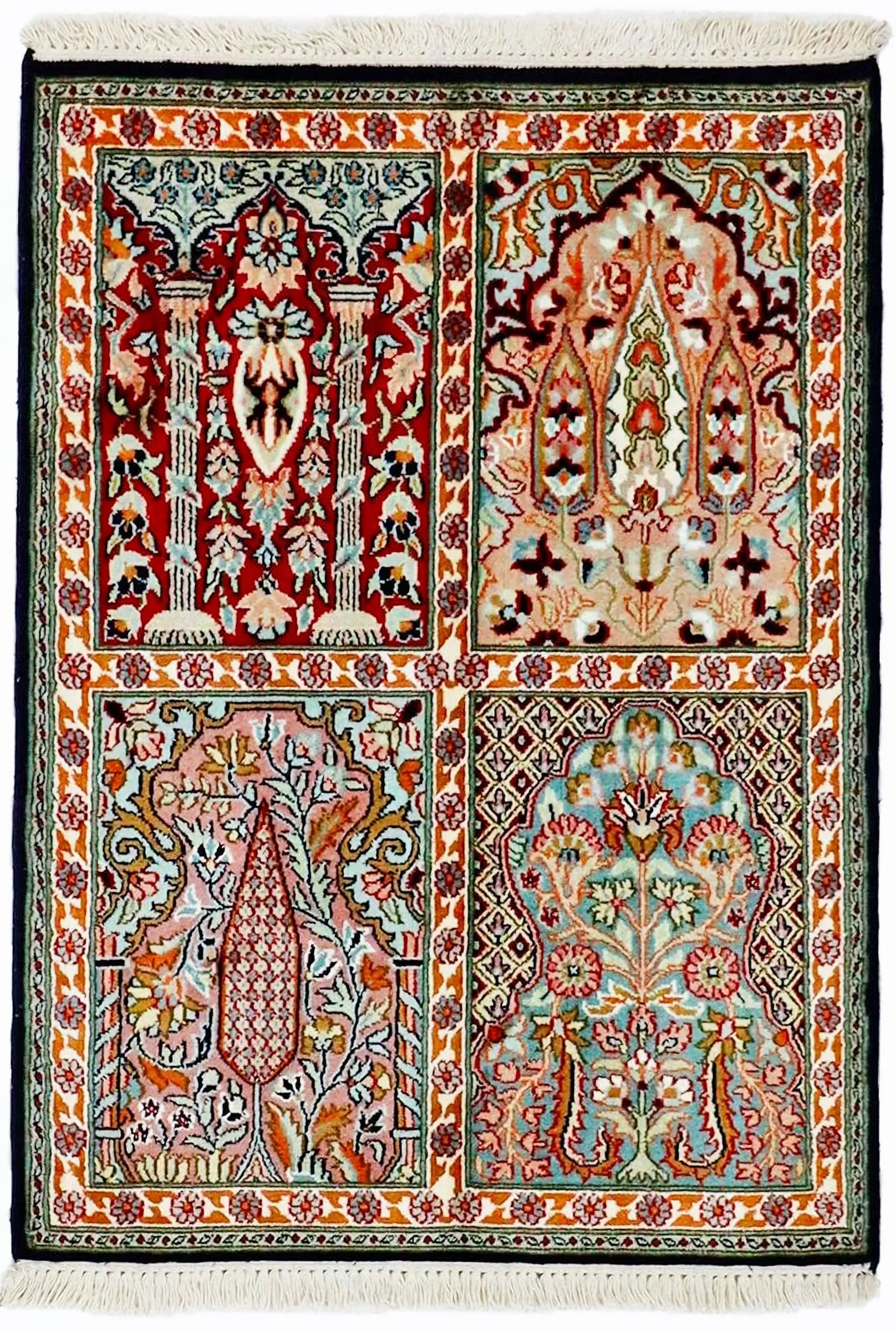
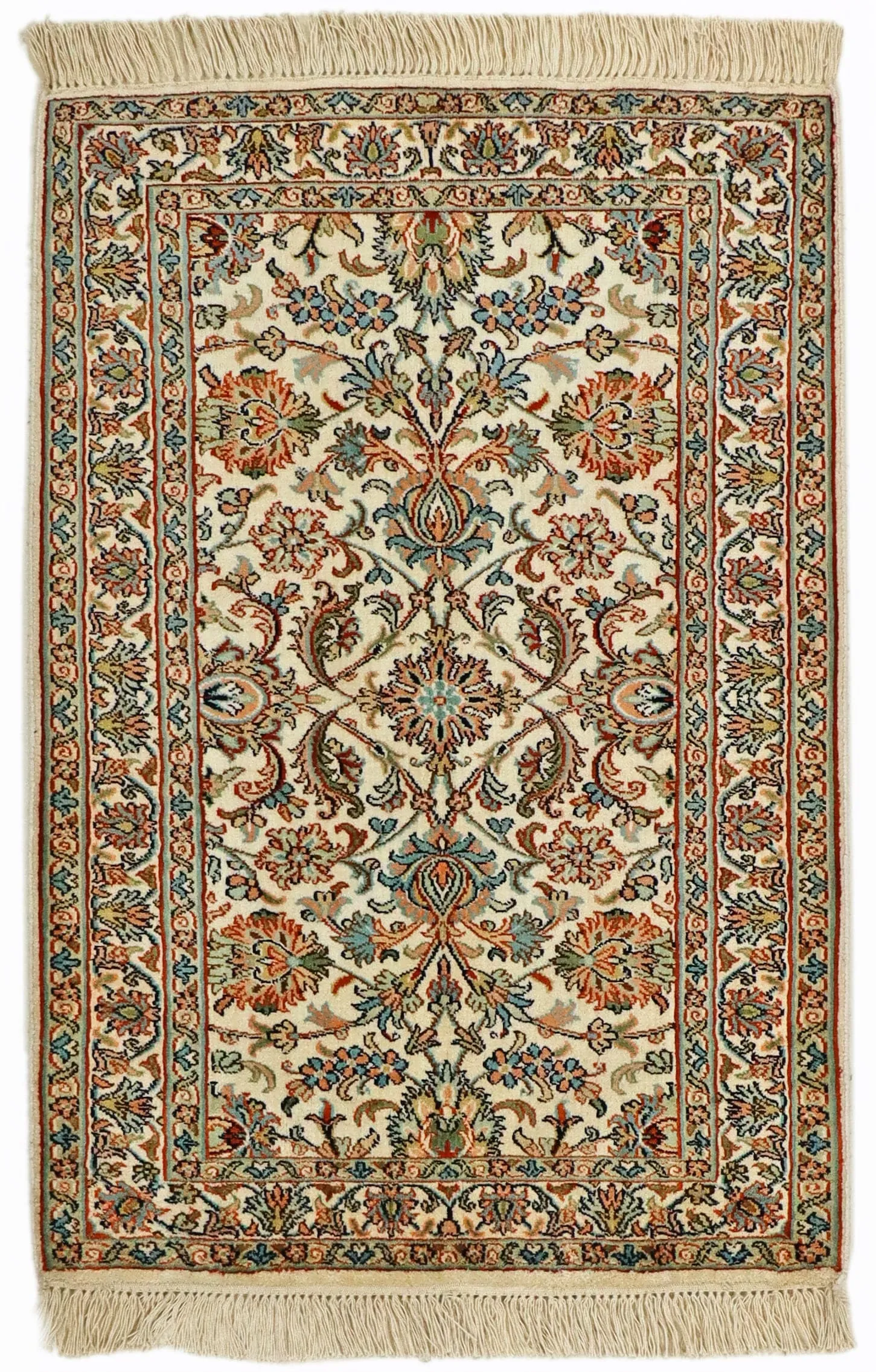
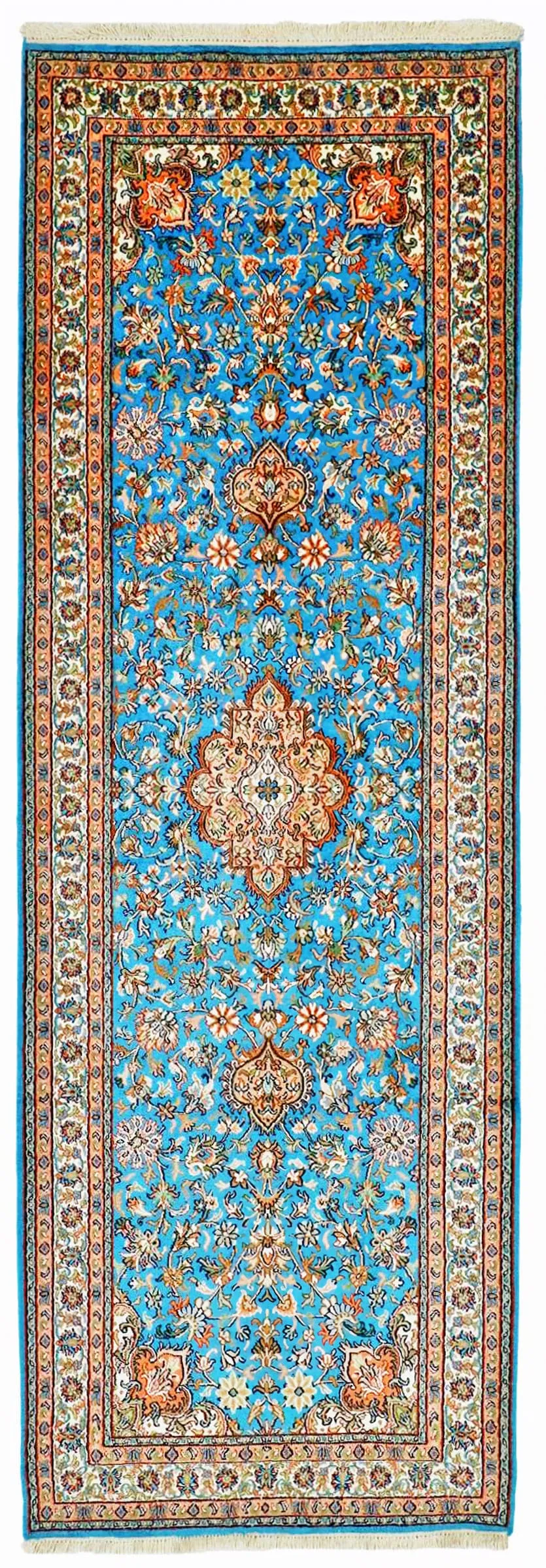
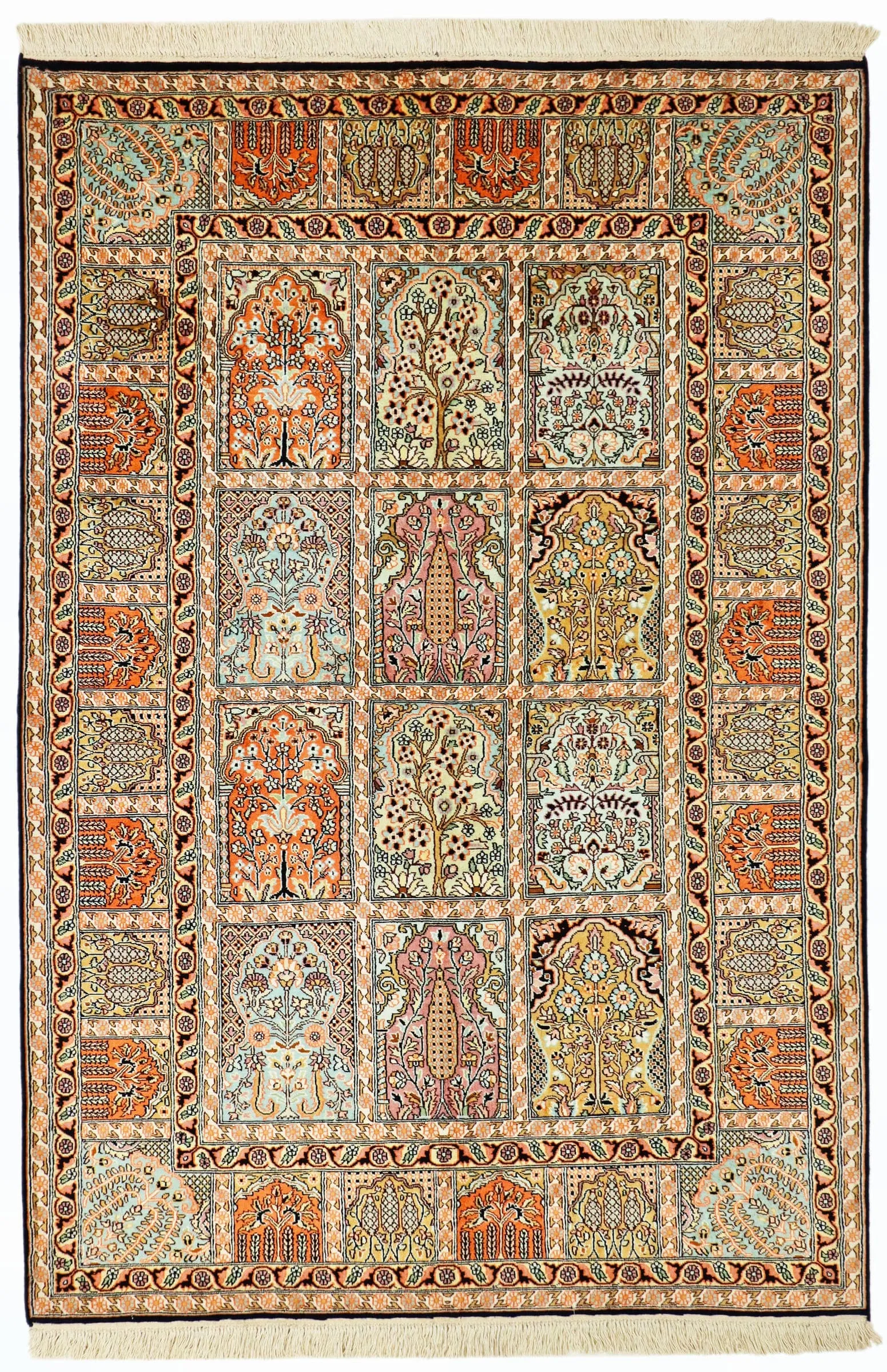

Hand-Knotted Construction
The individual knots are visible on the reverse. The fringes continue from the foundation warp and, on a hand-knotted rug, are not sewn on afterwards.
 Free shipping & returns
 31-day return policy
Free shipping & returns
31-day return policy
Free shipping & returns
31-day return policy
Free shipping & returns
31-day return policy
Free Shipping & Returns
31-Day Return Policy
31-day return policy
Free shipping & returns
31-day return policy
Free shipping & returns
31-day return policy
Free shipping & returns
31-day return policy
Free Shipping & Returns
31-Day Return Policy

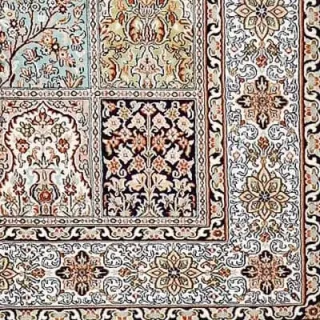
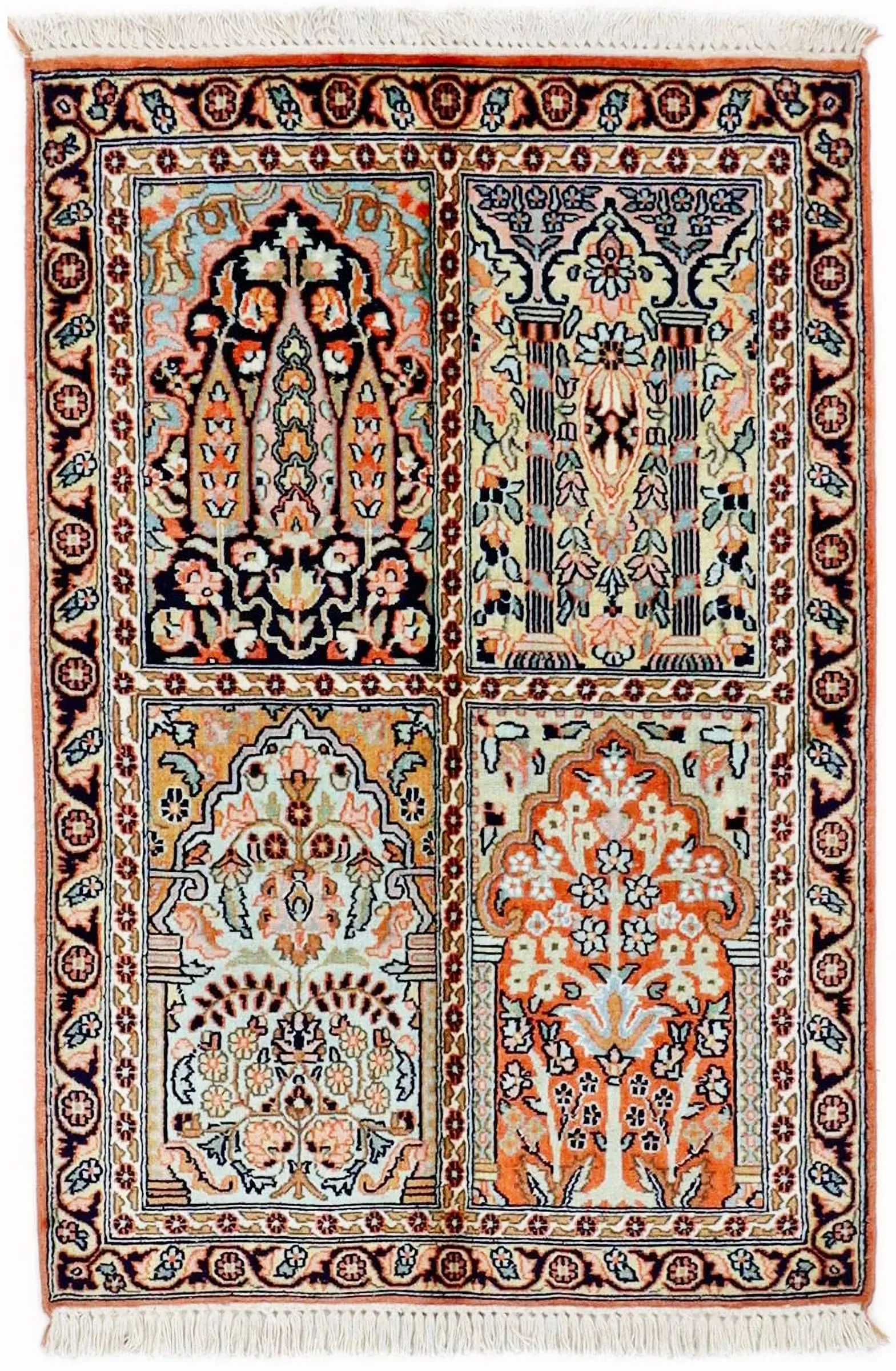
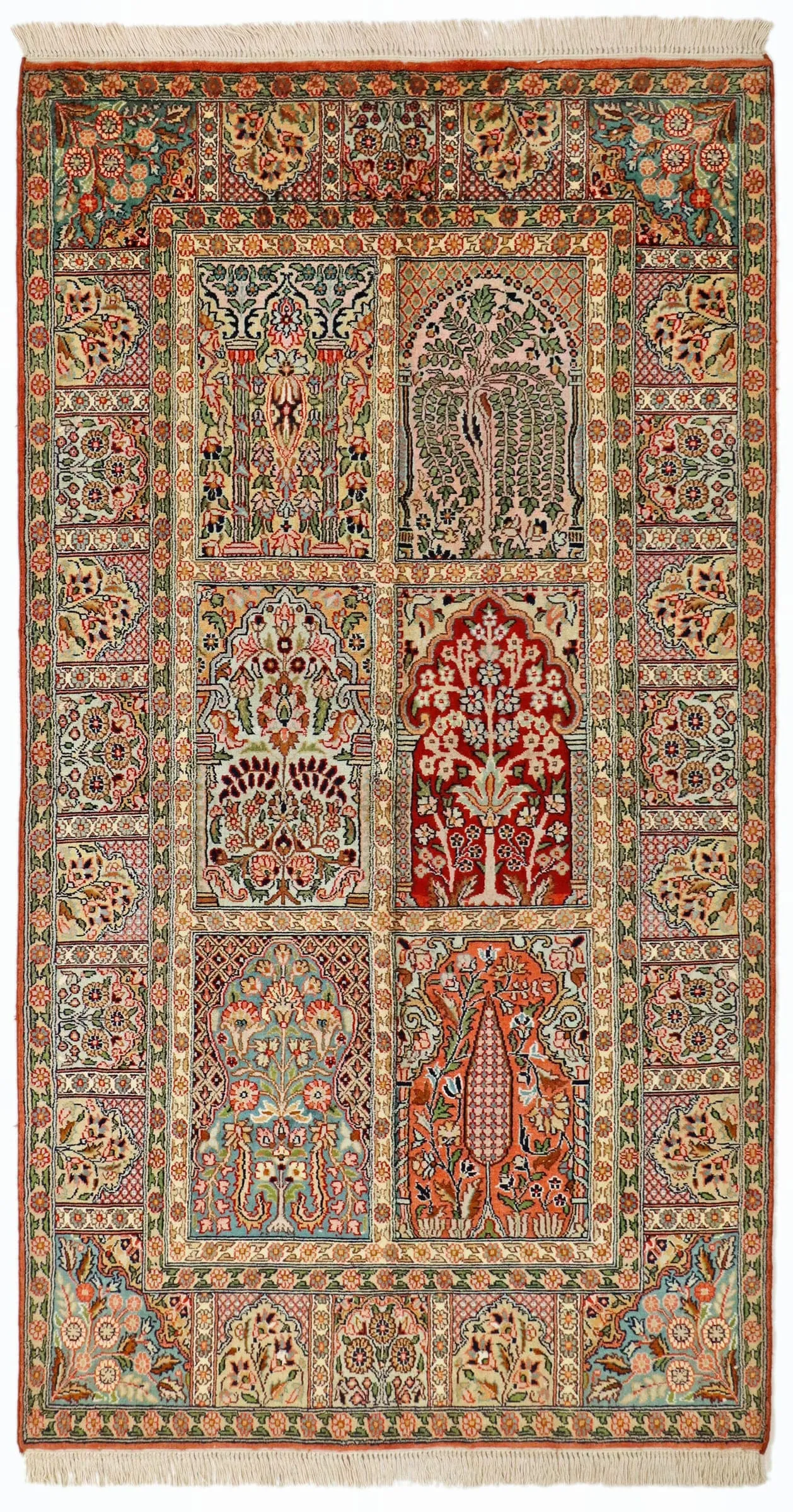
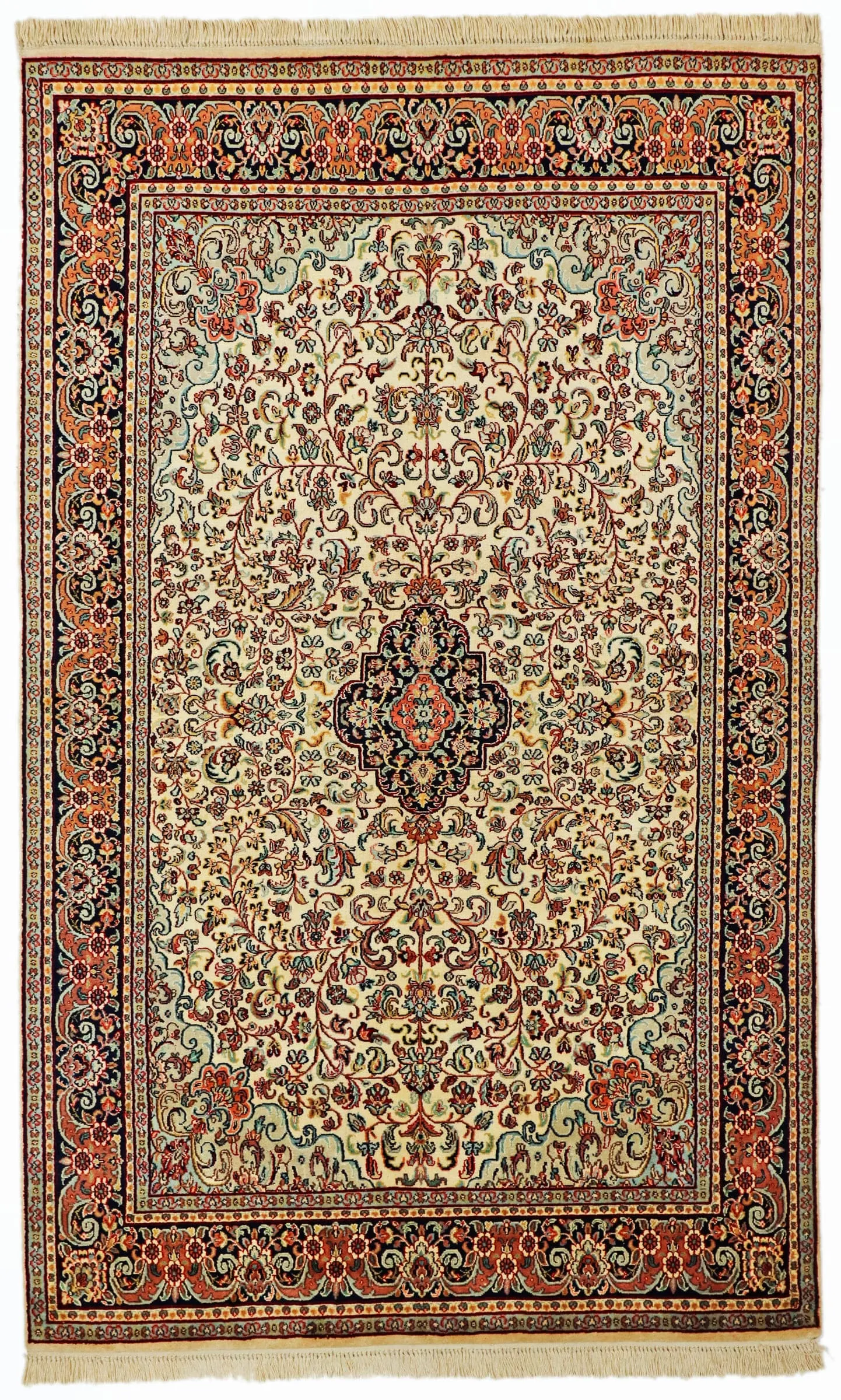
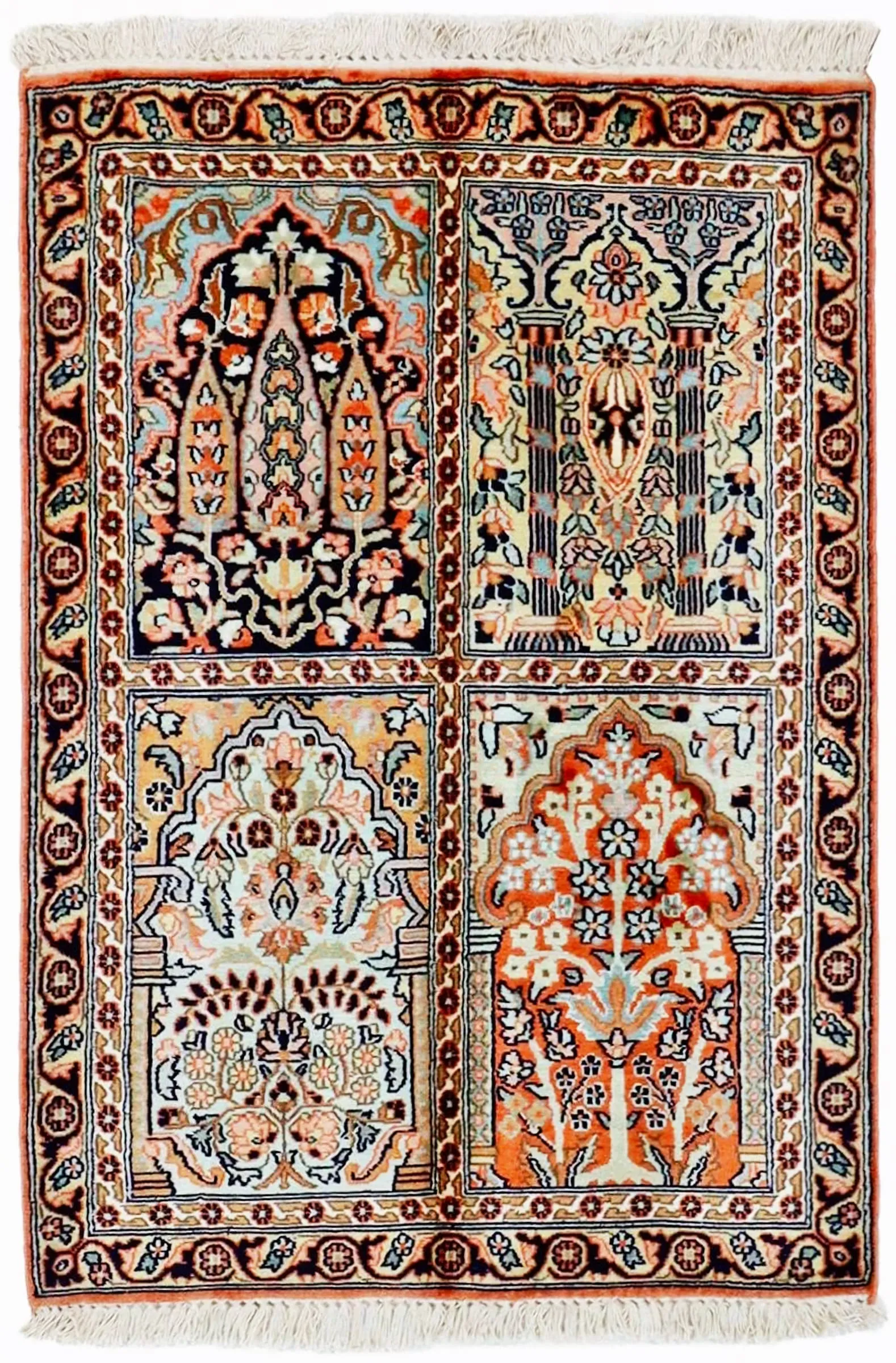
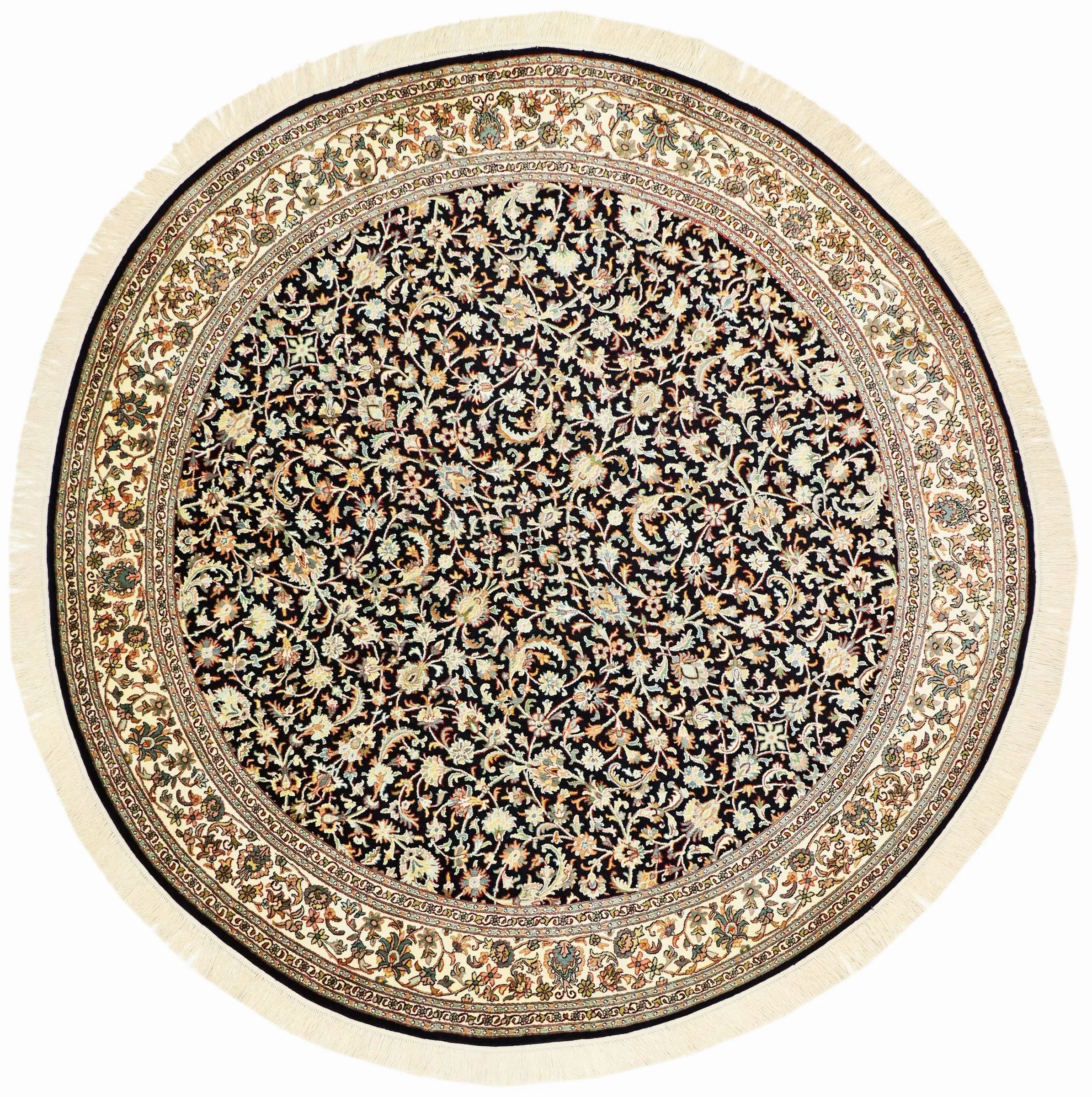
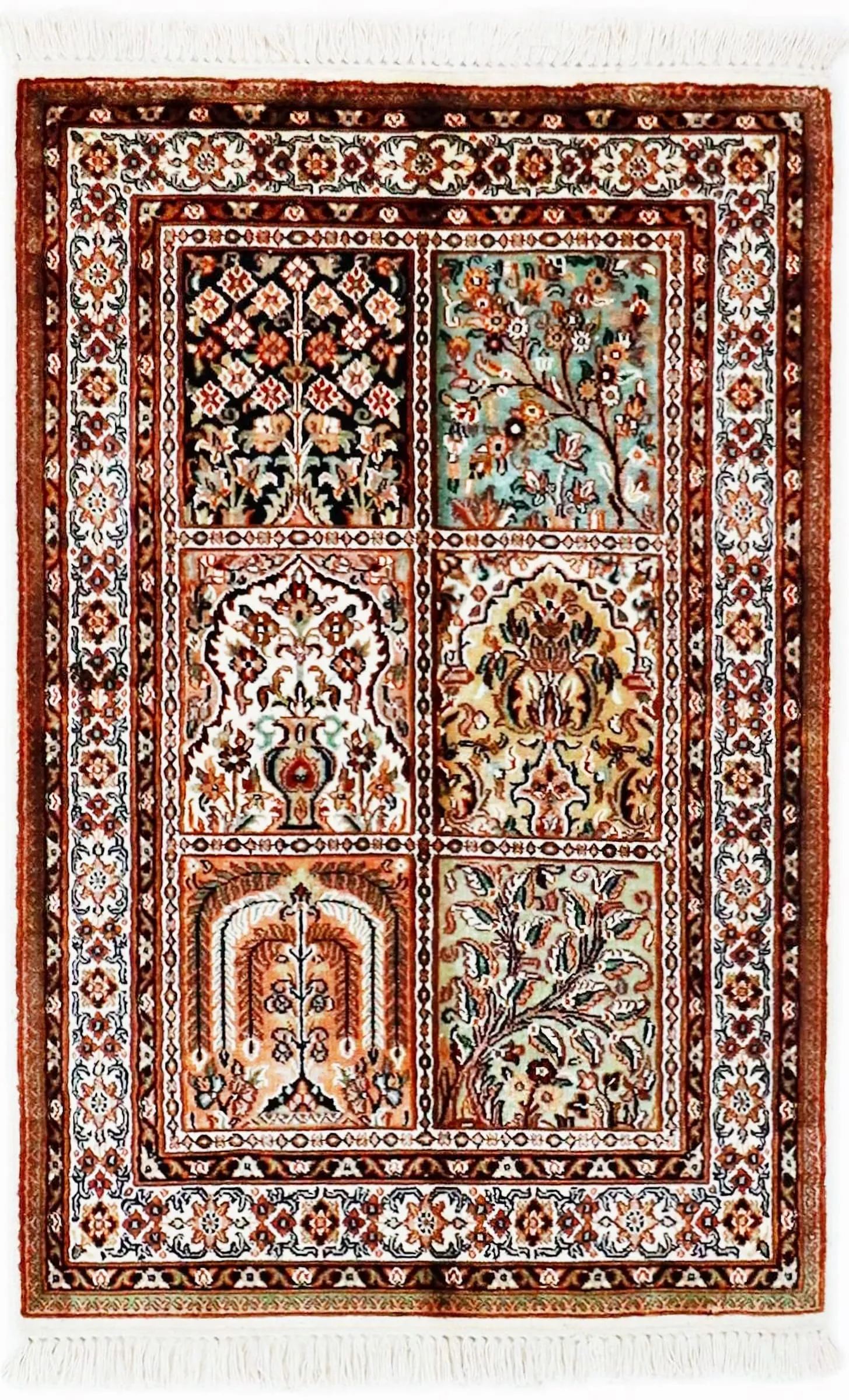
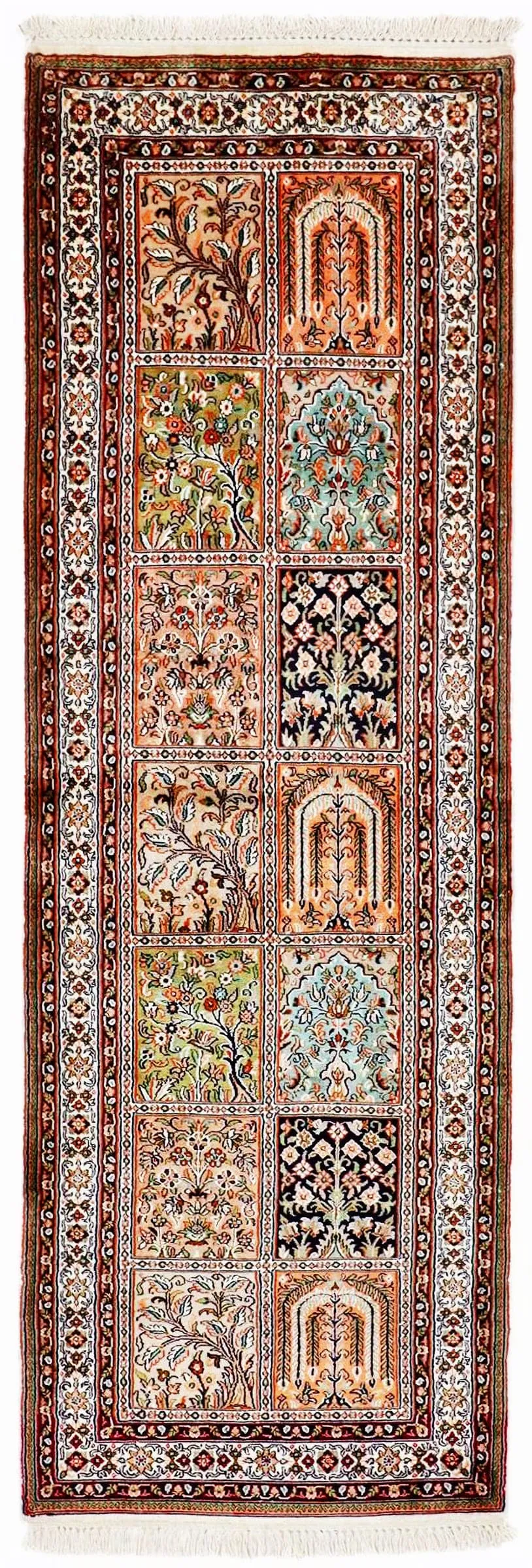
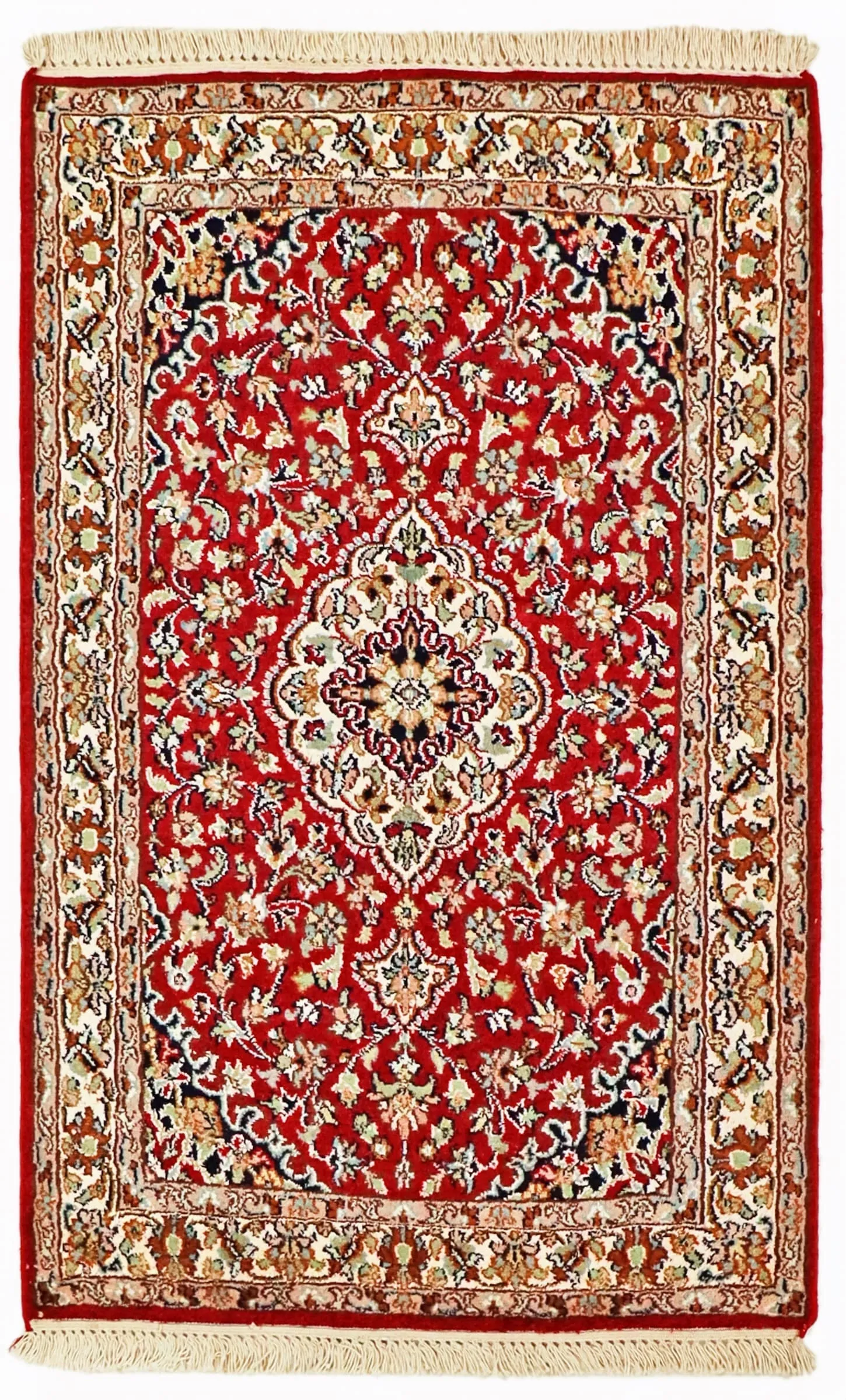
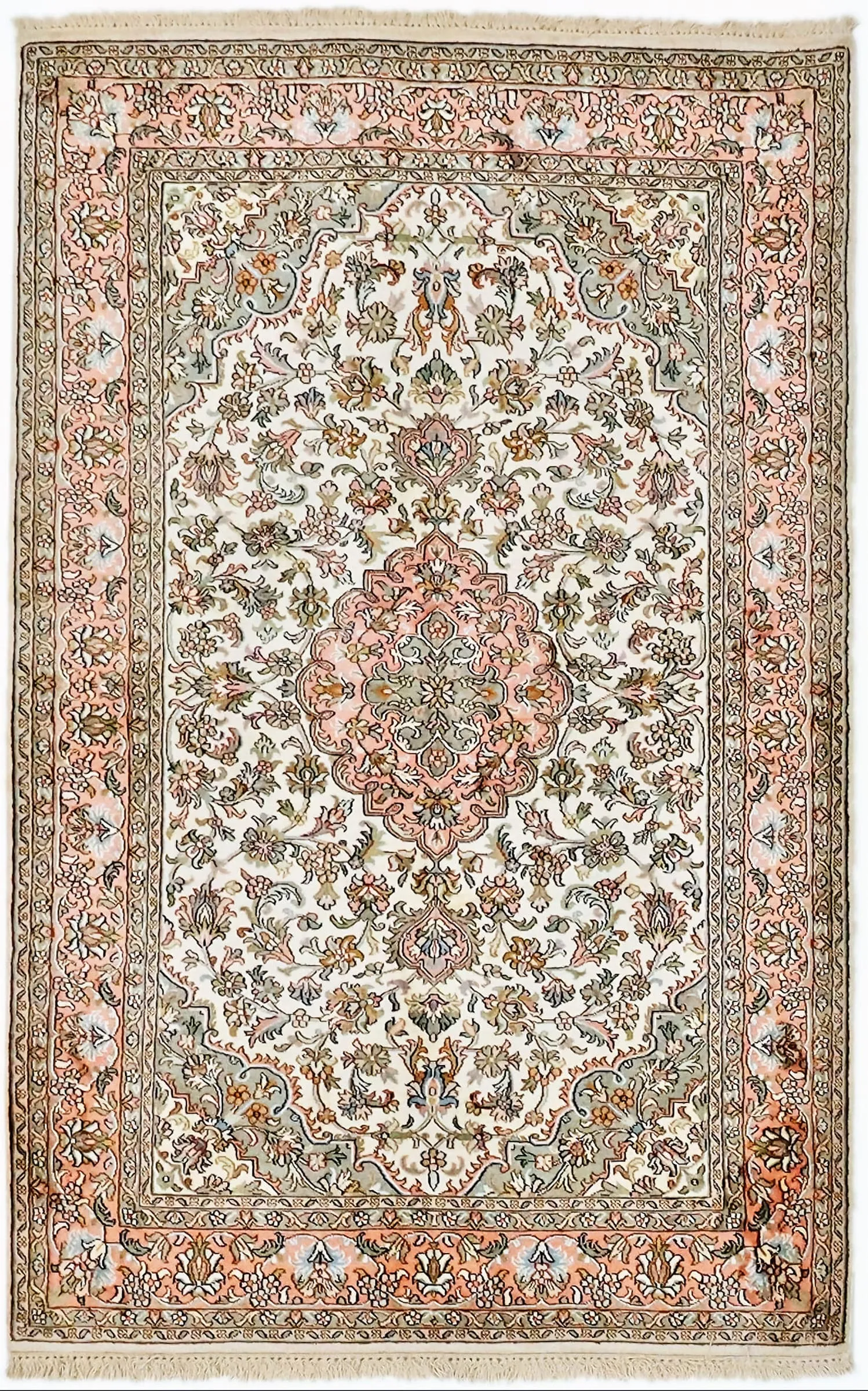
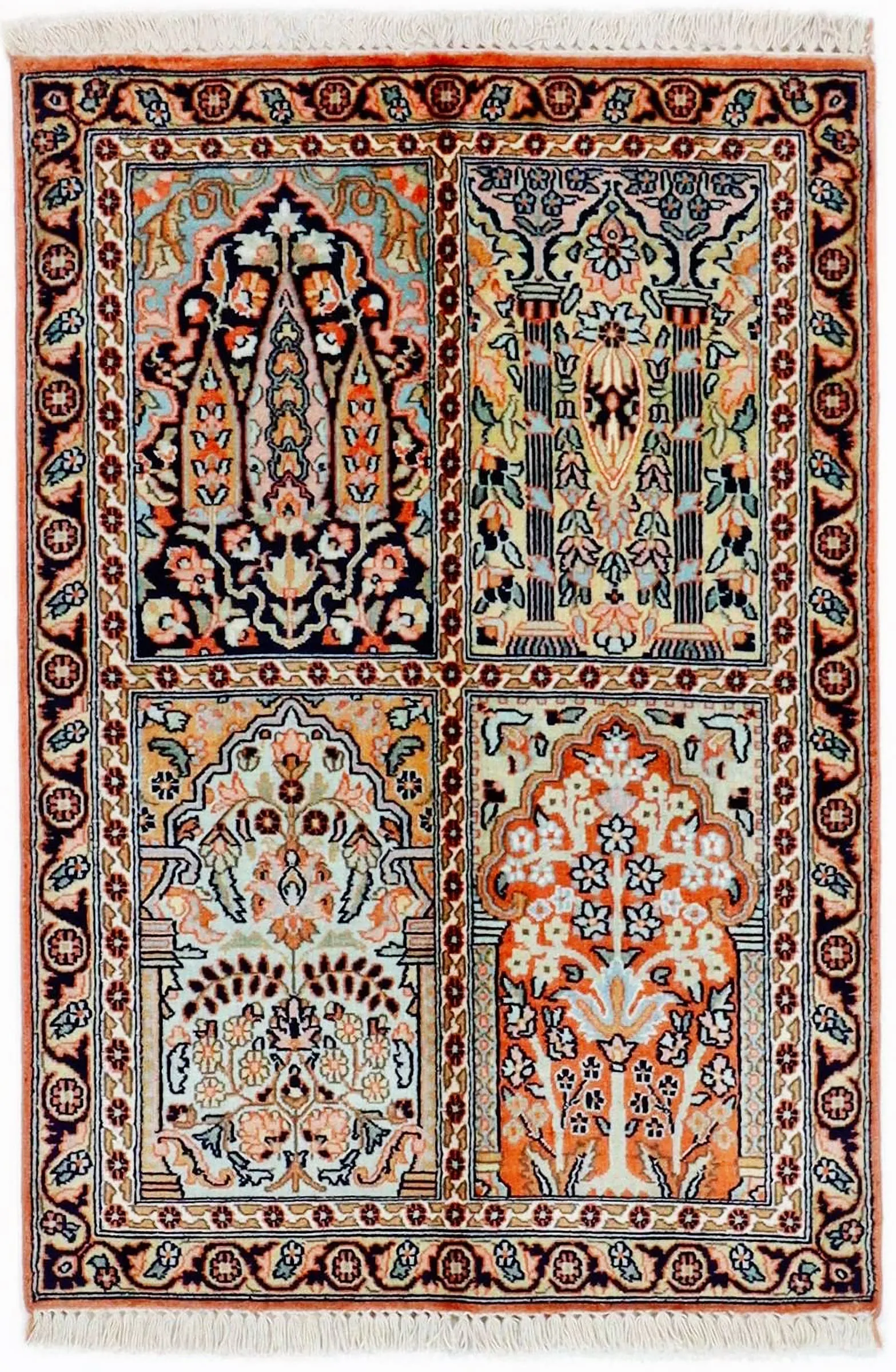
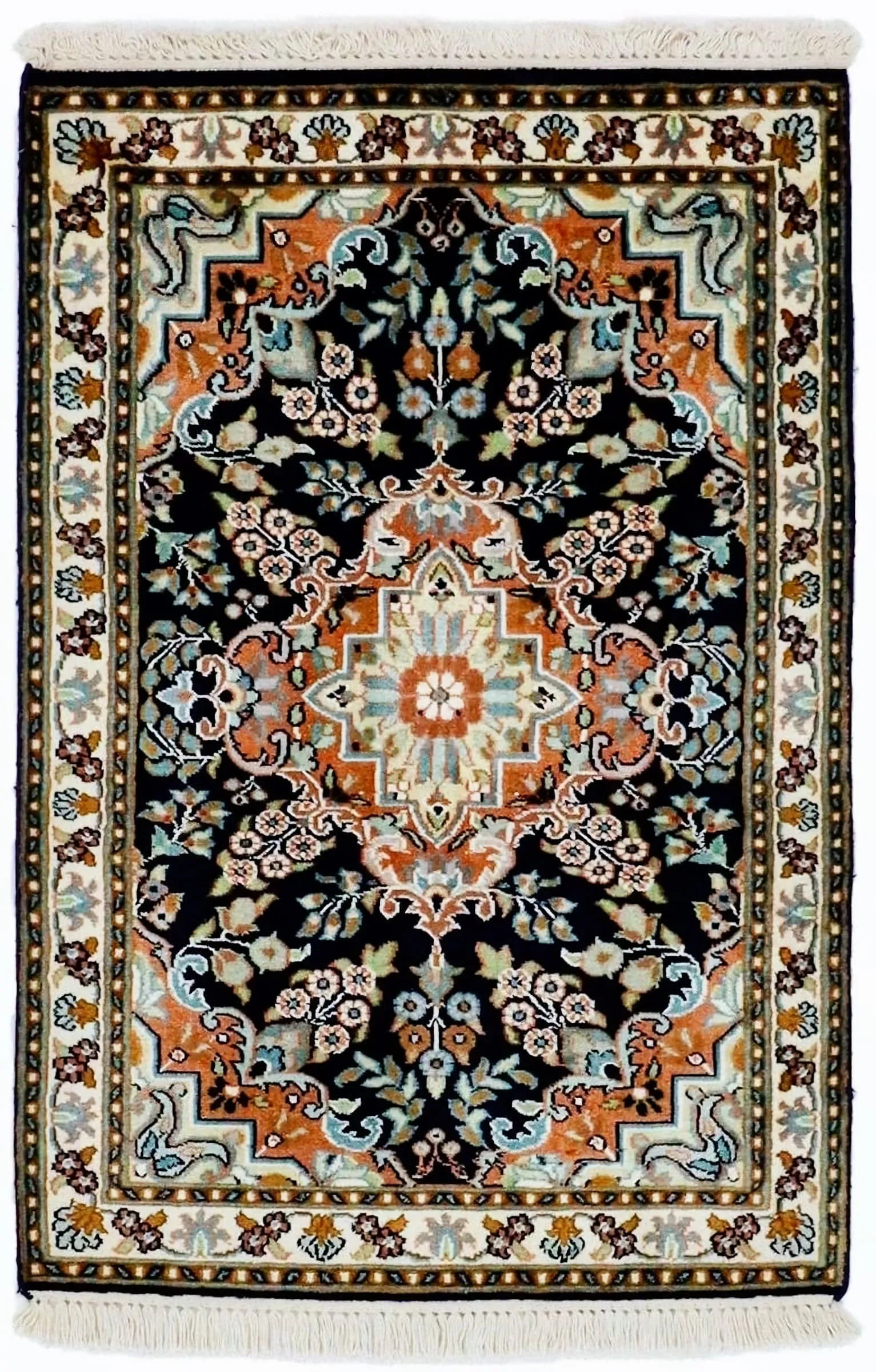
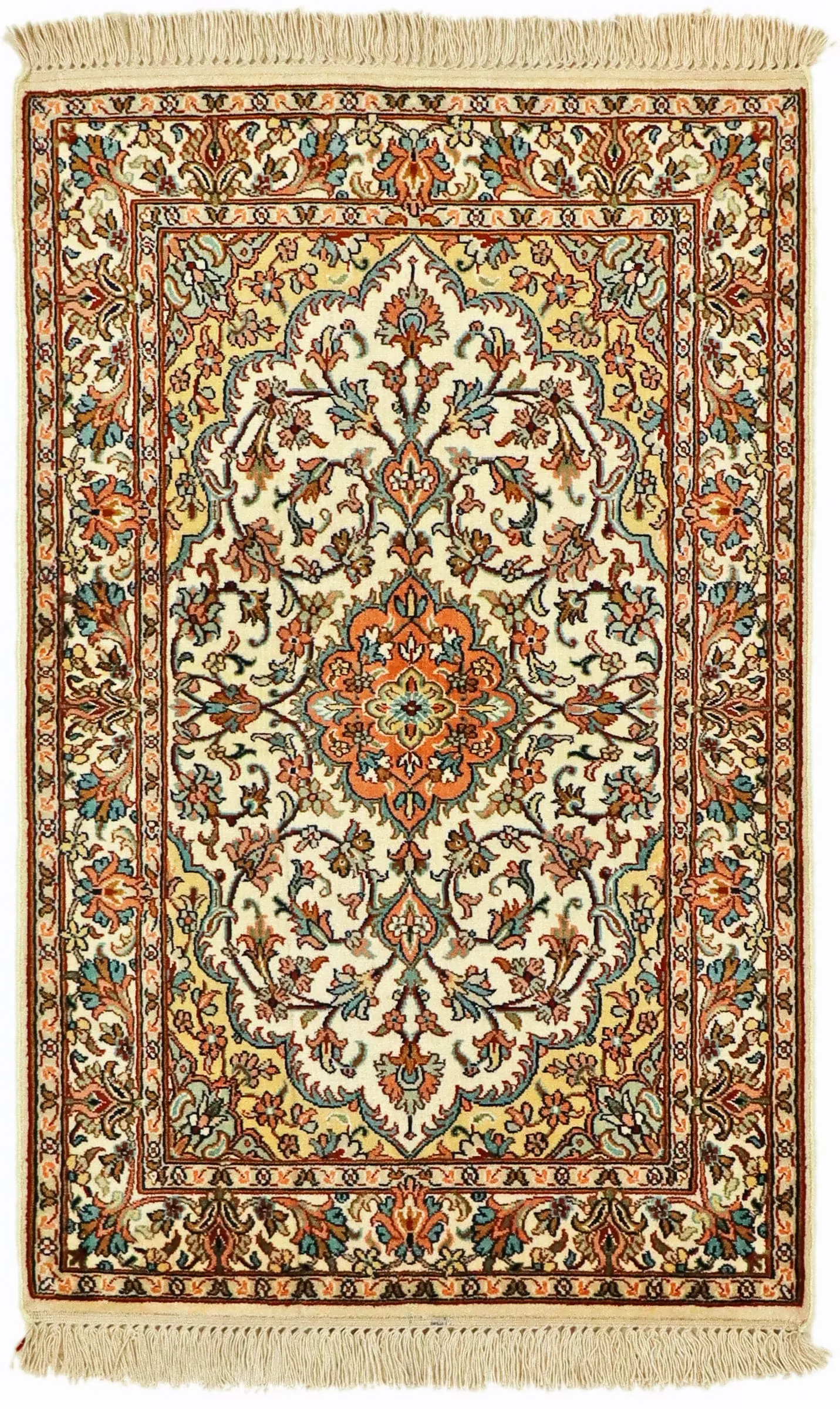
A refined lustre, precisely drawn ornament and a smooth surface give these rugs their exceptionally elegant and precious appearance. Hand-knotted Kashmir silk rugs have a pile made from 100% silk, while a strong cotton warp forms the stable foundation. This construction allows delicate floral vines, medallions and traditional garden-inspired motifs to be rendered with remarkable precision; the silk pile also shifts subtly in colour as the light changes. Careful knotting and finishing give every piece its own distinctive character. In quieter living rooms or bedrooms, the luminous surface, intricate details and balanced compositions can be appreciated particularly well.
When choosing a high-quality Kashmir silk rug the most important factors are even hand knotting, precise finishing, knot density, condition and the origin of the individual piece. These characteristics make it easier to assess different qualities confidently and choose a rug that suits the way it will be used.
This guide explains how to recognise high-quality craftsmanship, how to interpret knot density sensibly, which settings are best suited to these rugs and which criteria really matter when buying a hand-knotted Kashmir silk rug.
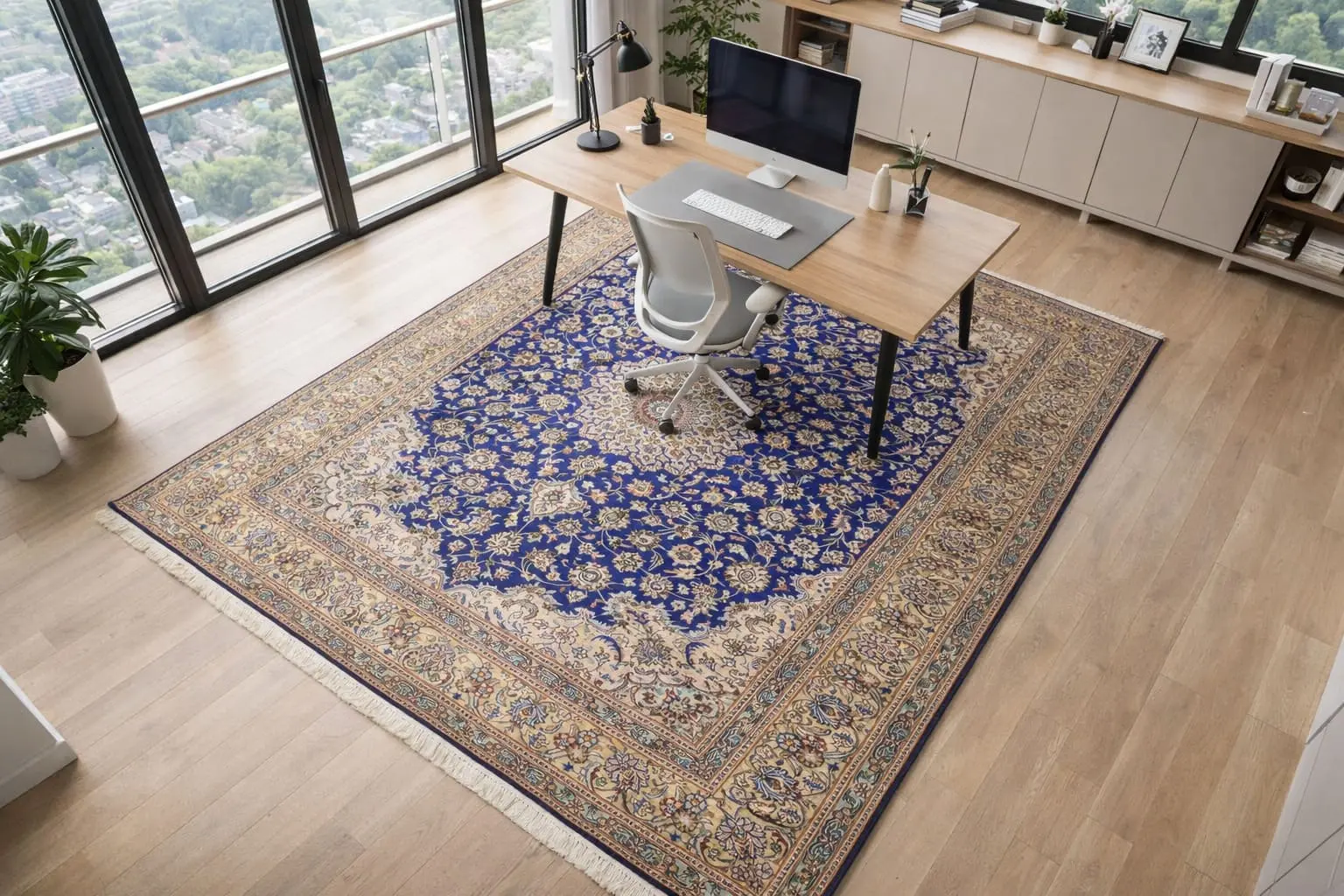
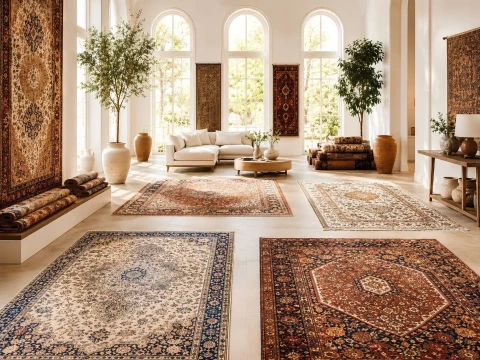
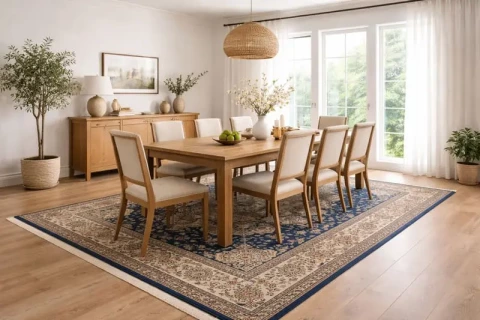
Kashmir silk rugs are particularly well suited to quieter interiors where their refined surface and light-responsive colour effect can be appreciated. Living rooms, bedrooms and representative studies or offices usually provide ideal settings.
Because silk is more delicate than robust wool, these rugs should not be exposed to constant heavy wear. Alongside the way the room is used, the right size, harmonious colours and enough open space are important so that the fine pattern remains clearly visible.
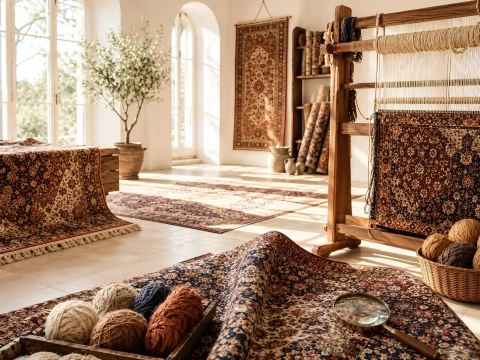
On a hand-knotted Kashmir silk rug, the workmanship and knot structure can be examined from the reverse. The fringes form part of the rug’s foundation, outlines appear clear and the knotting should look even. Neatly finished edges, precise pattern definition and the fine, smooth appearance of the silk pile are equally important.
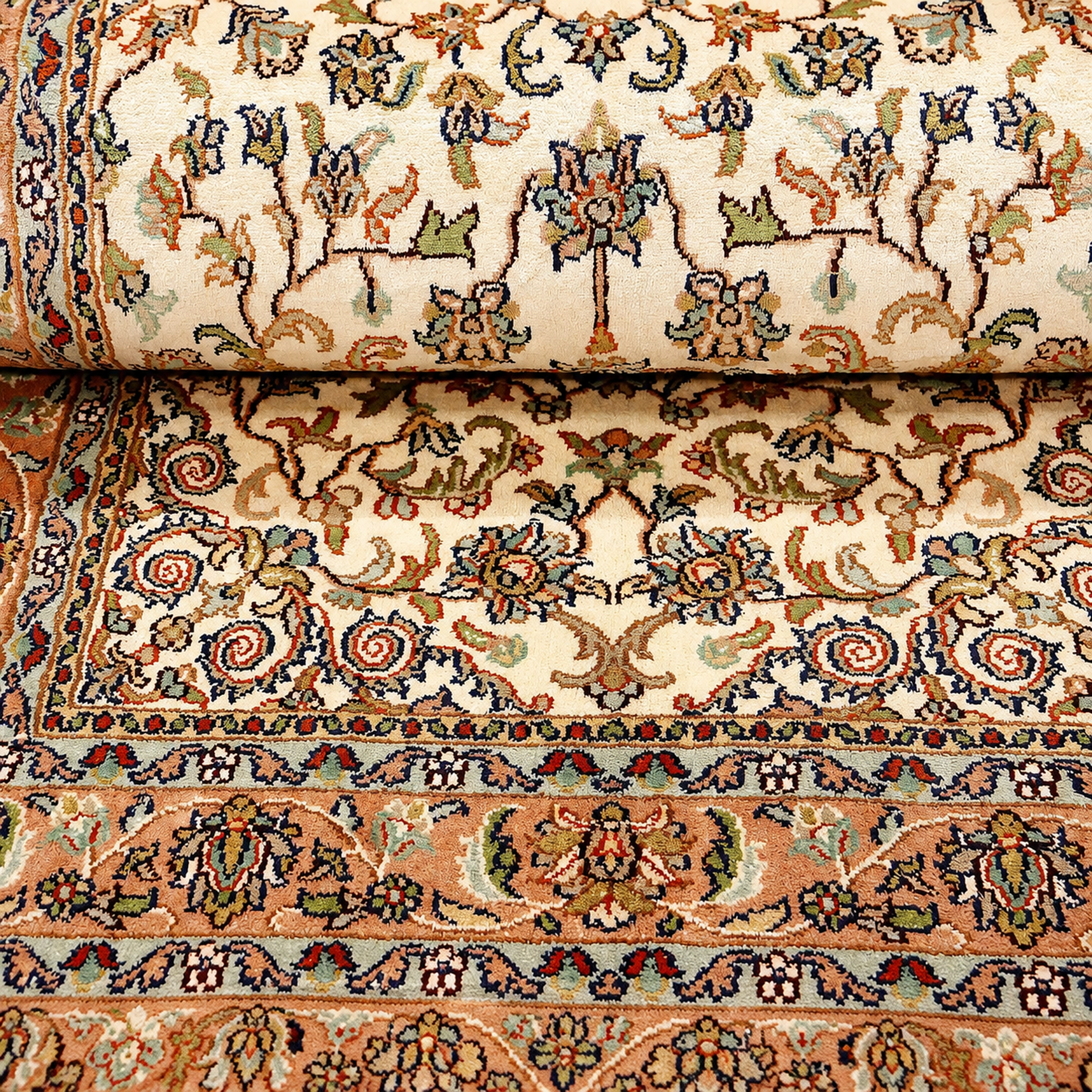
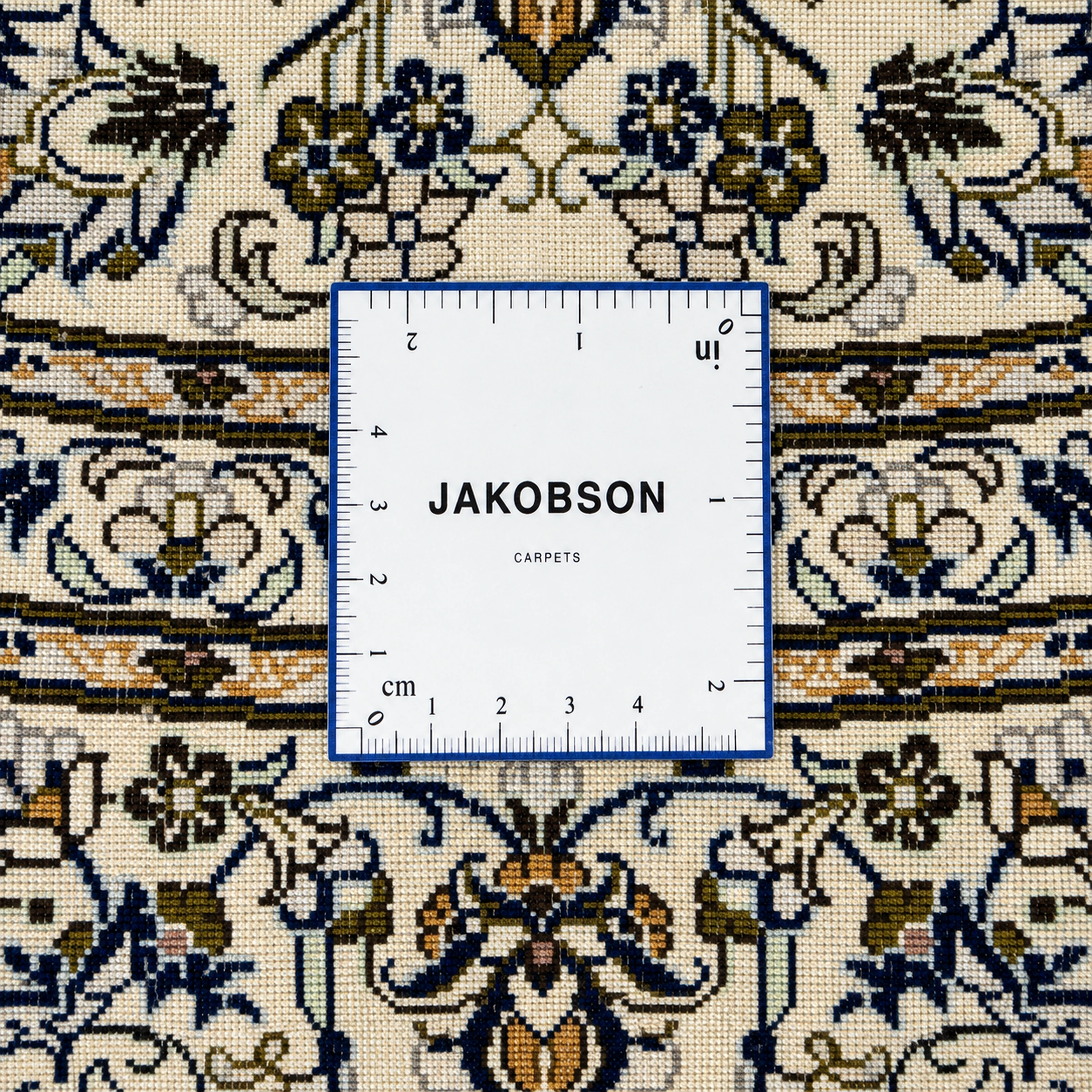
The individual knots are visible on the reverse. The fringes continue from the foundation warp and, on a hand-knotted rug, are not sewn on afterwards.
The pile is made from fine silk, while a cotton warp provides the stable foundation. This combination allows for a smooth surface and highly precise designs.
Fine, even knotting allows borders, medallions, floral vines and small ornaments to be rendered with crisp definition and without coarse transitions.
Knot density indicates how many knots are worked into one square metre. The finer the knotting, the more precisely small ornaments, curved lines and complex motifs can be rendered. It is therefore an important quality indicator, but never the only one.
The Kashmir silk rugs currently offered by Jakobson Carpets typically have around 450,000 to 500,000 knots per square metre. Combined with the fine silk pile, this creates particularly clear and detailed pattern definition.
Overall quality also depends on the consistency of the knotting, the materials, edge finishing, pattern composition and condition. A high knot count alone does not automatically make a rug high quality.
Typical range for the Kashmir silk qualities currently offered – always assess it together with the materials, workmanship and condition.
The silk pile responds visibly to light and viewing direction, so colours can appear lighter, deeper or subtly change in tone. In clean, understated interiors especially, a finely patterned Kashmir silk rug can create an elegant focal point without visually overwhelming the room.
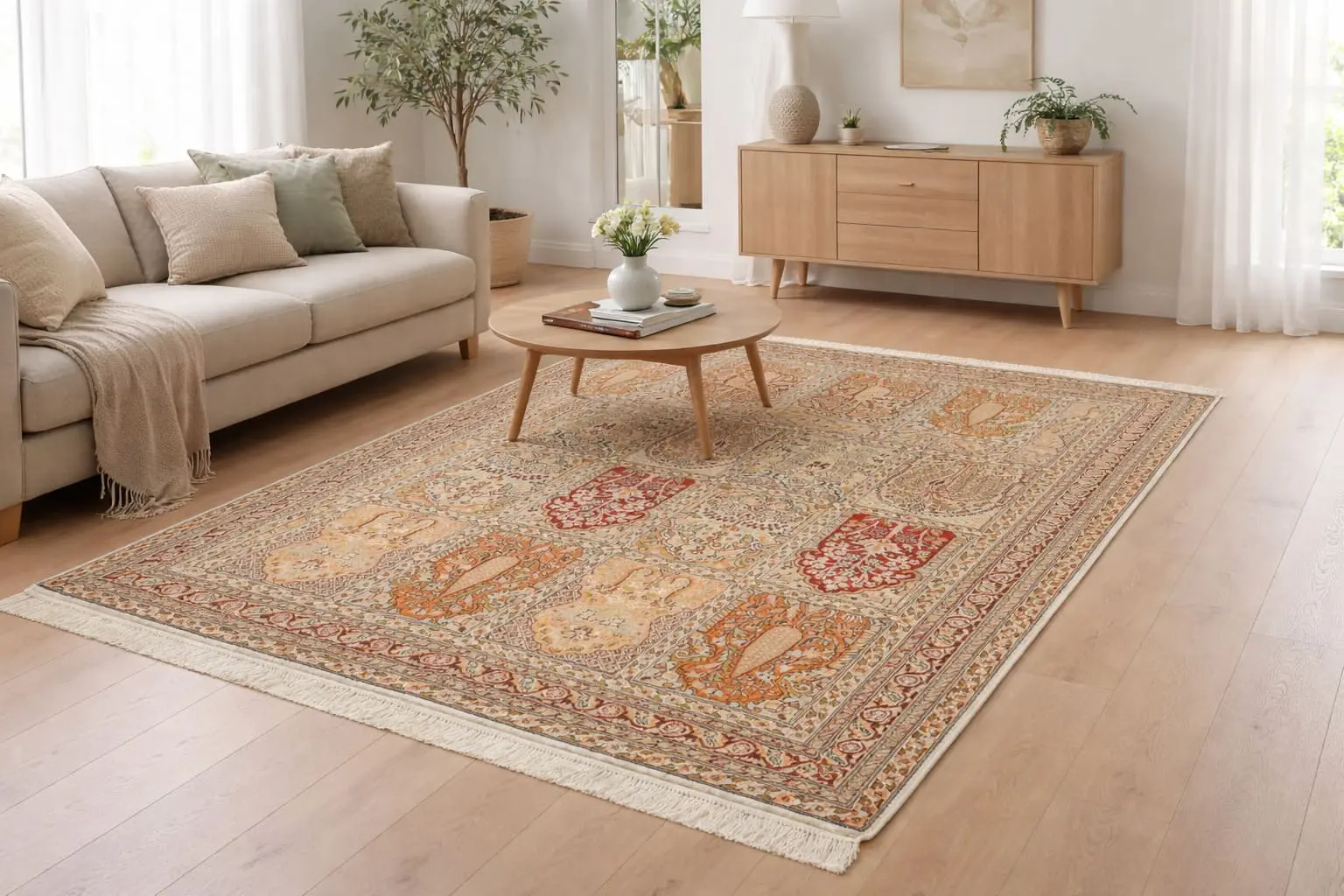
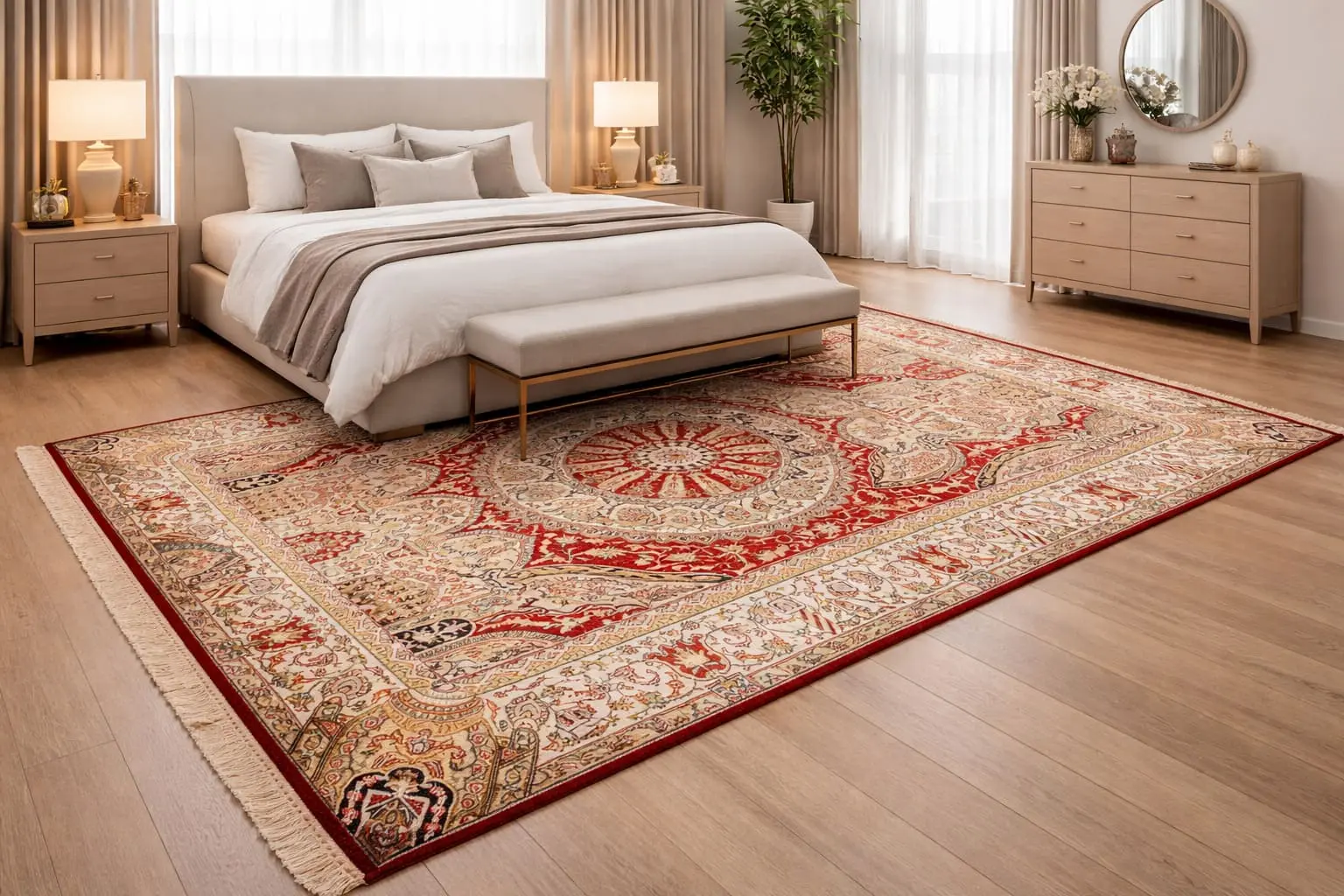
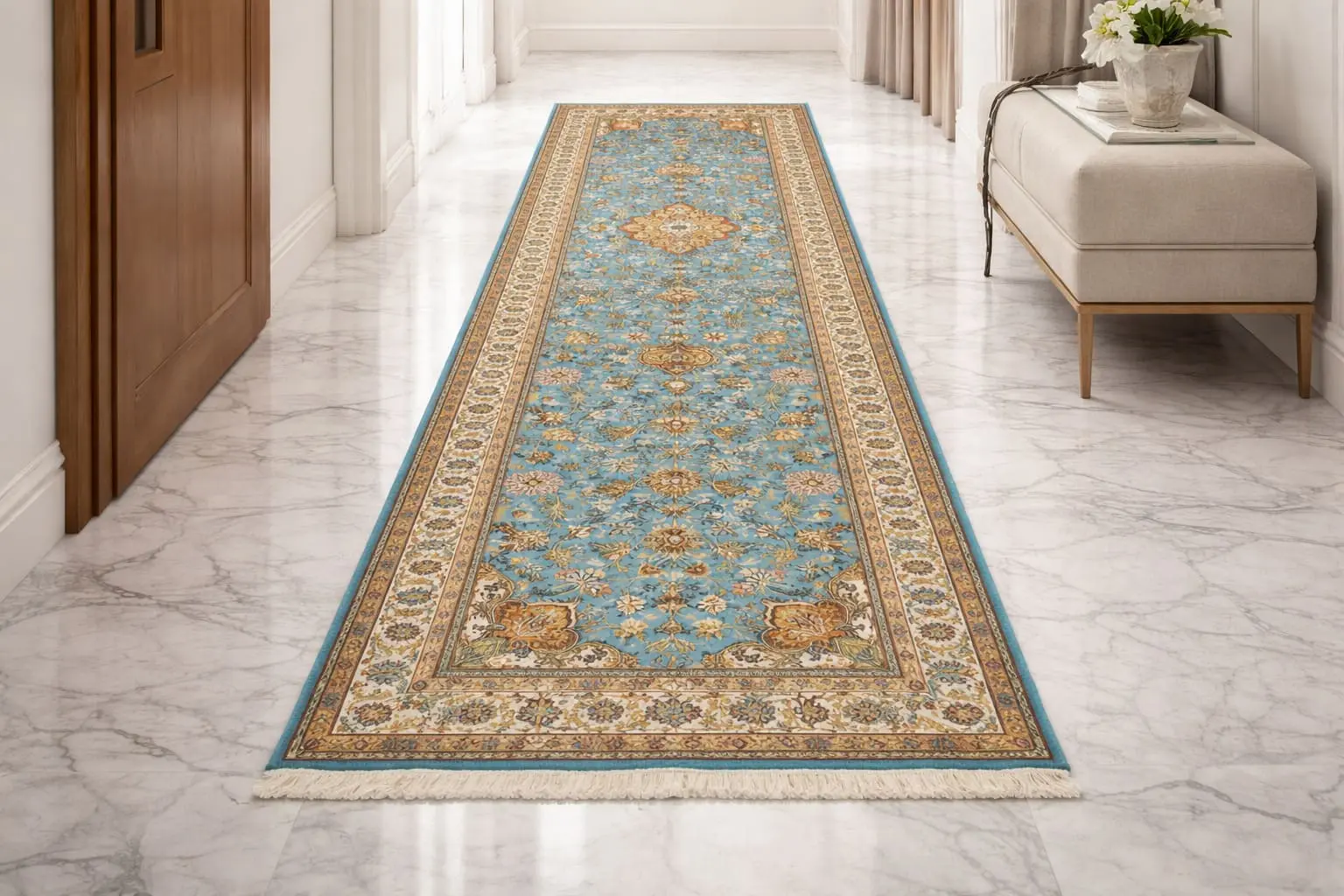
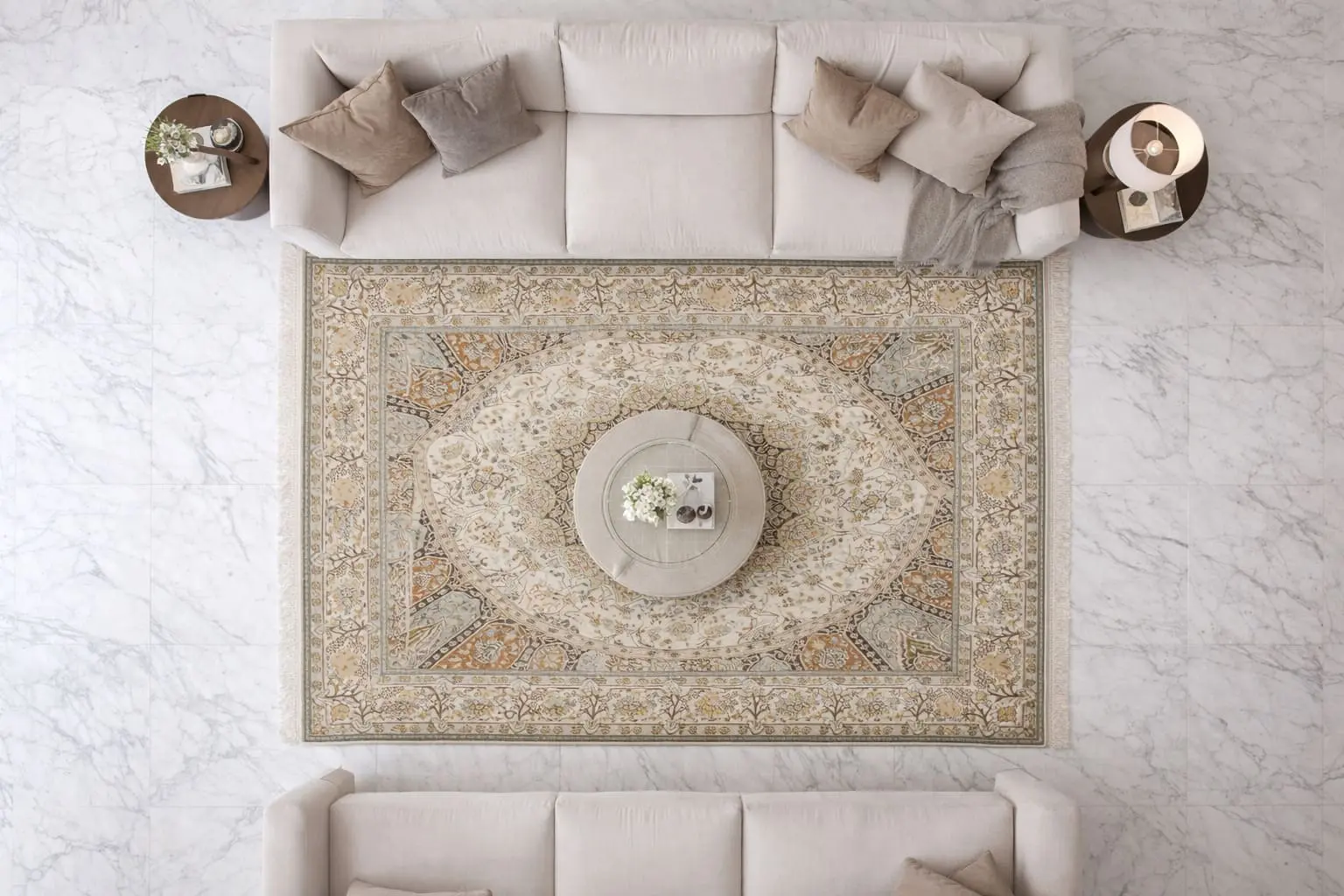
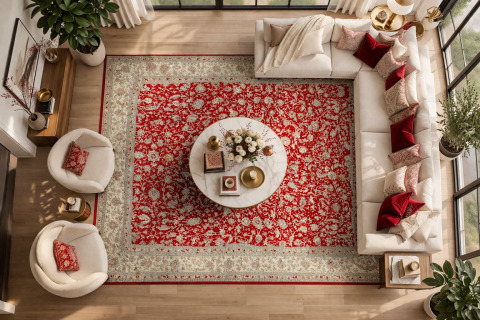
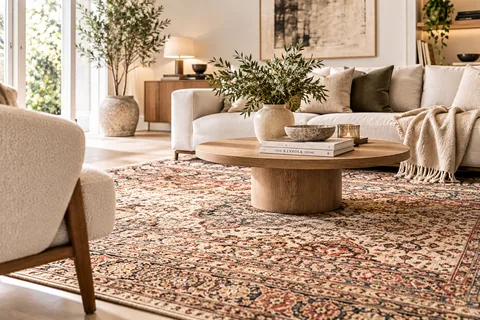
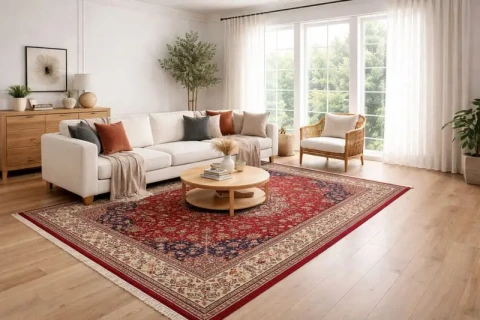
In a quieter living room, the rug can visually bring the seating area and furniture together. The silk lustre is particularly attractive in soft side light.
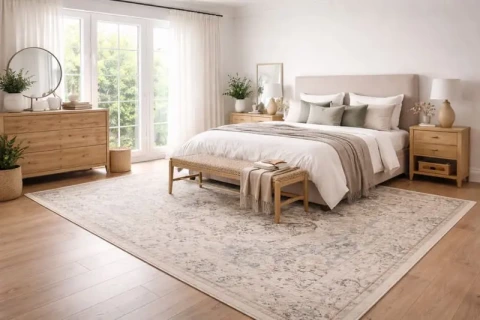
The smooth feel, fine detailing and subtle response to light work particularly well in calm bedrooms with natural materials and a clean interior style.
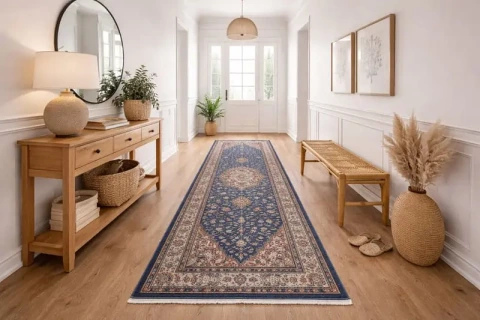
In representative offices or low-traffic hallways, Kashmir silk can create a refined accent. For heavily used walkways, robust wool is usually the more practical choice.
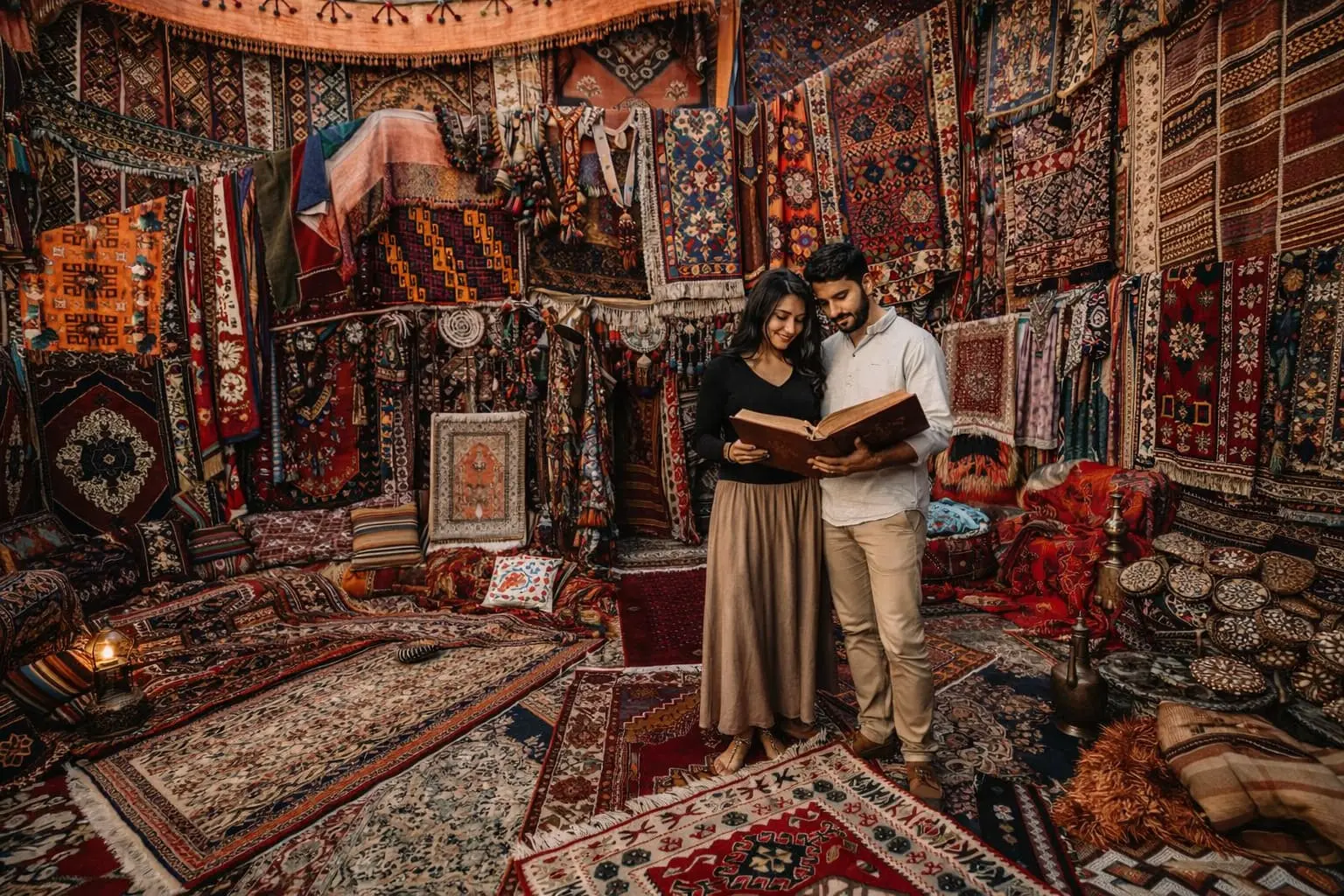
Kashmir’s hand-knotted rug tradition developed over centuries under strong Persian and Central Asian influences. Historical accounts trace the establishment of rug knotting in the region back to the 15th century, while the Mughal period later helped shape the refined floral and ornamental design language.
Srinagar remains especially well known for hand-knotted rugs made from wool and silk. Detailed medallions, flowers, scrolling vines and garden-inspired motifs are characteristic, with fine knotting allowing the designs to be rendered with great precision.
When buying a Kashmir silk rug, look beyond colour and pattern. Check the pile and warp materials, knot density, construction, origin, exact dimensions and the way the rug will be used. At Jakobson Carpets, these details are listed for every available one-of-a-kind piece so that individual Kashmir silk rugs can be compared transparently.
For a broader comparison of fibres, visit our material advice. If you would like to compare different silk qualities, explore our silk rugs and the Persian Qom silk rugs. Further practical guidance on choosing and caring for a rug is available in our rug buying guide and our guide to rug care and cleaning.
You can assess the rug at your own pace in your own home without having to factor in additional shipping costs.
This gives you enough time to assess the colour, size and light-responsive effect of the silk pile in your own room.
Hand-knotted rugs are covered by a three-year guarantee in accordance with the stated guarantee terms.
Key answers about materials, origin, hand knotting, knot density, suitable use and care.
In the Kashmir silk rugs offered by Jakobson Carpets, the pile is made from silk while the warp is cotton. The name refers to the rug type and the Kashmiri weaving tradition; it does not mean that the pile is made from cashmere wool.
The knot structure can be examined on the reverse, and the fringes form part of the rug’s foundation. Finer qualities also show even knotting, clear outlines, neatly finished edges and precise pattern definition.
The Kashmir silk rugs currently offered by Jakobson Carpets typically have around 450,000 to 500,000 knots per square metre. Knot density is important for the fineness of the design, but it should always be assessed together with the materials, workmanship and condition.
The Kashmir silk rugs offered here come from India. Kashmir’s rug-making tradition has been strongly influenced by Persian and Central Asian craftsmanship, and Srinagar remains an important centre of hand-knotted rug production.
The Kashmir silk rugs in our collection come from India and have a silk pile on a cotton warp. Qom silk rugs are Persian rugs from Iran; in pure Qom silk qualities, both pile and warp are made from silk and the knot density can be considerably higher.
They are particularly well suited to quieter living rooms, bedrooms and representative workspaces. Because silk is more delicate than robust wool, heavily used walkways or very intensive everyday use are less suitable.
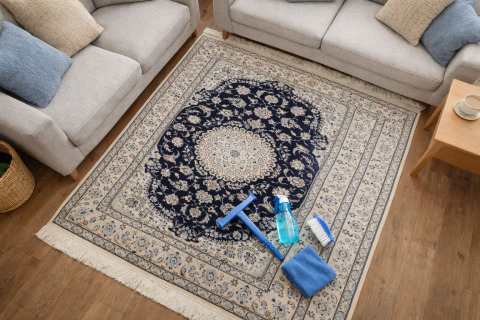
Vacuum the rug regularly and gently without an aggressive rotating brush. Avoid moisture, vigorous rubbing and unsuitable cleaning products. For heavier soiling, professional cleaning suitable for high-quality hand-knotted rugs is recommended.