




-320.webp)
-320.webp)
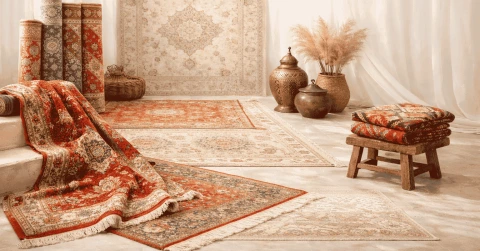
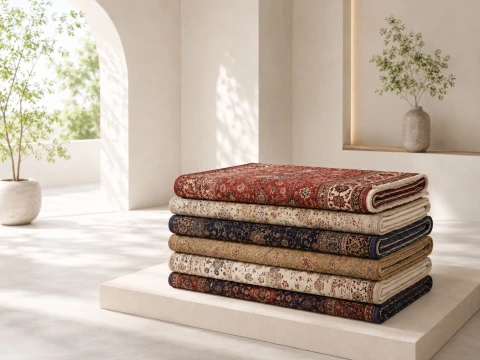

Rectangular Dining Table
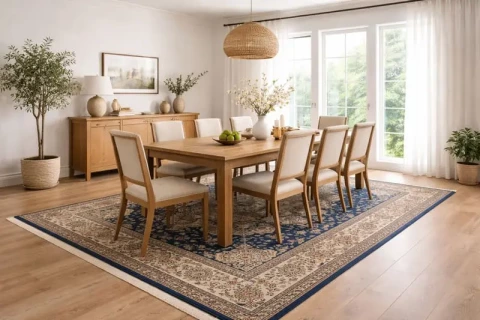
With a rectangular table, a rectangular rug usually creates a particularly calm and balanced look. The key is for the rug to extend clearly beyond the tabletop on all relevant sides.
 Free shipping & returns
 31-day return policy
Free shipping & returns
31-day return policy
Kostenloser Versand & Rückversand
31 Tage Rückgaberecht
Free shipping & returns
31-day return policy
Free shipping & returns
31-day return policy
Free Shipping & Returns
31-Day Return Policy
31-day return policy
Free shipping & returns
31-day return policy
Kostenloser Versand & Rückversand
31 Tage Rückgaberecht
Free shipping & returns
31-day return policy
Free shipping & returns
31-day return policy
Free Shipping & Returns
31-Day Return Policy

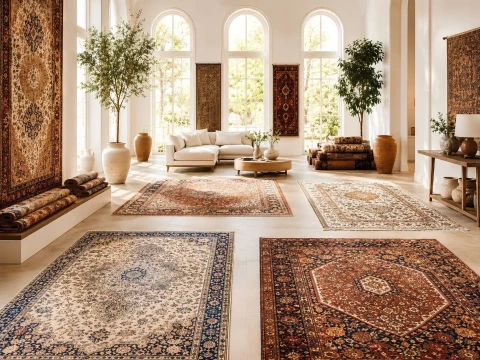
A hand-knotted Oriental rug in the dining room creates a calm focal point, visually connects the dining table and chairs, and adds warmth and structure to the space. At Jakobson Carpets, you can buy selected one-of-a-kind rugs in suitable sizes, colours and designs. Whether you prefer a classic Persian rug, a softly coloured Ziegler or a geometric Oriental rug, a hand-knotted dining room rug made from high-quality wool can define the entire dining area while bringing authentic craftsmanship into the room. Choosing the right rug size beneath the dining table is especially important: ideally, the chairs should remain fully on the rug even when pulled back. Generous formats frame the table and seating area harmoniously, while floral, medallion and geometric designs add character without overwhelming the space. This makes it easier to choose a hand-knotted rug that balances proportions, colour palette and interior style in both traditional and contemporary dining rooms.
In a dining room, a rug should do more than look attractive: it should bring the table and chairs together as one defined area while leaving enough room for movement. A well-proportioned Oriental rug frames the dining setting, strengthens the room layout and can pleasantly soften the sound of chairs and footsteps.
This guide explains how large a rug beneath a dining table should be, how much extra space is useful for chairs when pulled back, and how shape, material, pile, colour and pattern can be matched to the dining area.
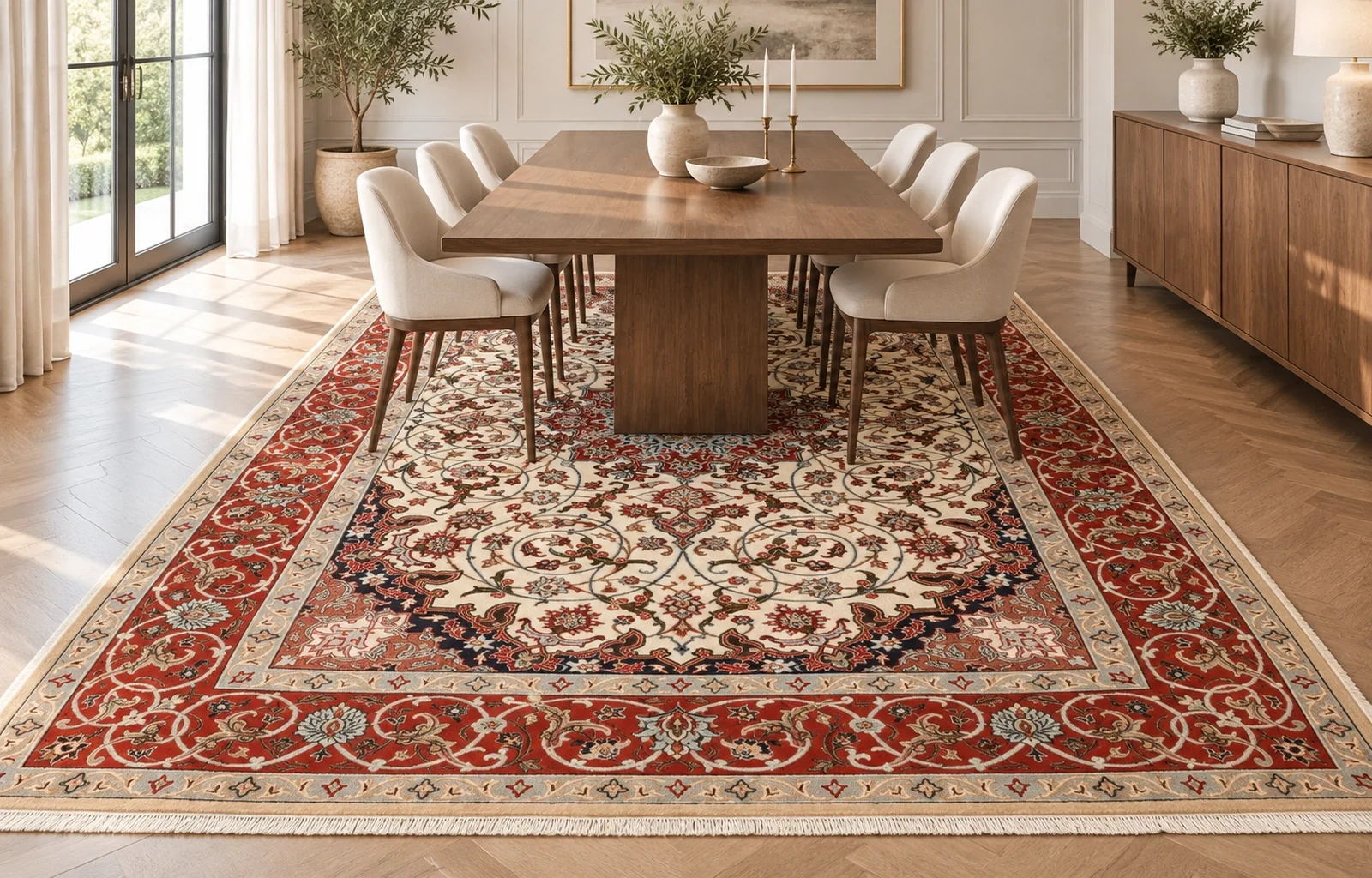
The rug should frame the entire dining setting, not just the tabletop. Ideally, the chairs should remain fully on the rug even when they are pulled back.
As a practical guide, around 60 to 70 cm of extra rug beyond each edge of the table is often useful. Deep chairs or a more generous movement zone may require a little more space.
A dining room rug works best when it does not end at the edge of the table. Extra space around the table helps prevent chair legs from catching on the rug edge when people sit down or pull their chairs back.
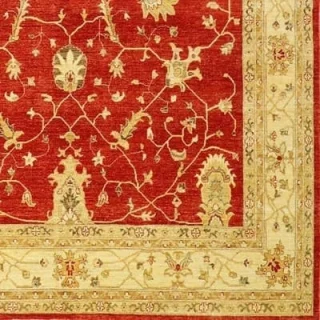
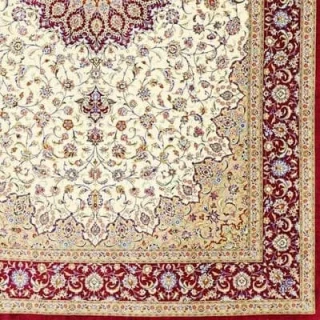
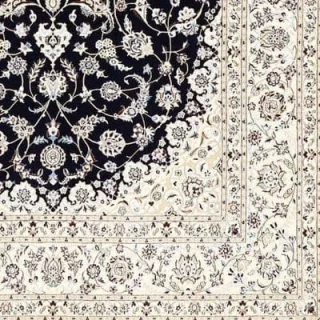
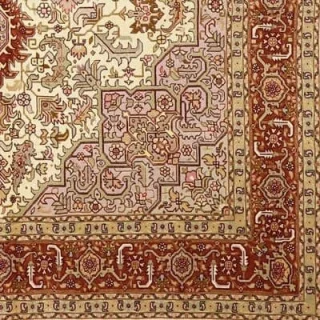
With a rectangular table, a rectangular rug usually creates a particularly calm and balanced look. The key is for the rug to extend clearly beyond the tabletop on all relevant sides.
A round rug can echo the shape of a round table beautifully. A rectangular rug can also work well when the proportions of the rug and the room remain balanced.
Plan not only for the chairs when they are tucked in, but also for the space they need when pulled back. Ideally, the rear chair legs should not tip over the rug edge.
Leave enough open floor between the rug edge, walls, doorways and adjoining areas. This keeps the dining setting clearly defined without blocking important circulation routes.
The right rug size depends mainly on the table dimensions, the number of seats and the movement space required for the chairs. The following examples show typical solutions for compact dining areas, medium-sized table settings and generous open-plan spaces.
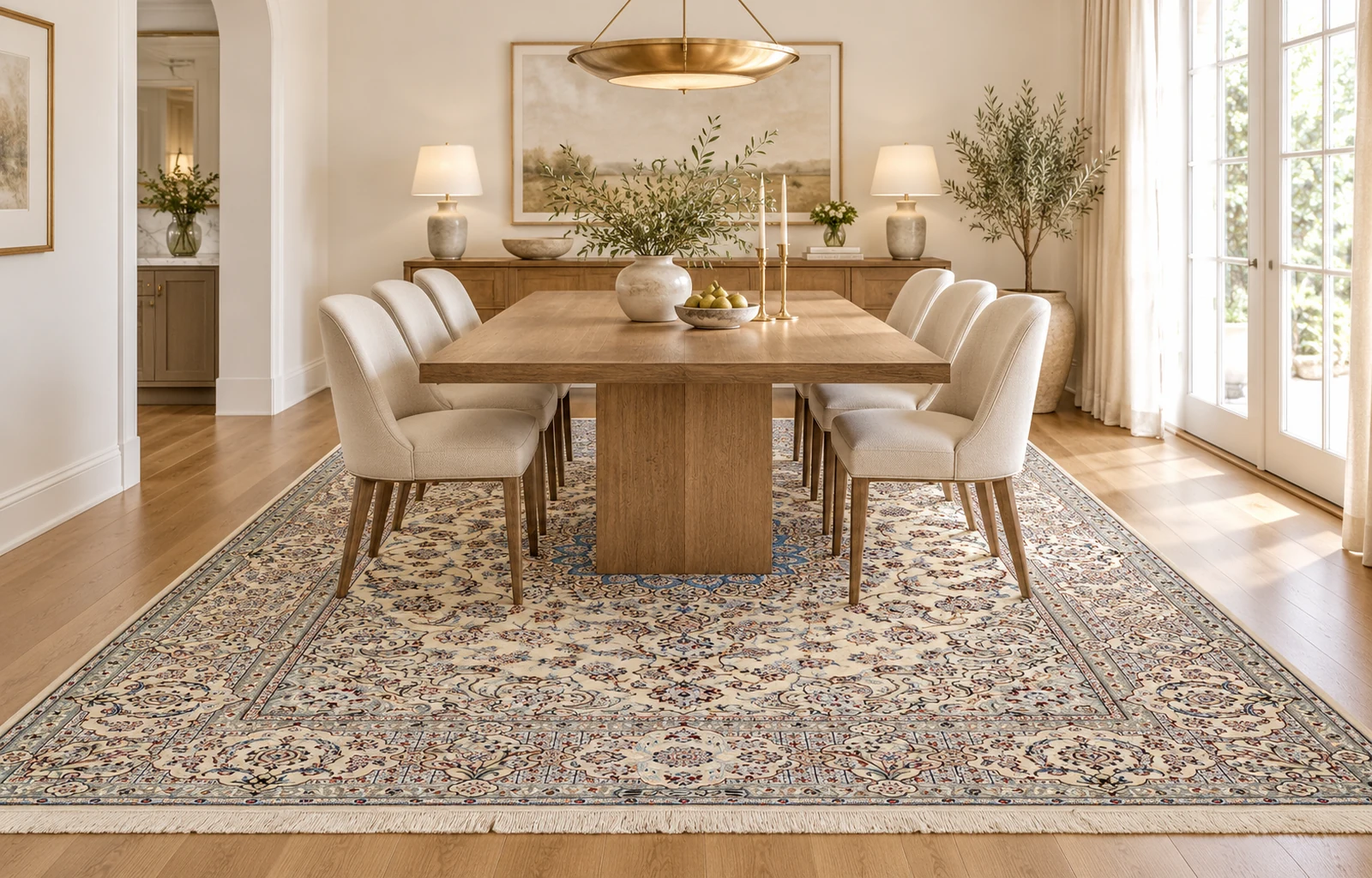
With smaller dining tables, the rug should not be chosen too tightly. Even with four seats, each side needs enough extra space so that chairs do not immediately move beyond the rug edge when pulled back.
Light base colours and finer patterns can make a compact dining area feel calmer. Clear contrast with the floor, table and chairs helps prevent the interior from visually blending together.
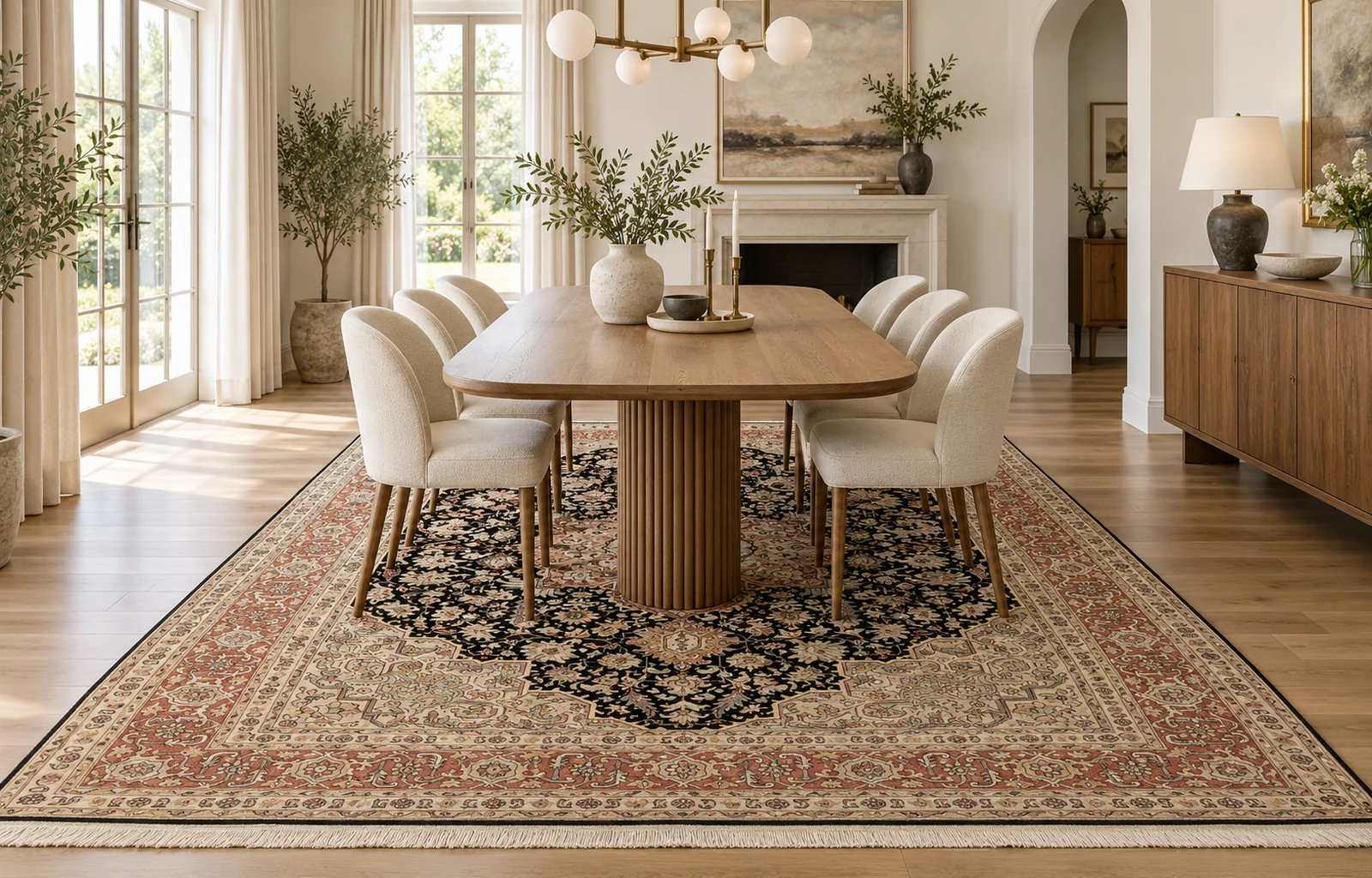
For many rectangular dining tables with four to six seats, around 200 × 300 cm can be a useful starting point. The actual table size plus the movement space required for the chairs remains the deciding factor.
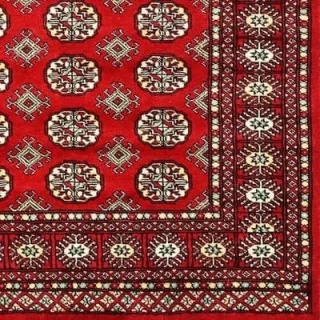
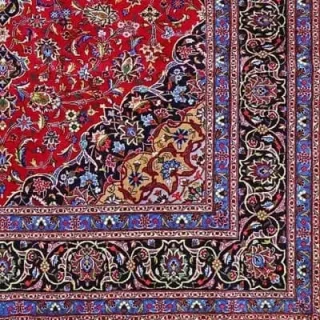
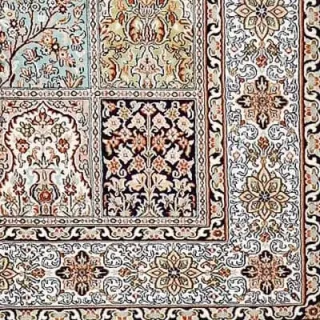
All-over and floral patterns are especially flexible beneath tables and chairs because their effect does not depend on one fully visible centre. With medallion designs, it is worth considering which parts of the motif will remain visible.
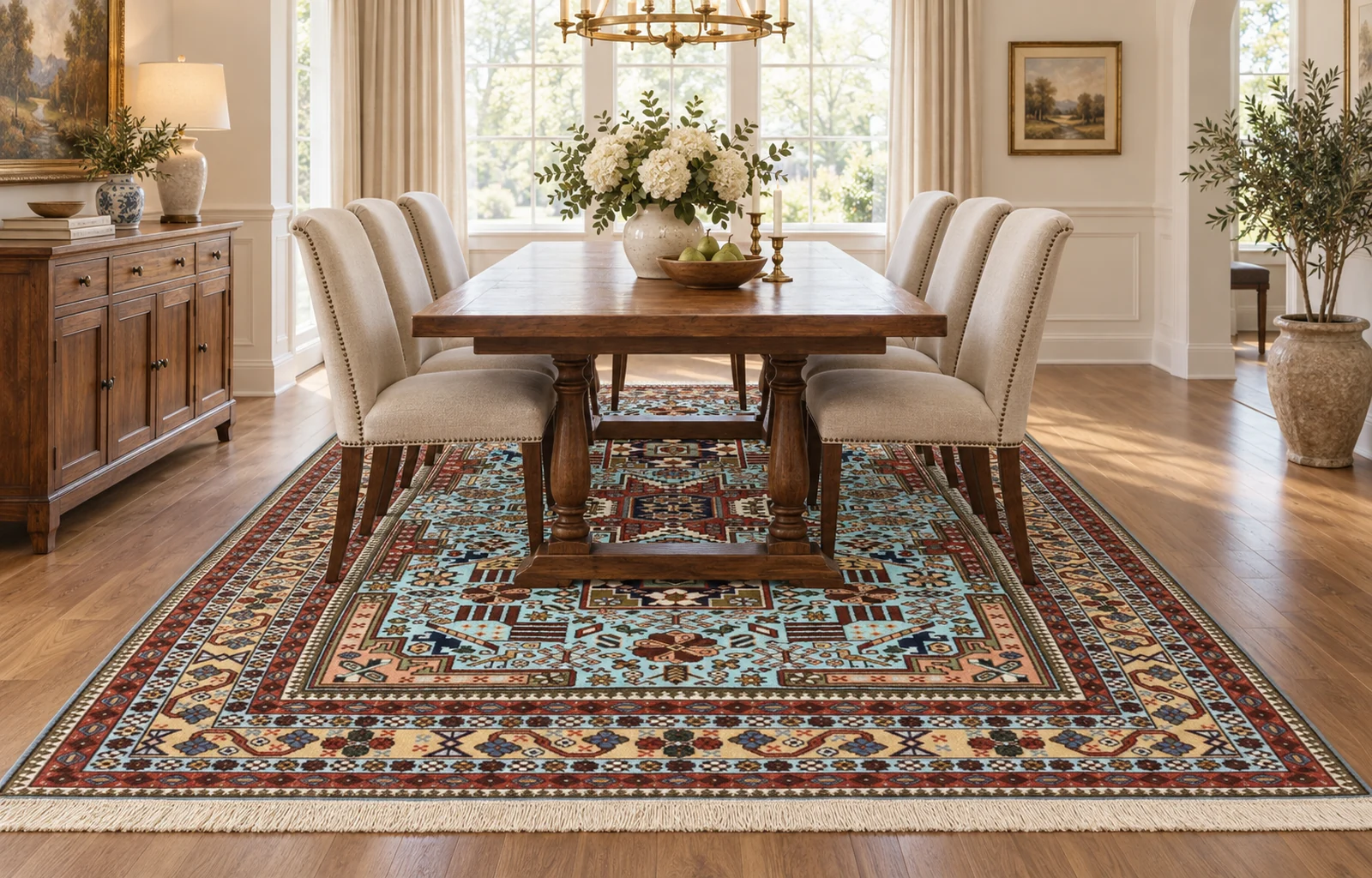
For six to eight seats or particularly wide tables, 250 × 350 cm, 300 × 400 cm or similarly generous sizes often look more balanced than a rug that is too tightly proportioned.
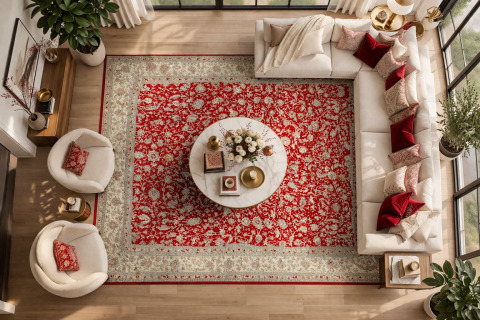
In open-plan interiors, a larger rug can clearly define the dining area from adjoining living or circulation zones. This creates a distinct dining space with a calm, cohesive feel.
In a dining room, a rug is exposed to chair movement, crumbs and the occasional spill more than in many quieter areas of the home. Material, pile height and care requirements should therefore be chosen just as carefully as colour and pattern.
Resilient wool qualities are particularly practical for many dining areas. A more compact or lower pile makes chairs easier to move and simplifies regular cleaning. Very fine silk rugs are better suited to dining areas with gentler use.
Mid-tone or subtly variegated colour palettes can make small everyday marks less noticeable. Floor colour, table material and light also matter so that the rug and furniture form a coherent overall composition.
All-over, floral and geometric patterns remain effective even when the table and chairs cover part of the rug. With a large medallion, it is worth checking whether the centre can still be appreciated once the table is in place.

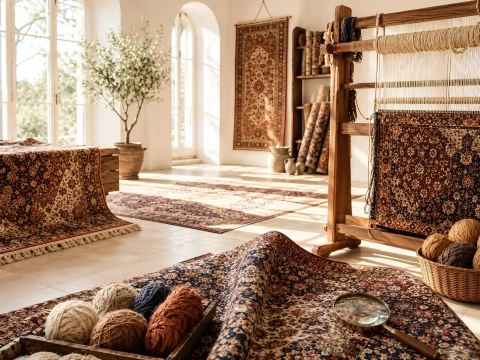
For generations, hand-knotted Oriental rugs have combined practical function with decorative design. Wool creates a warm textile surface, while regional patterns, colours and knotting traditions give each one-of-a-kind piece its own character.
In today’s dining room, the rug also performs a clear spatial role: it brings the table and chairs together, softens acoustics and visibly defines the dining area within an open-plan layout. This combination of traditional craftsmanship and modern space planning makes high-quality one-of-a-kind rugs especially versatile. For more historical background, see our history of Oriental rugs.
Since 1995, Jakobson Carpets has stood for hand-knotted rugs, careful selection and personal advice. In a dining room especially, the effect of a rug is best judged where the table size, chairs, flooring, light and existing colours actually come together.
View the rug comfortably at home and see how it works in the room for which it is intended.
You have ample time to compare size, colour and pattern without unnecessary pressure.
The three-year warranty applies exclusively to hand-knotted rugs in accordance with the stated warranty terms.
For appropriately marked hand-knotted rugs with a purchase value of €300 or more, you receive a Certificate of Authenticity. It records key details about the individual rug, including origin, materials, knotting technique, dimensions and other essential characteristics.
Key answers about rug size, chair clearance, table shape, materials, patterns and care.
The rug should accommodate the table and chairs as one shared area. The table dimensions are not the only factor; the movement space for the chairs matters as well. Around 60 to 70 cm of extra rug beyond each side of the table is often a useful starting point.
So that the chairs remain on the rug as far as possible when pulled back. If the rug is too small, the rear chair legs can catch on the edge and the dining setting may feel less visually balanced.
It can create a very harmonious result: a rectangular table often pairs naturally with a rectangular rug, while a round table can work beautifully with a round rug. It is not a fixed rule, however; sufficient space, balanced proportions and the overall effect in the room matter more.
Resilient wool rugs are a strong choice for many dining areas because wool is durable and comparatively practical for everyday use. A lower or more compact pile makes chairs easier to move and simplifies cleaning. Particularly fine silk rugs are better suited to quieter dining spaces.
All-over, floral and geometric patterns are especially flexible because their effect does not depend on one fully visible centre. With medallion designs, it is worth checking whether the table will completely cover the most important part of the motif.
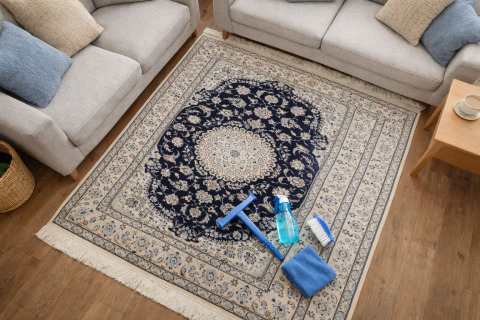
Vacuum crumbs and dry dirt regularly and gently, without aggressive rotating brushes. Blot spills as quickly as possible rather than rubbing them in. For heavier soiling or delicate materials, professional rug cleaning is the safer option.