




-320.webp)
-320.webp)

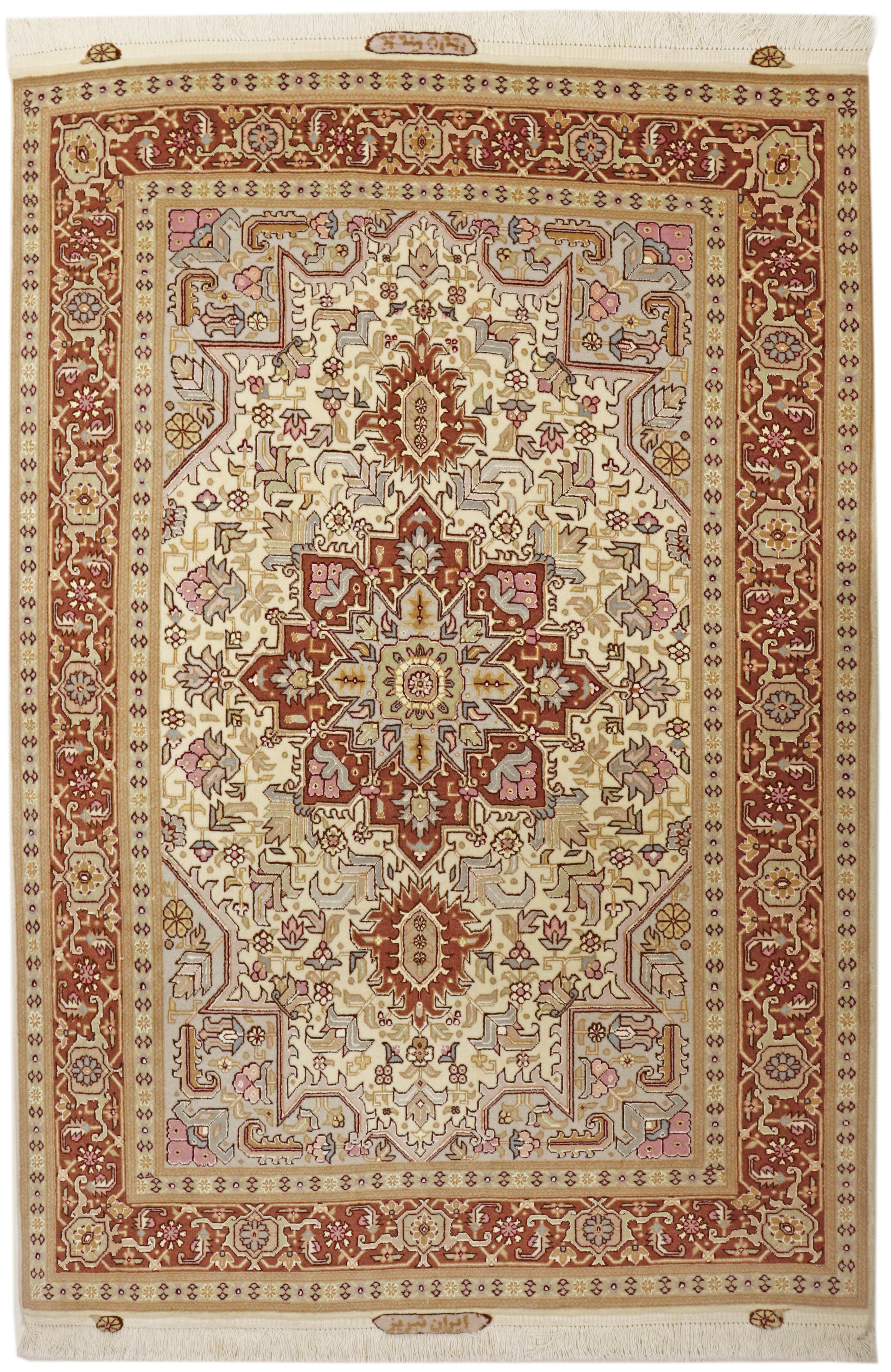
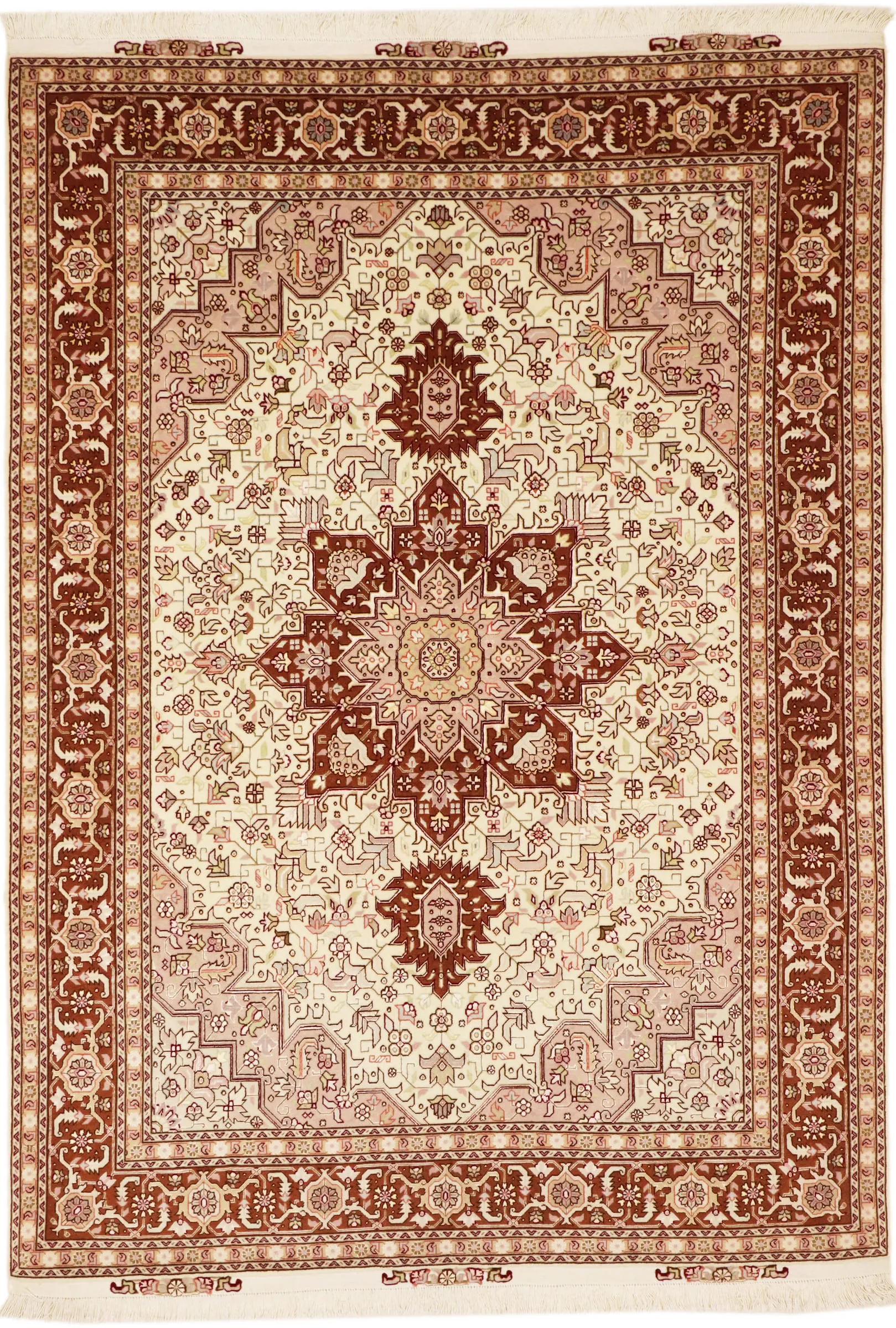
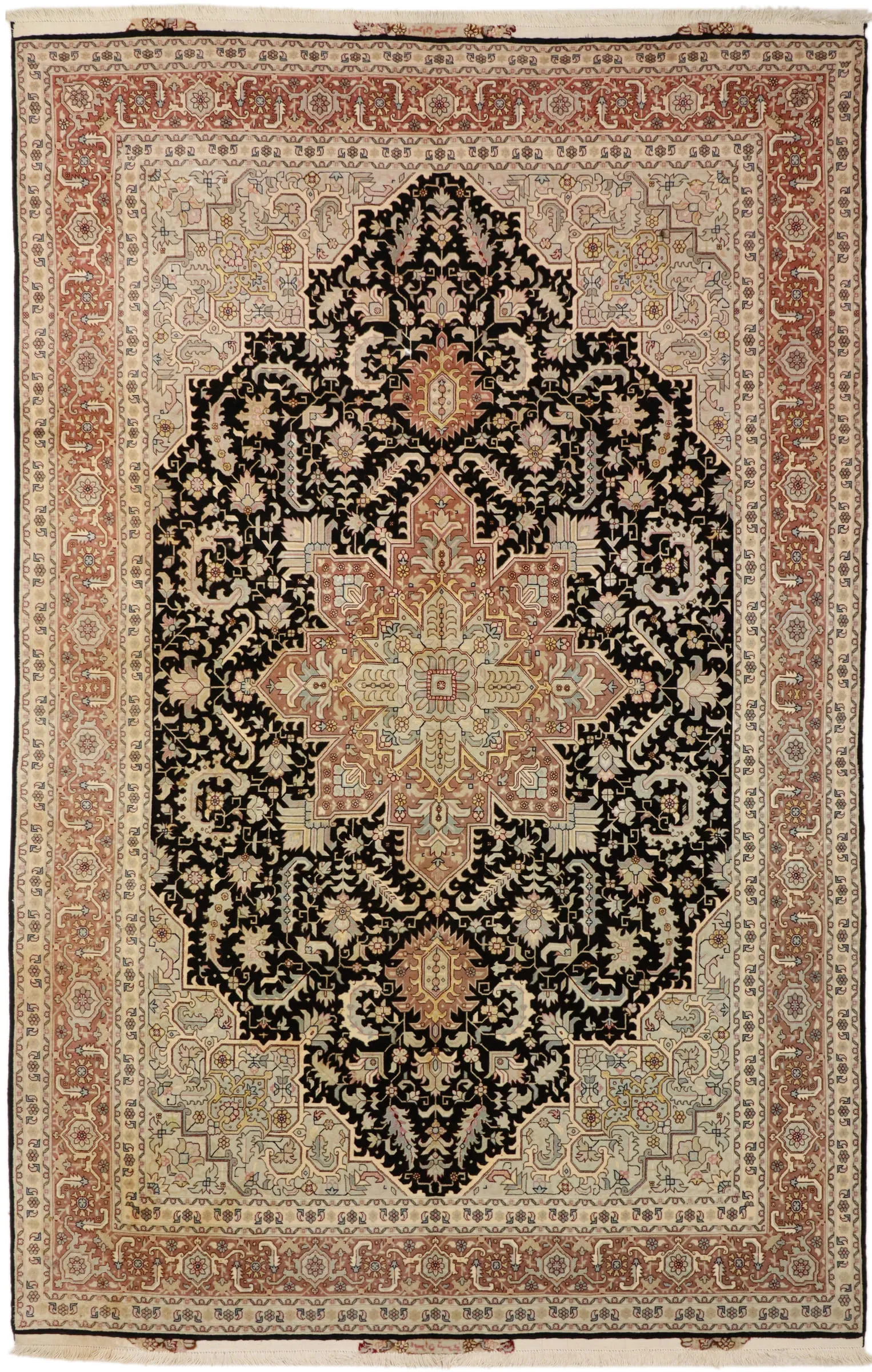
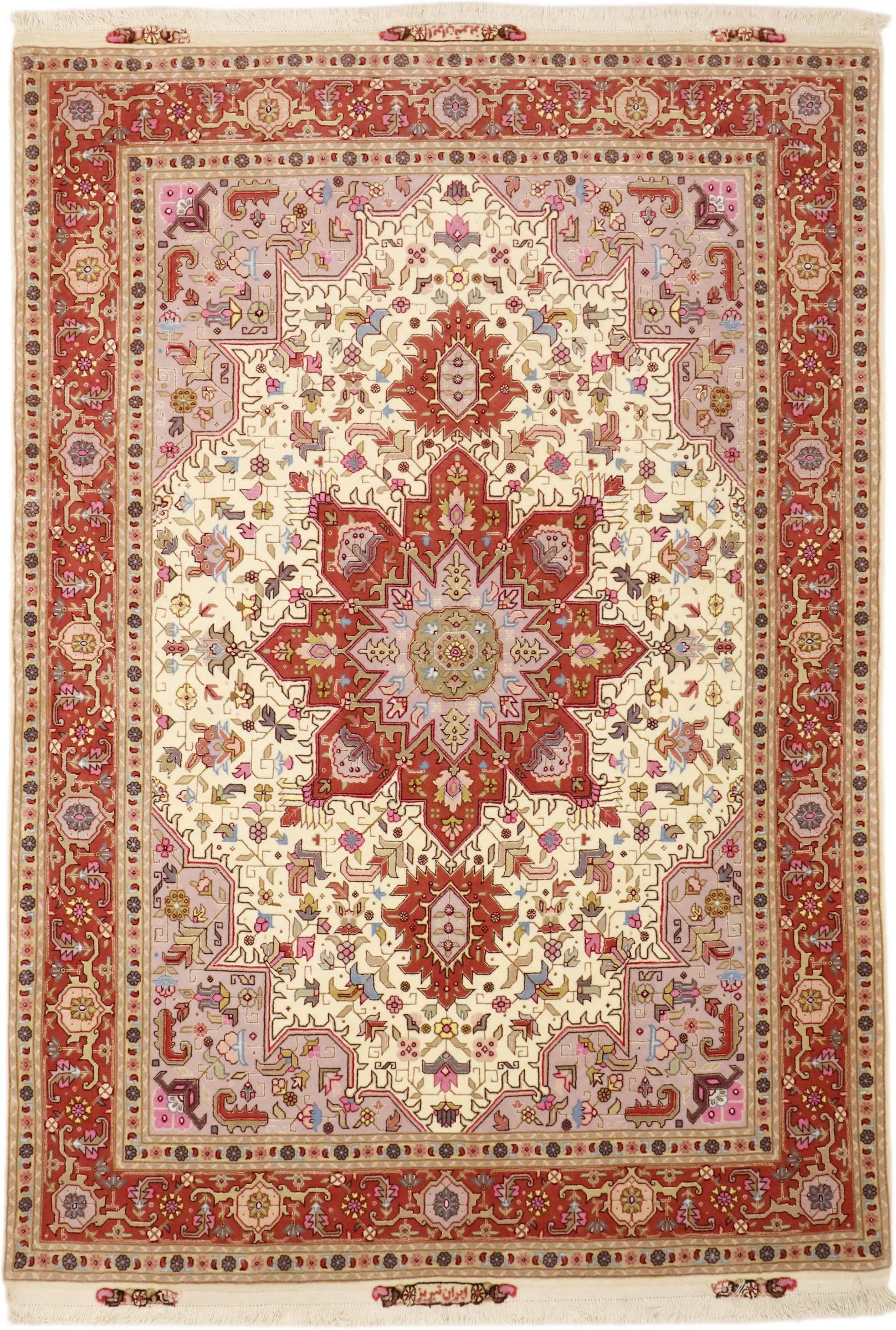
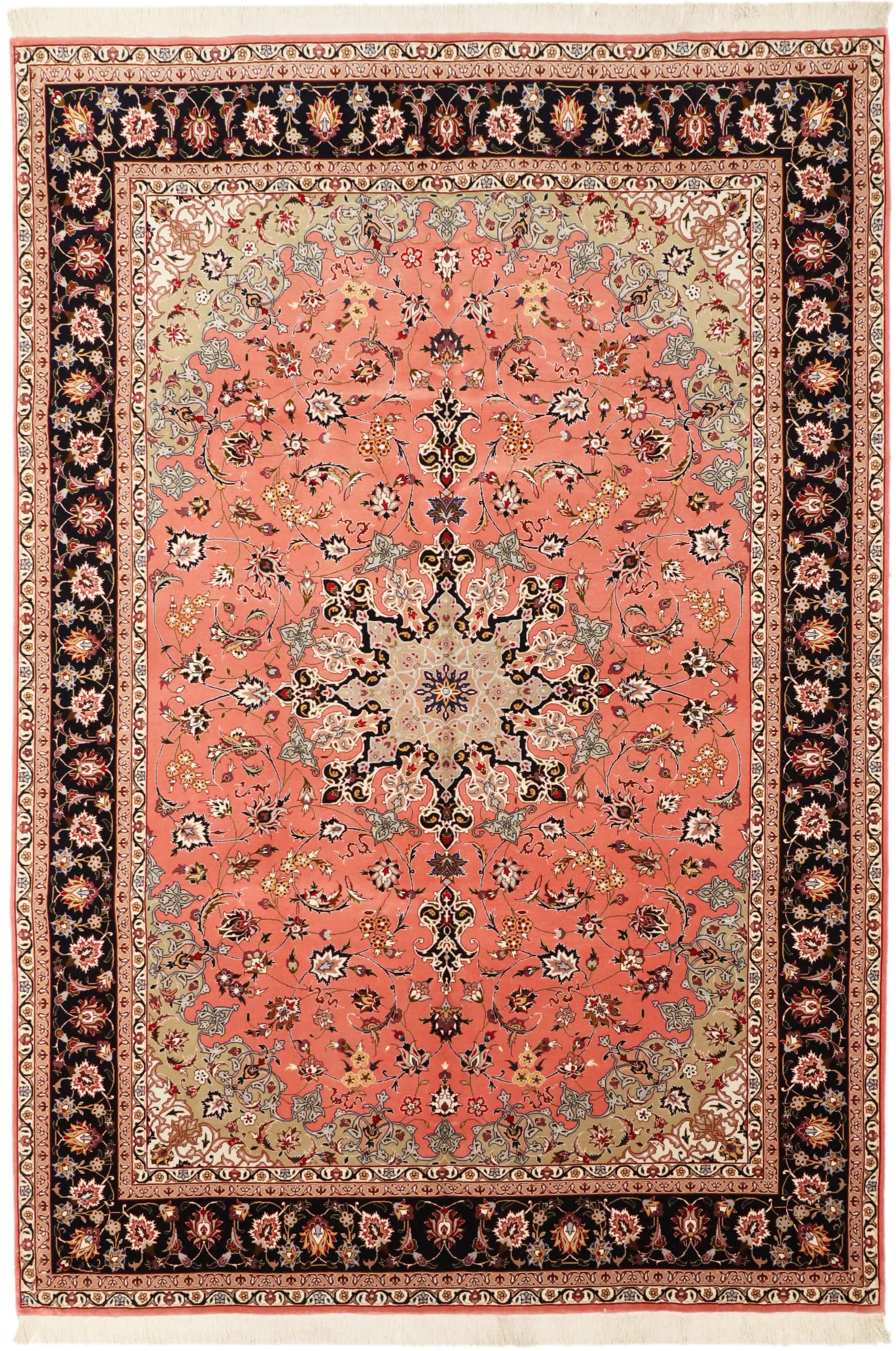
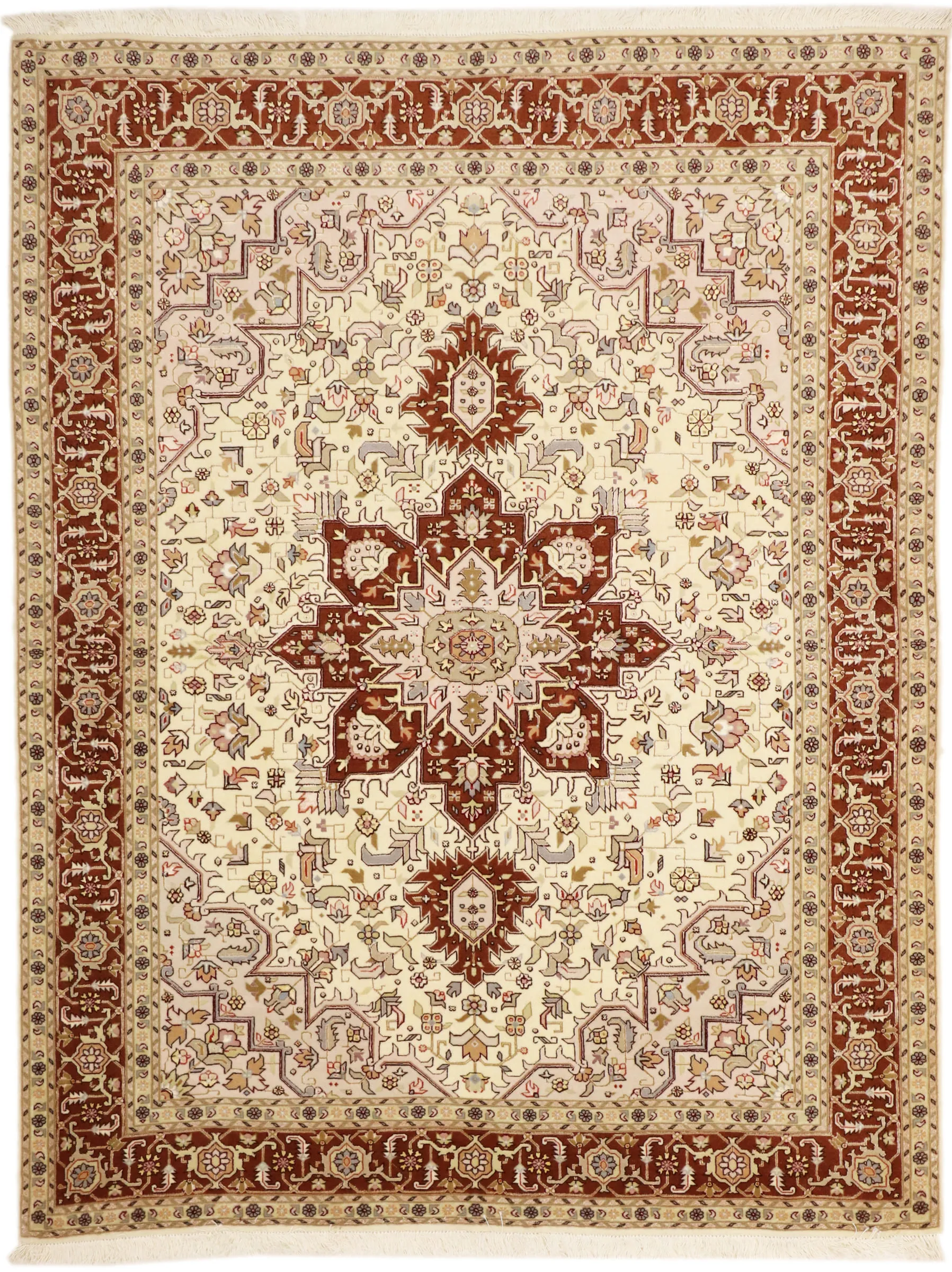
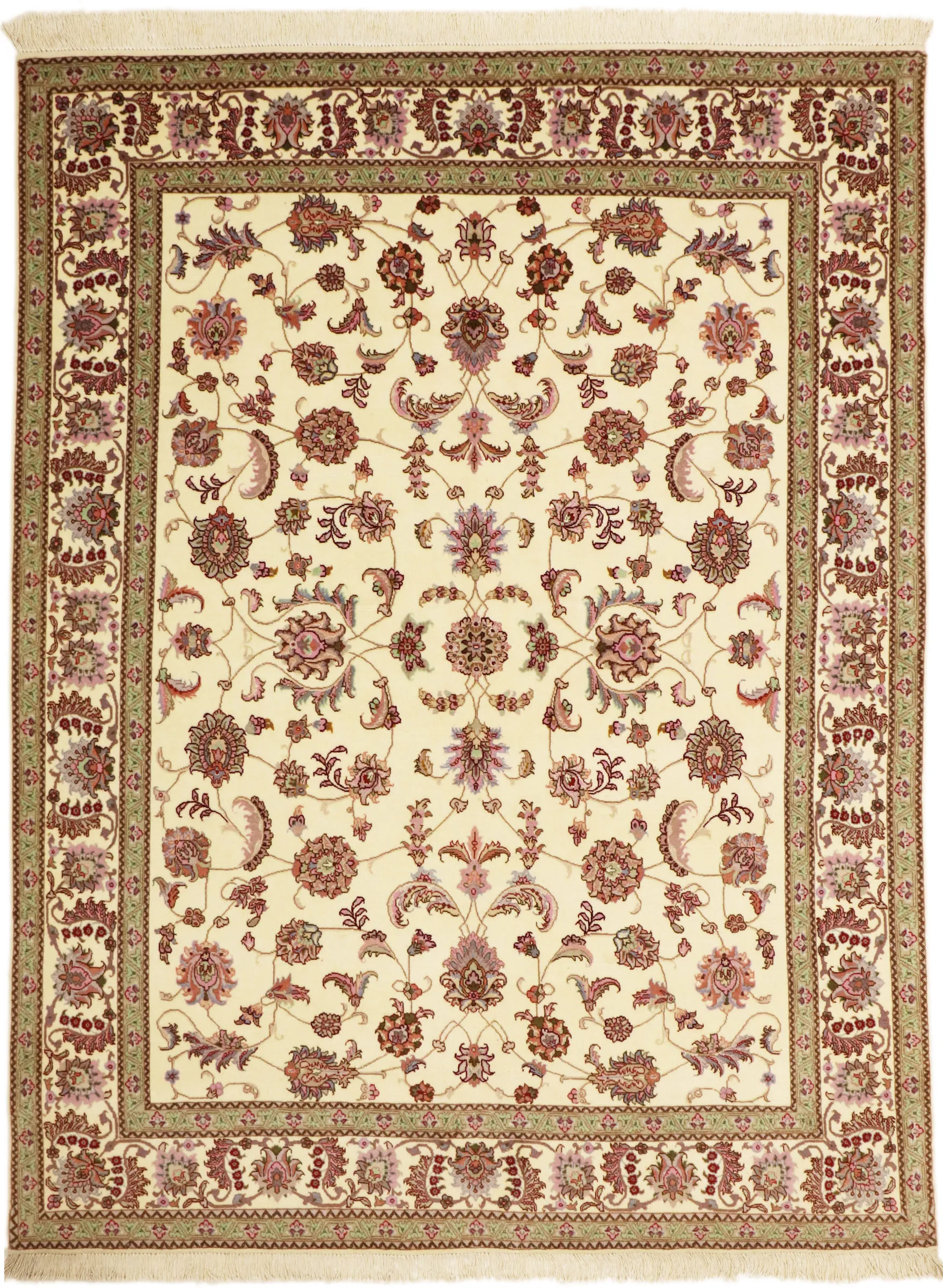
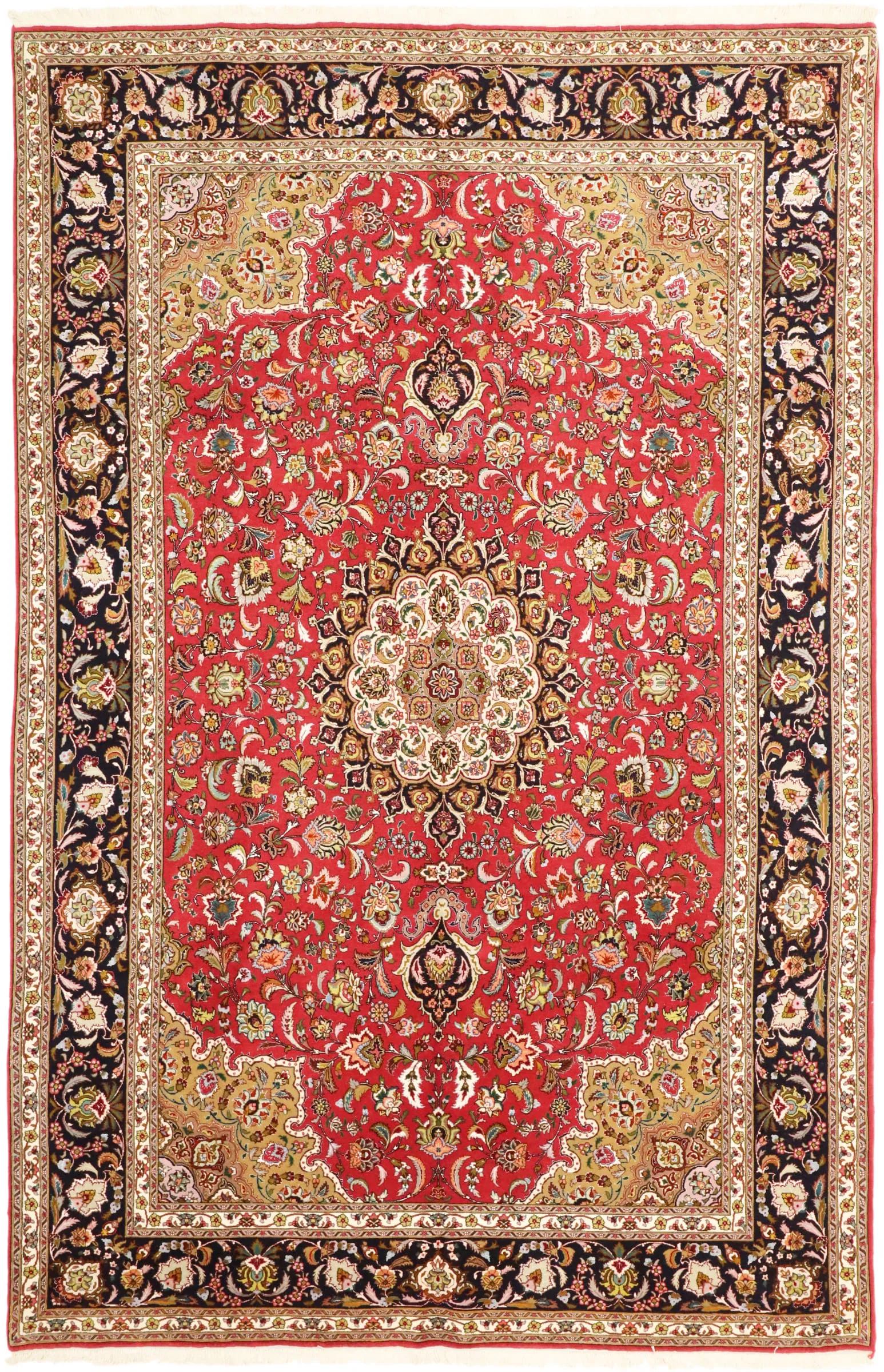
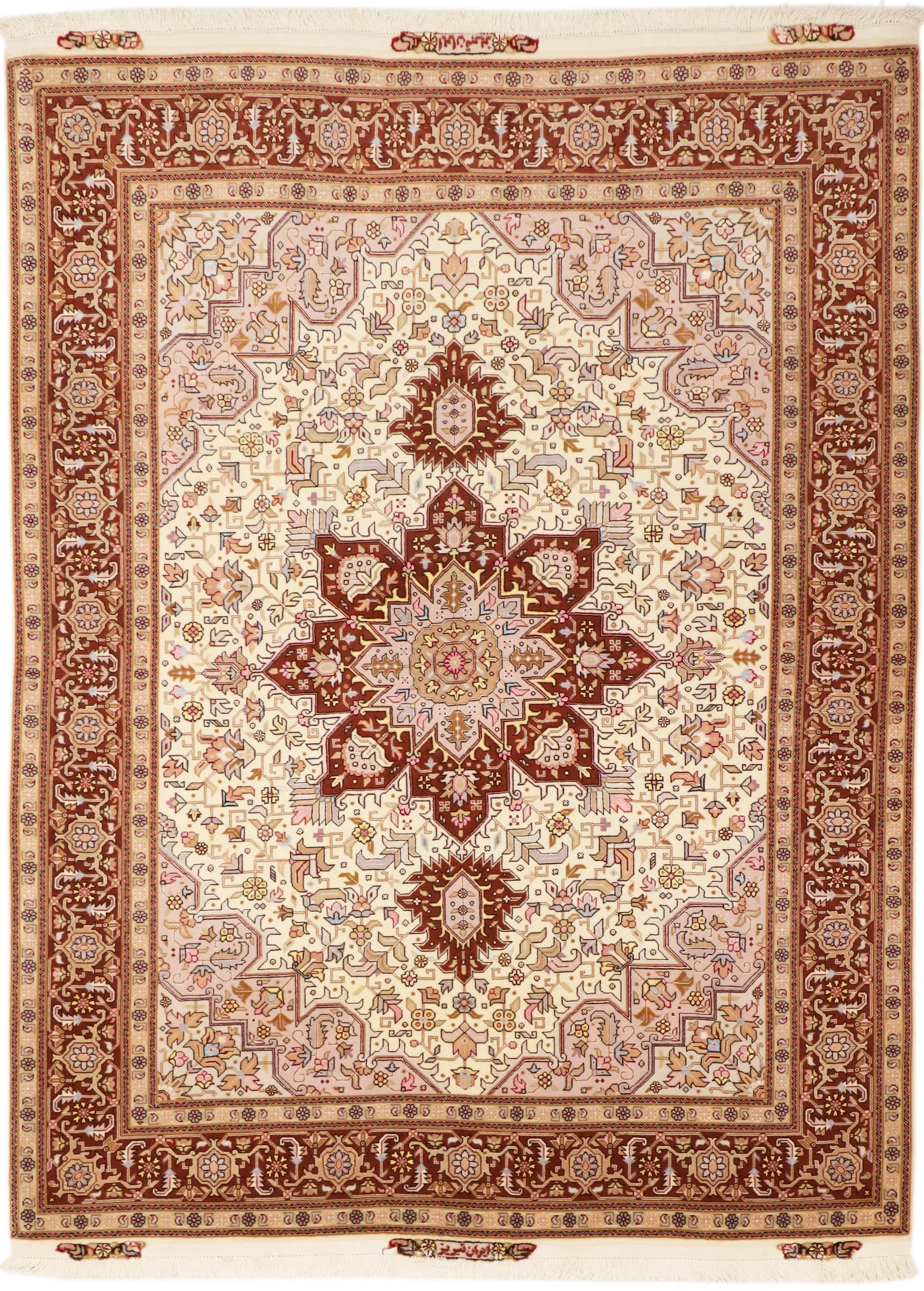
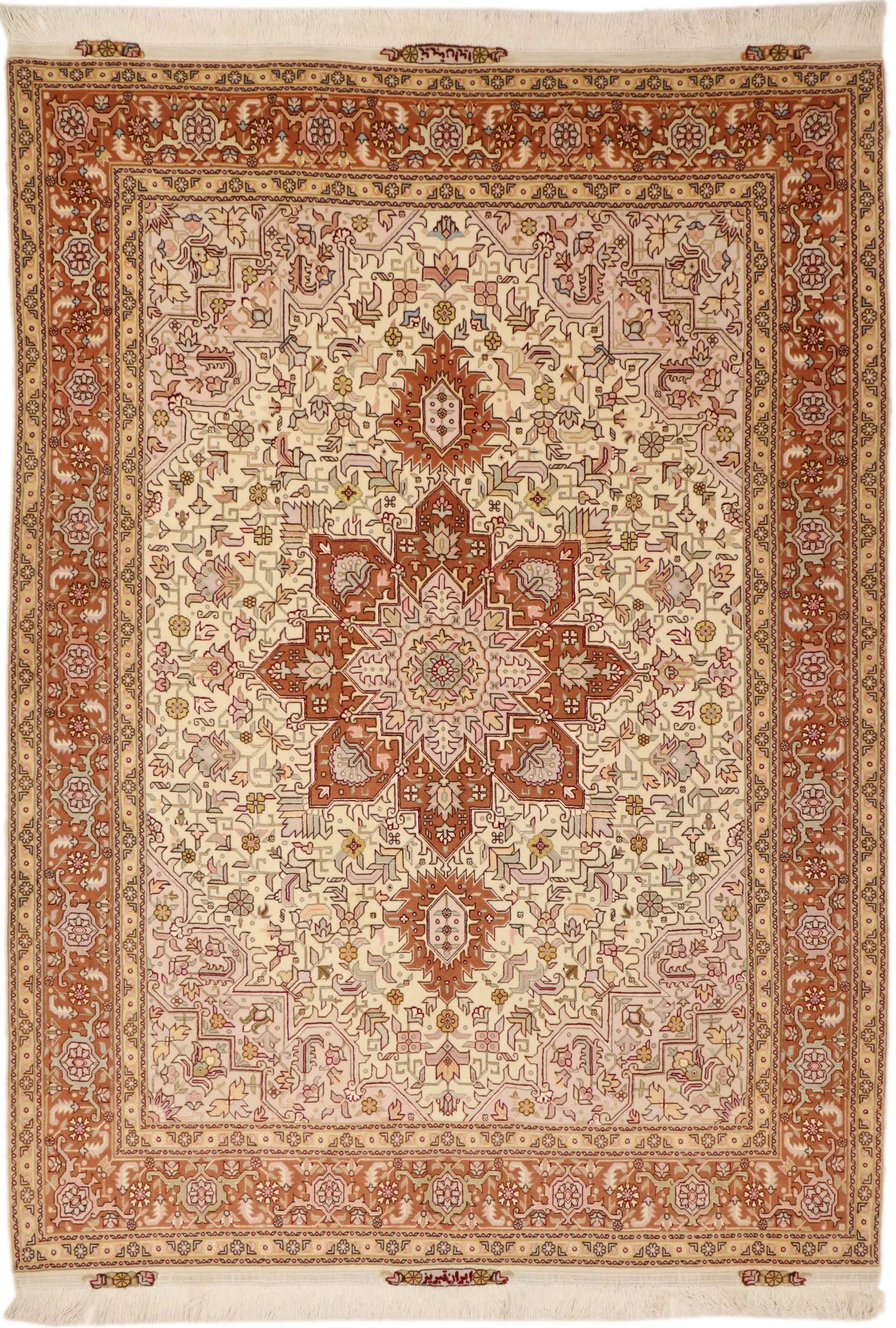
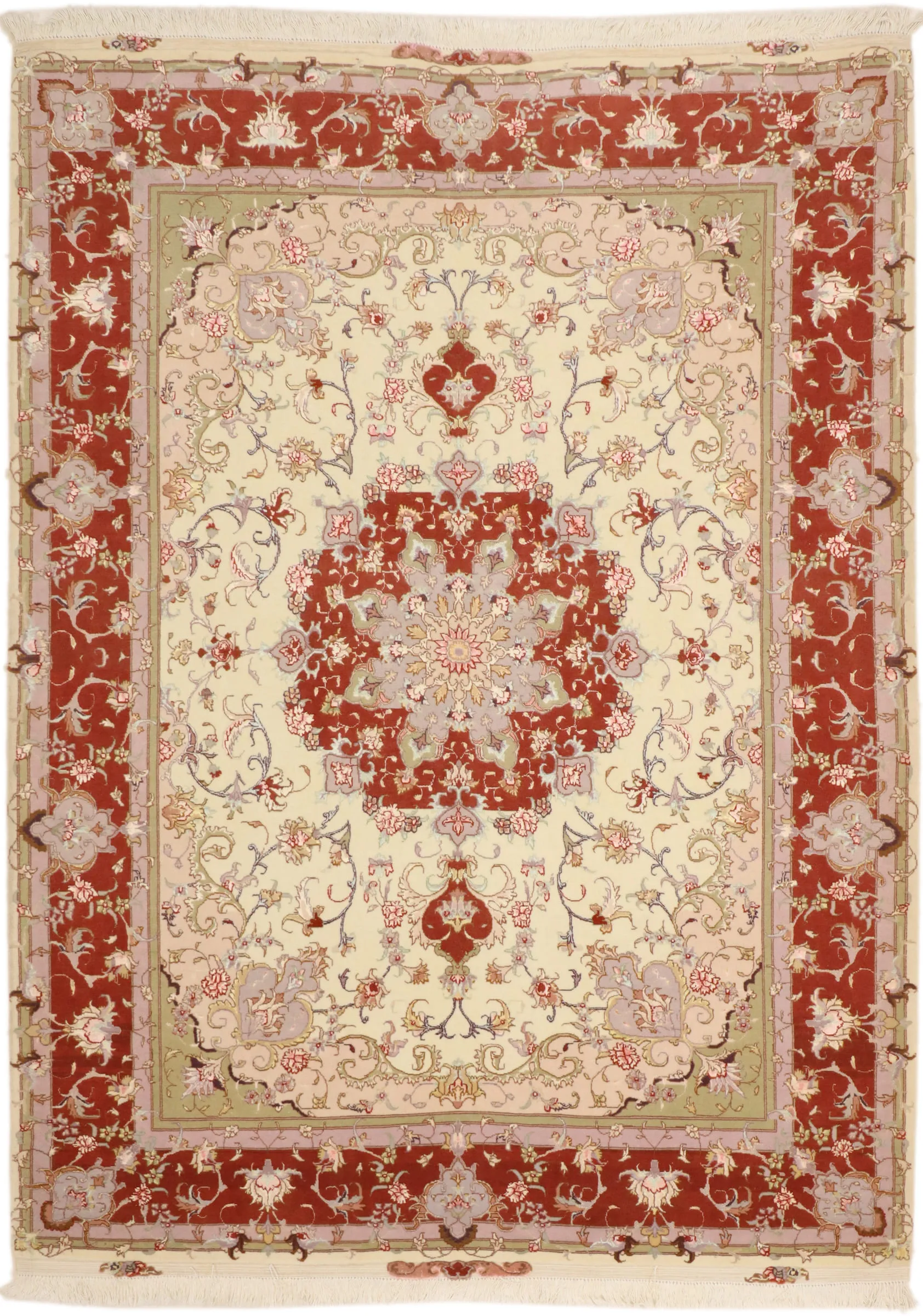
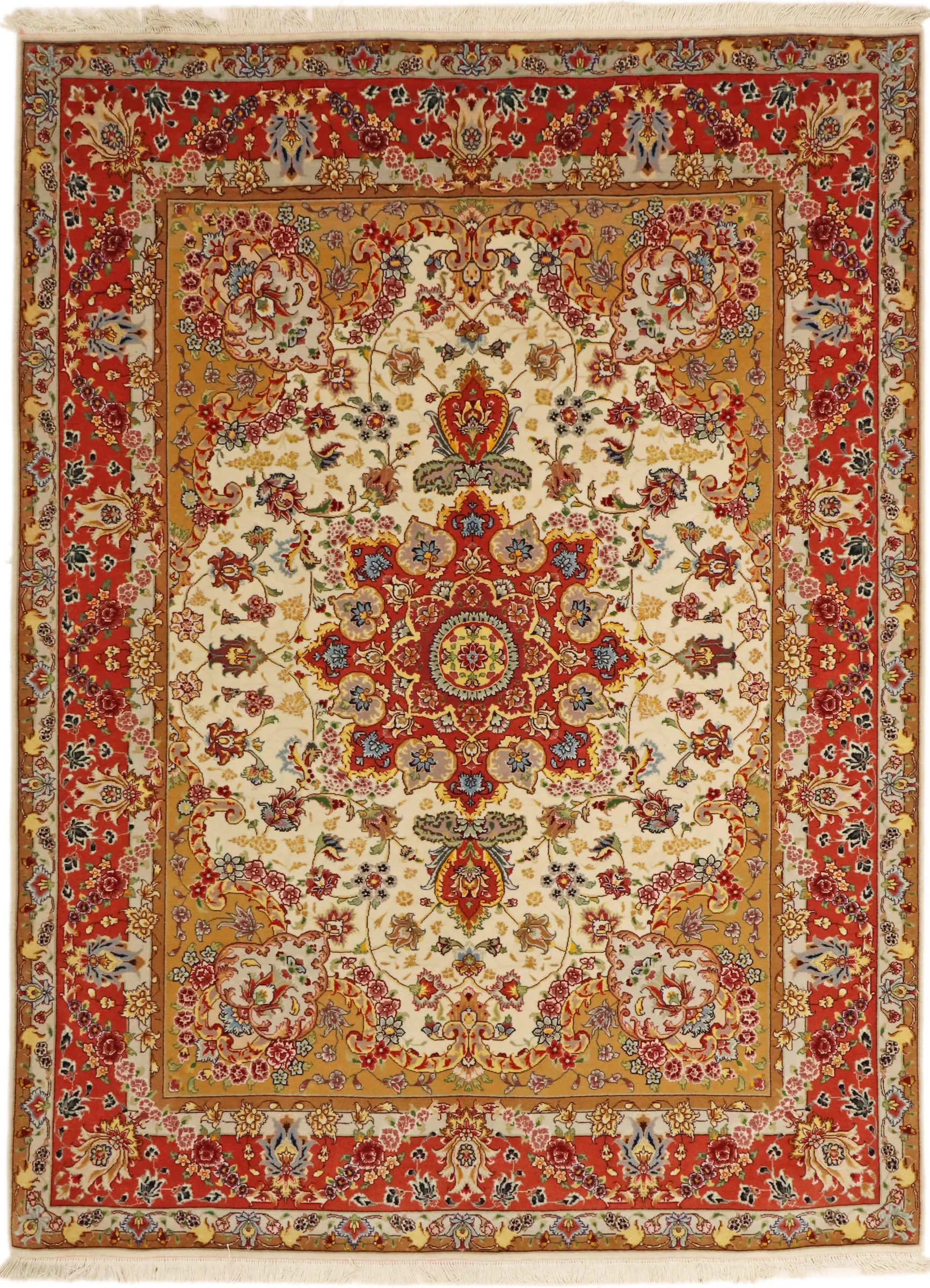
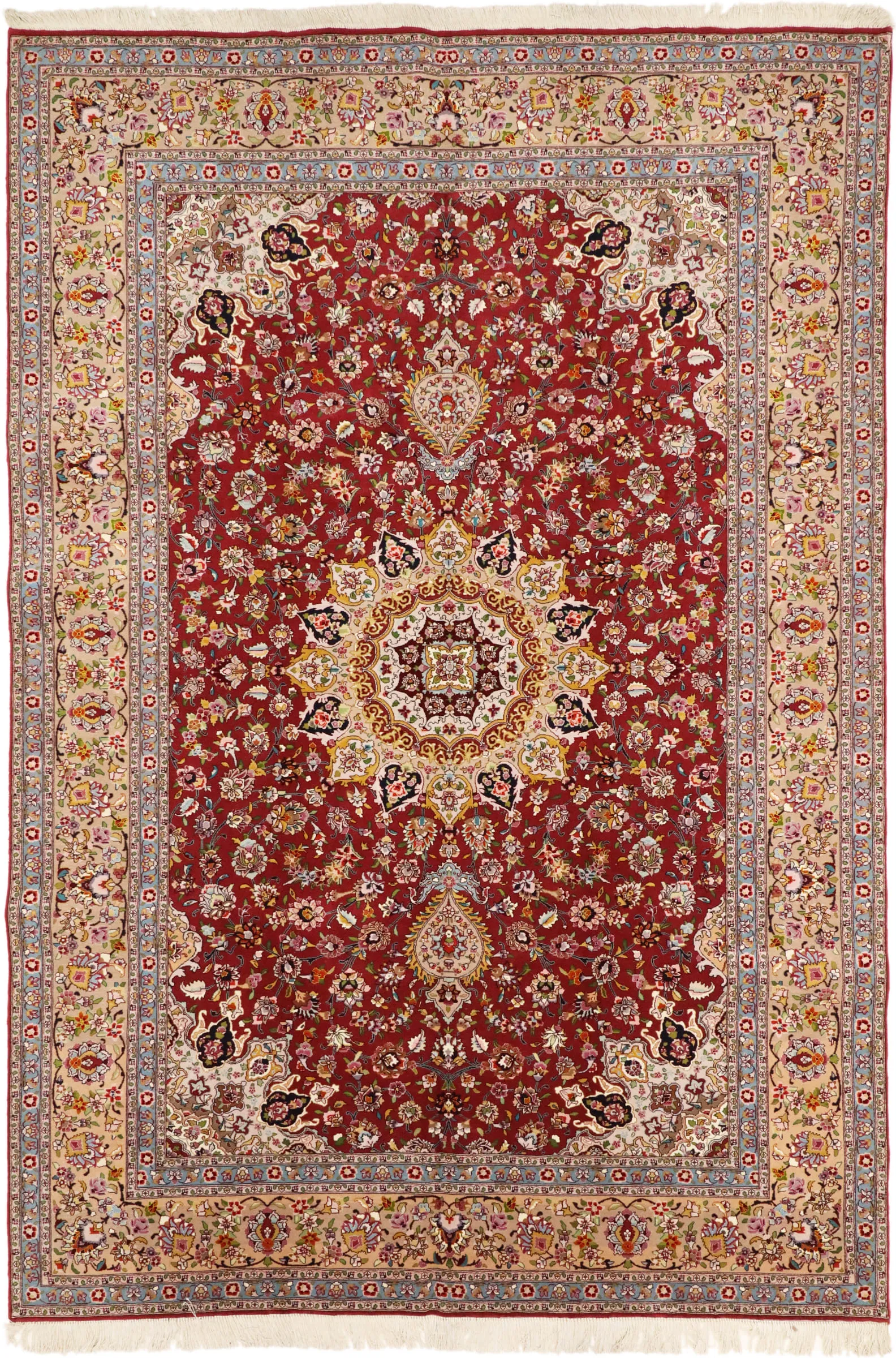
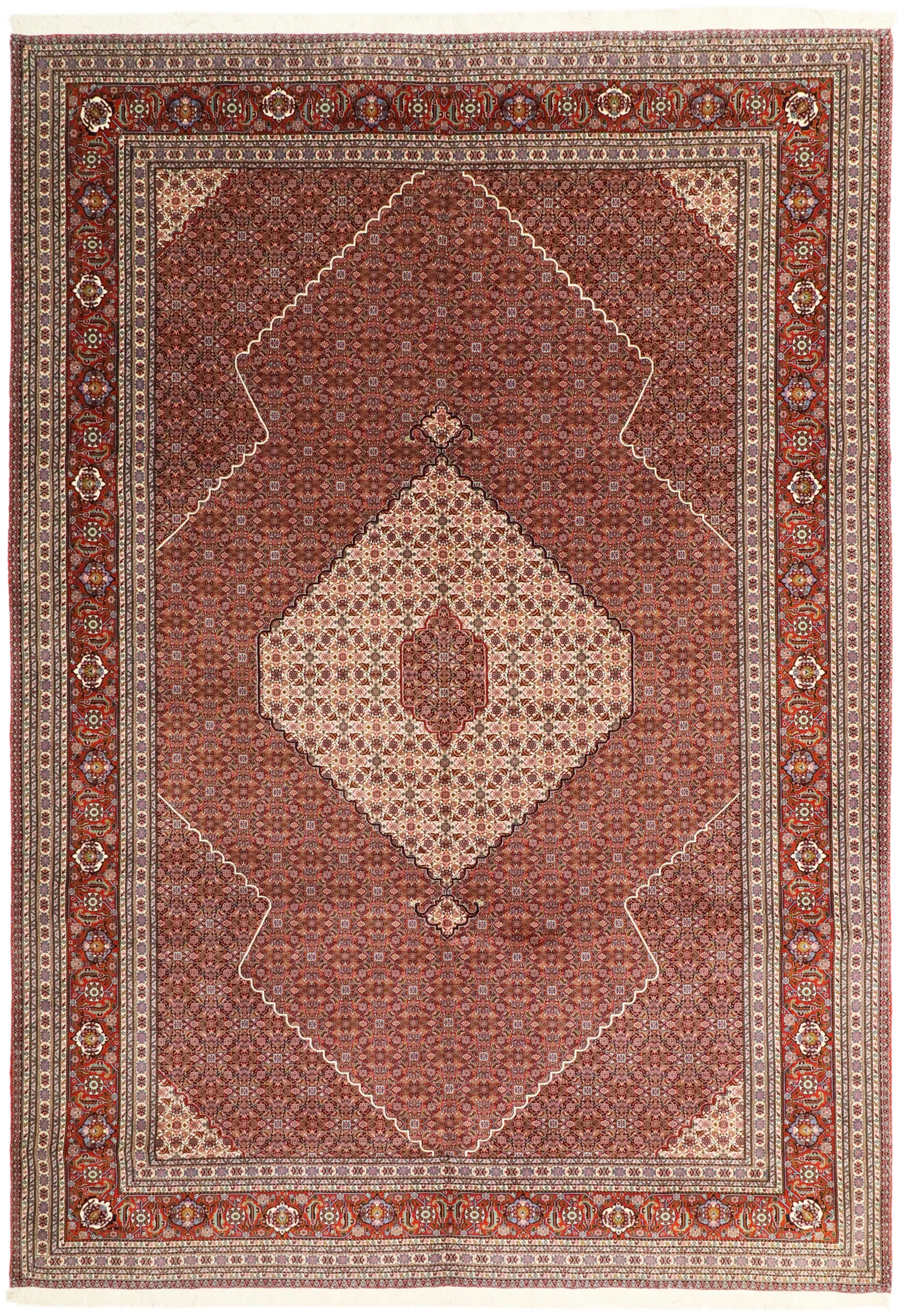
Raj
The Raj figure helps place a rug’s fineness within the Tabriz tradition. It is most useful when comparing rugs of similar construction and should not be viewed in isolation.
 Free shipping & returns
 31-day return policy
Free shipping & returns
31-day return policy
Free shipping & returns
31-day return policy
Free shipping & returns
31-day return policy
Free Shipping & Returns
31-Day Returns
31-day return policy
Free shipping & returns
31-day return policy
Free shipping & returns
31-day return policy
Free shipping & returns
31-day return policy
Free Shipping & Returns
31-Day Returns

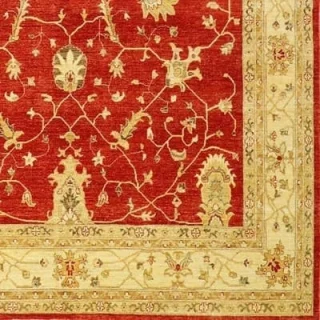
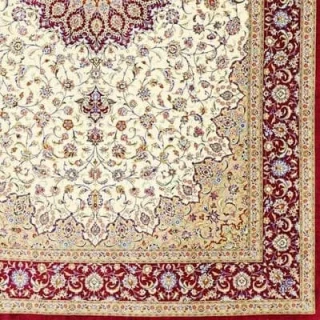
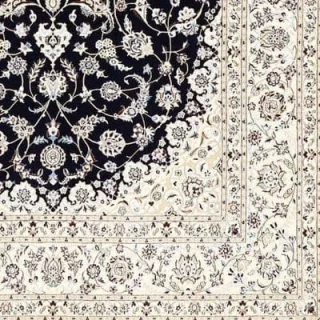
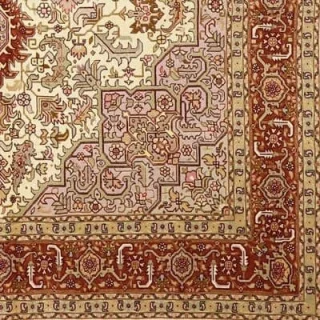
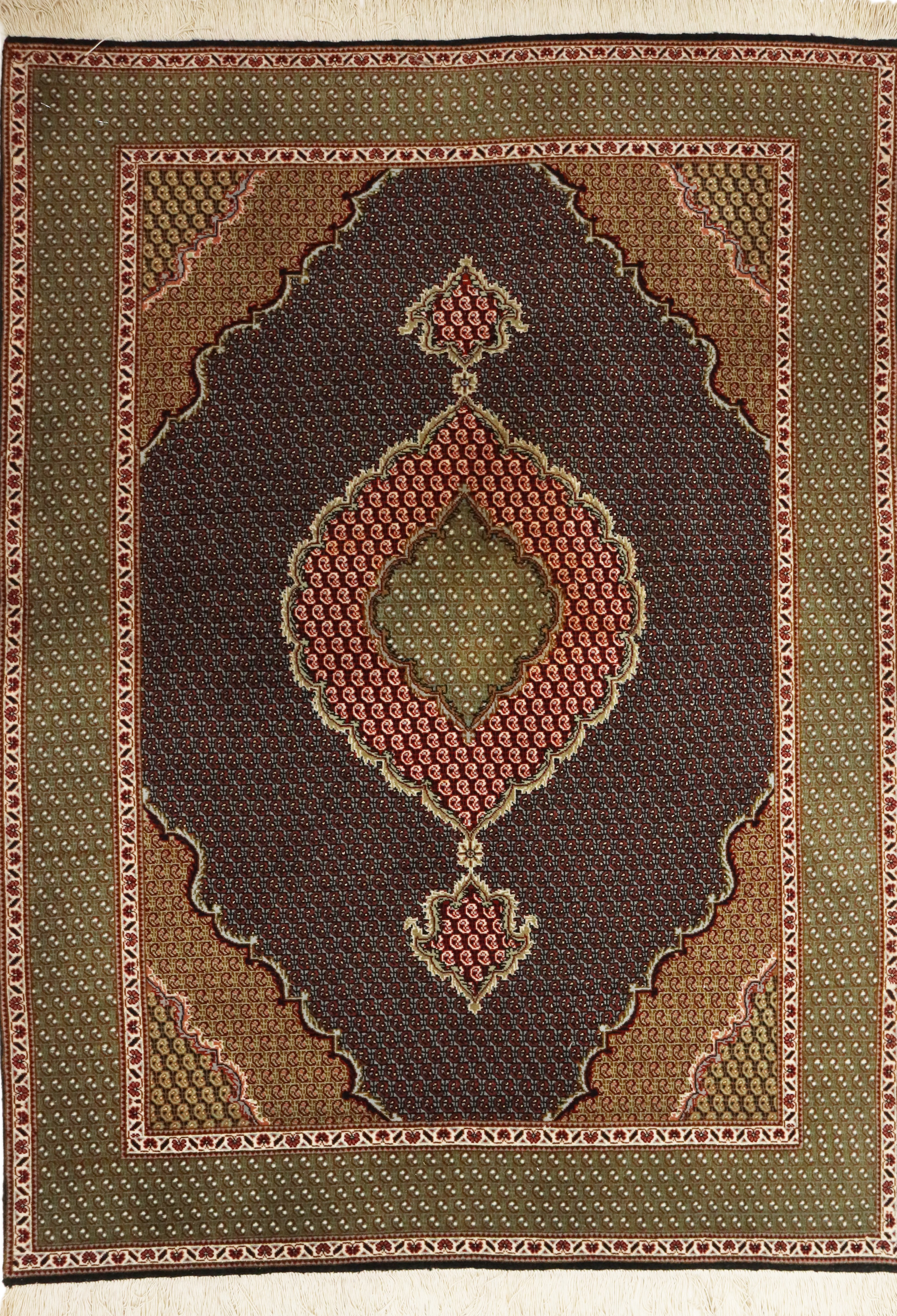
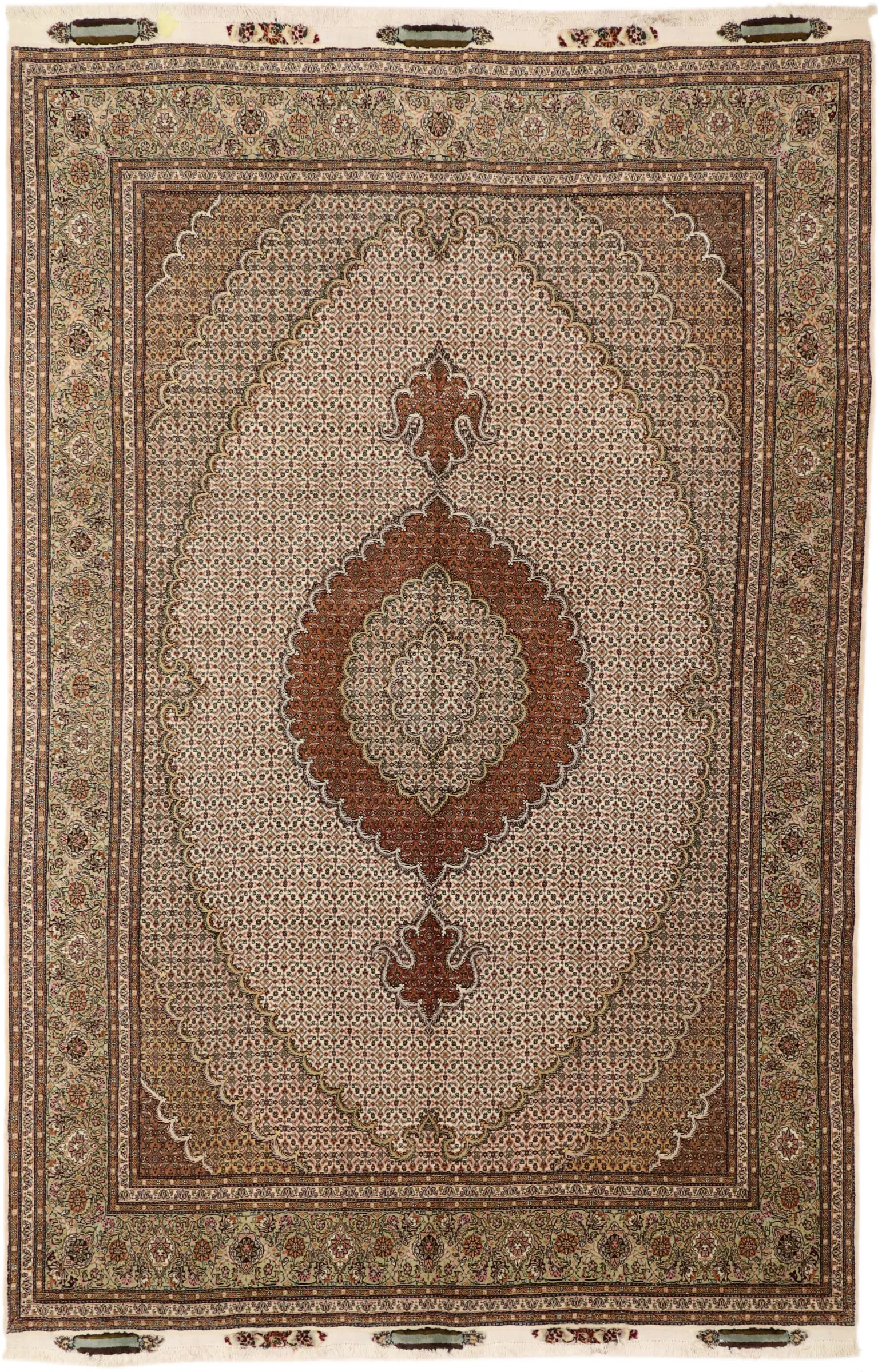
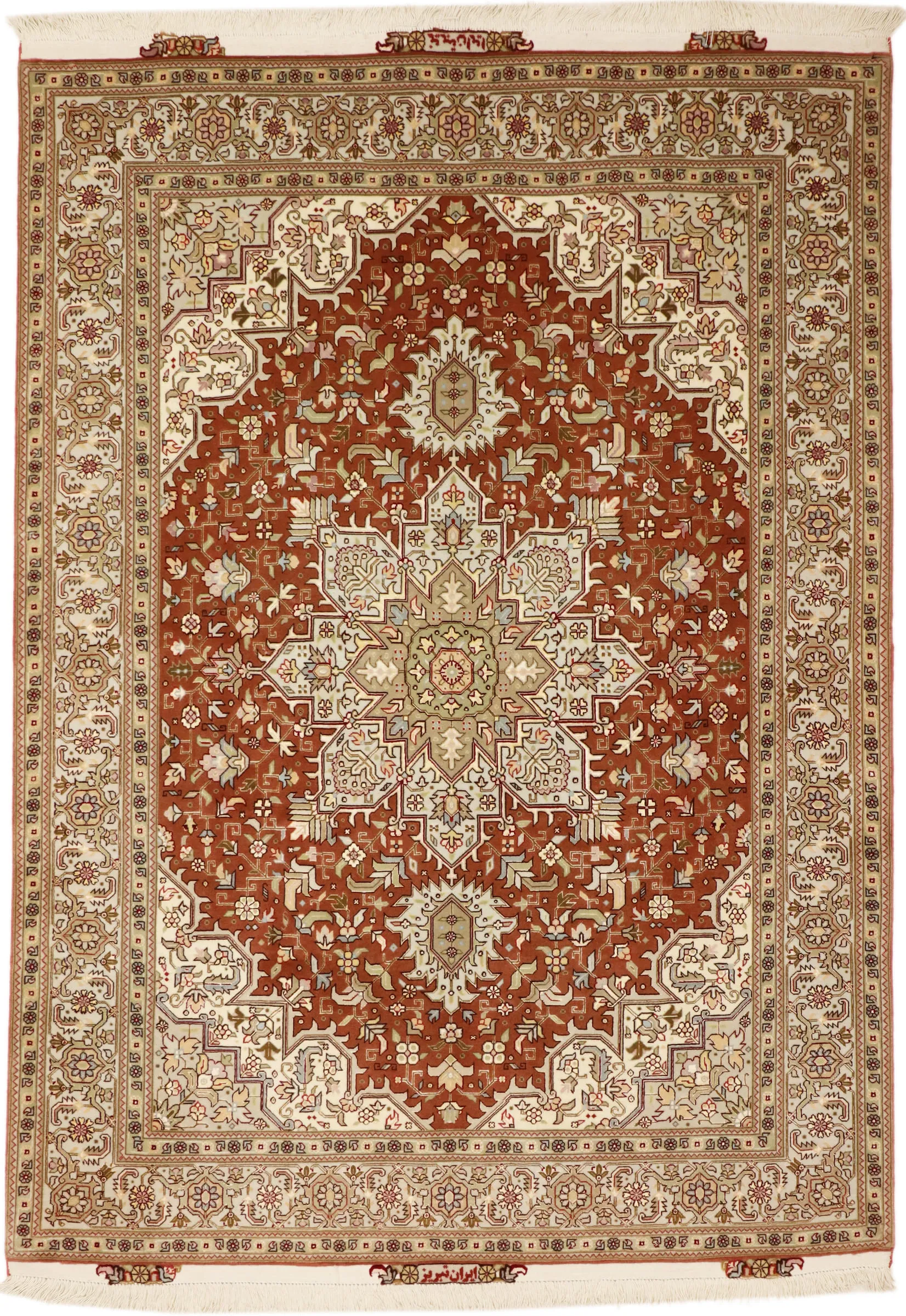
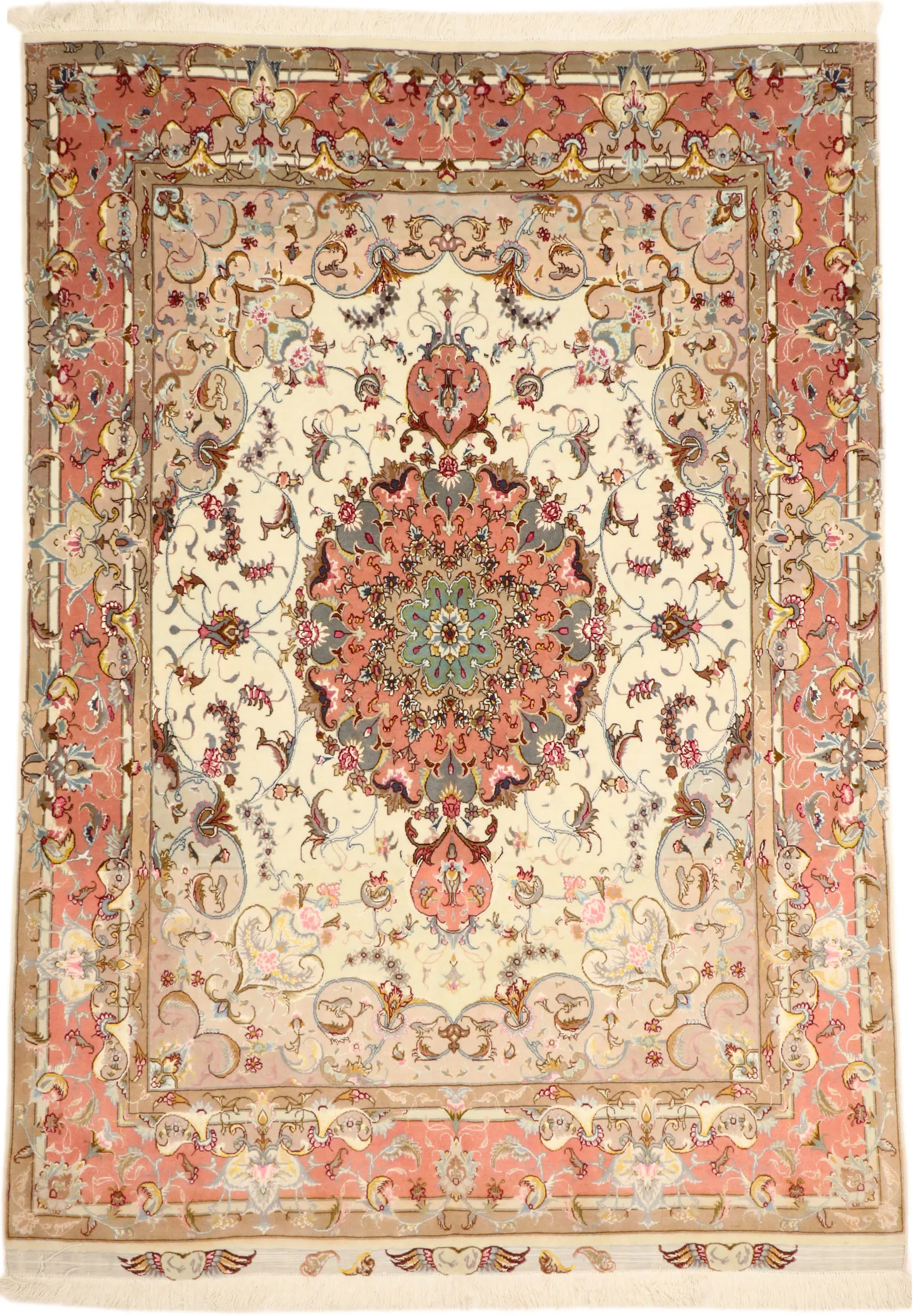
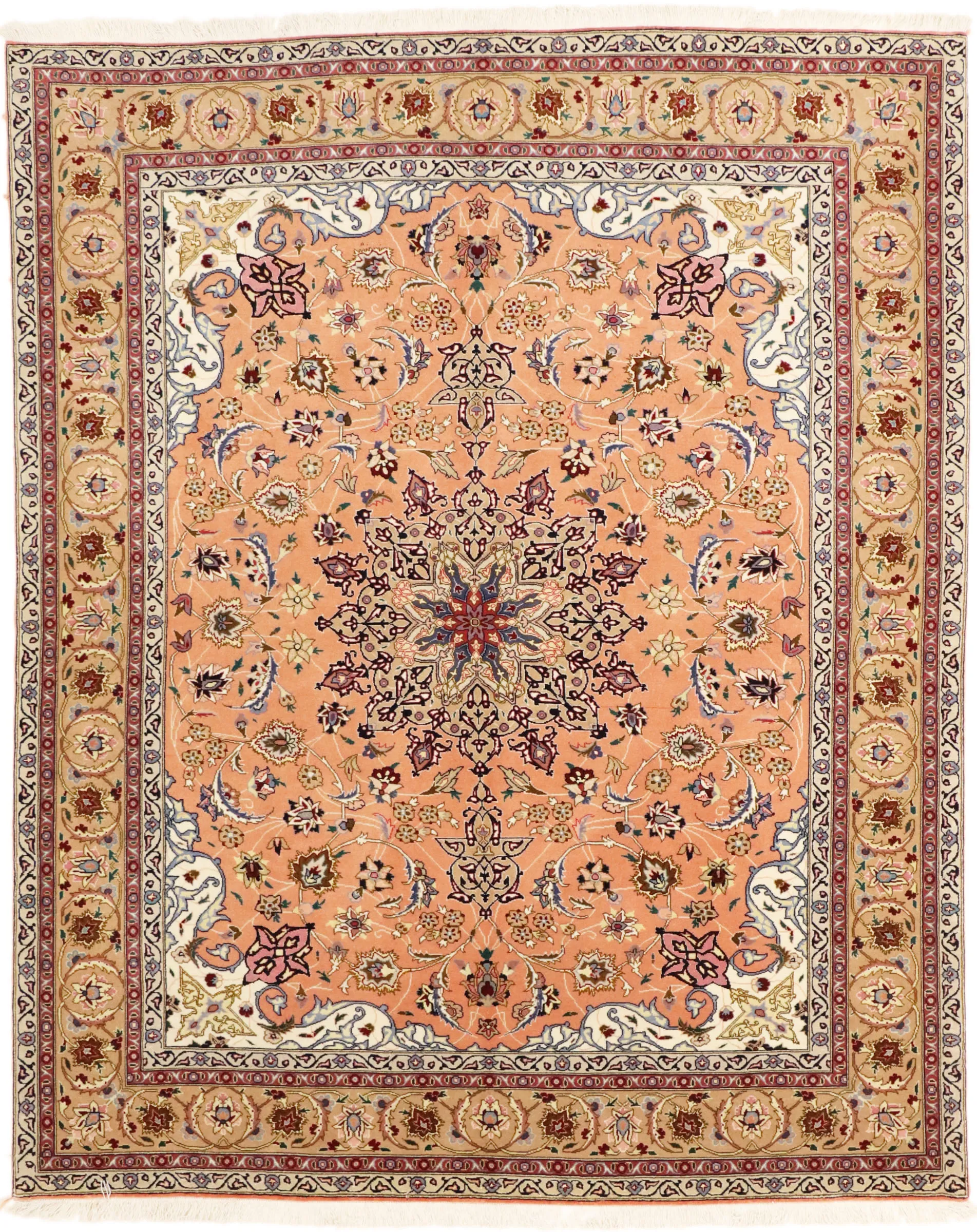
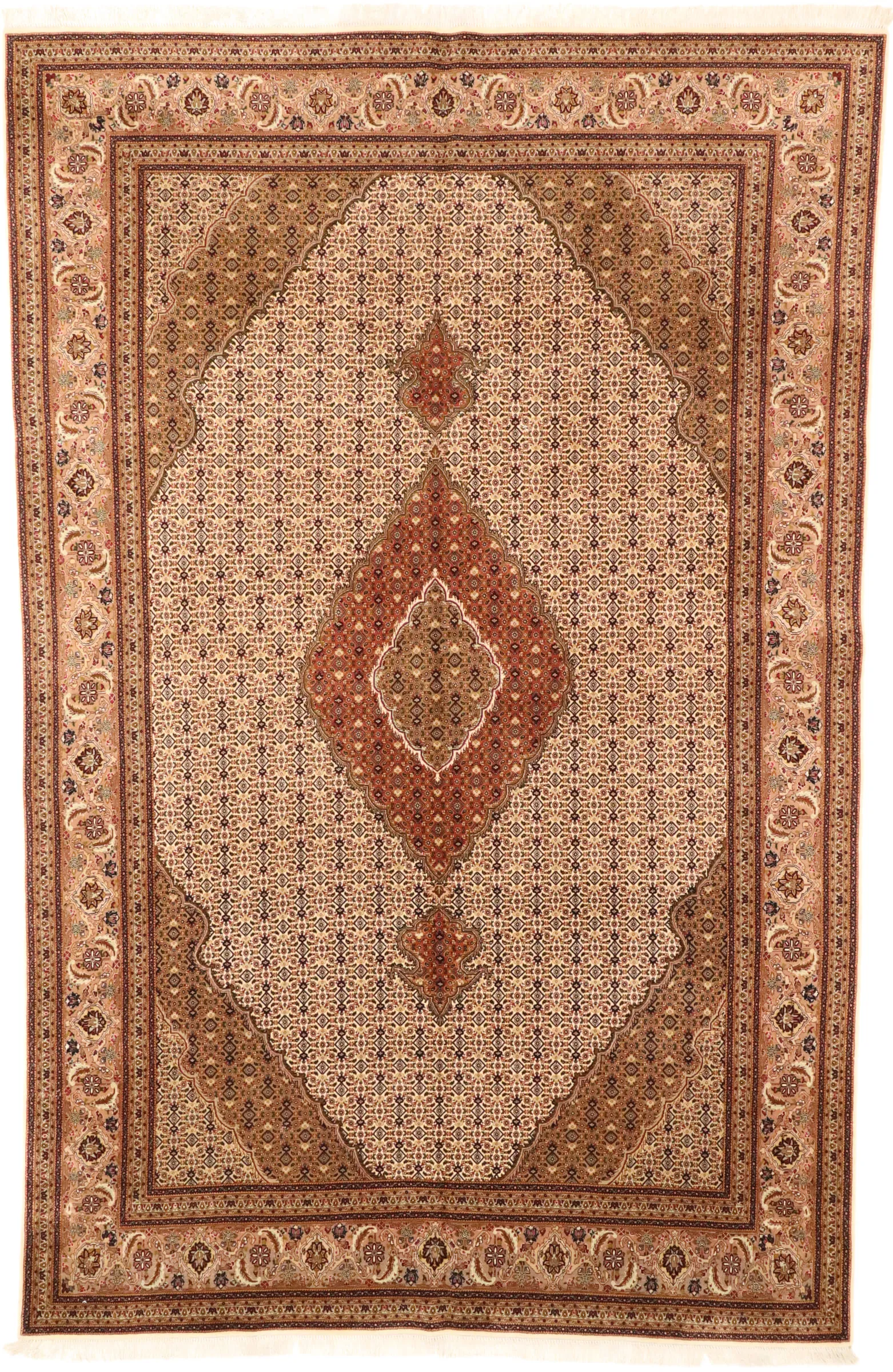
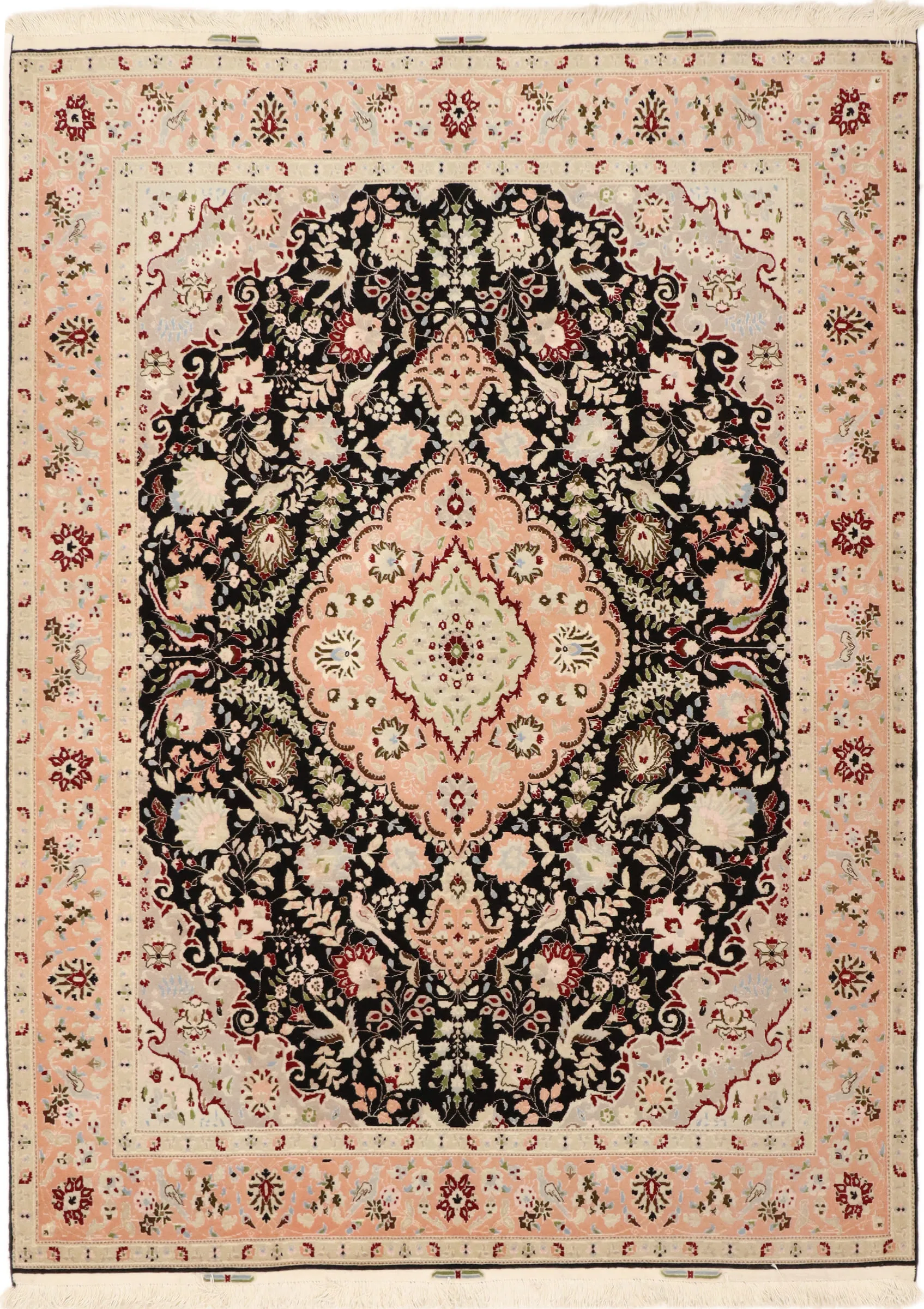
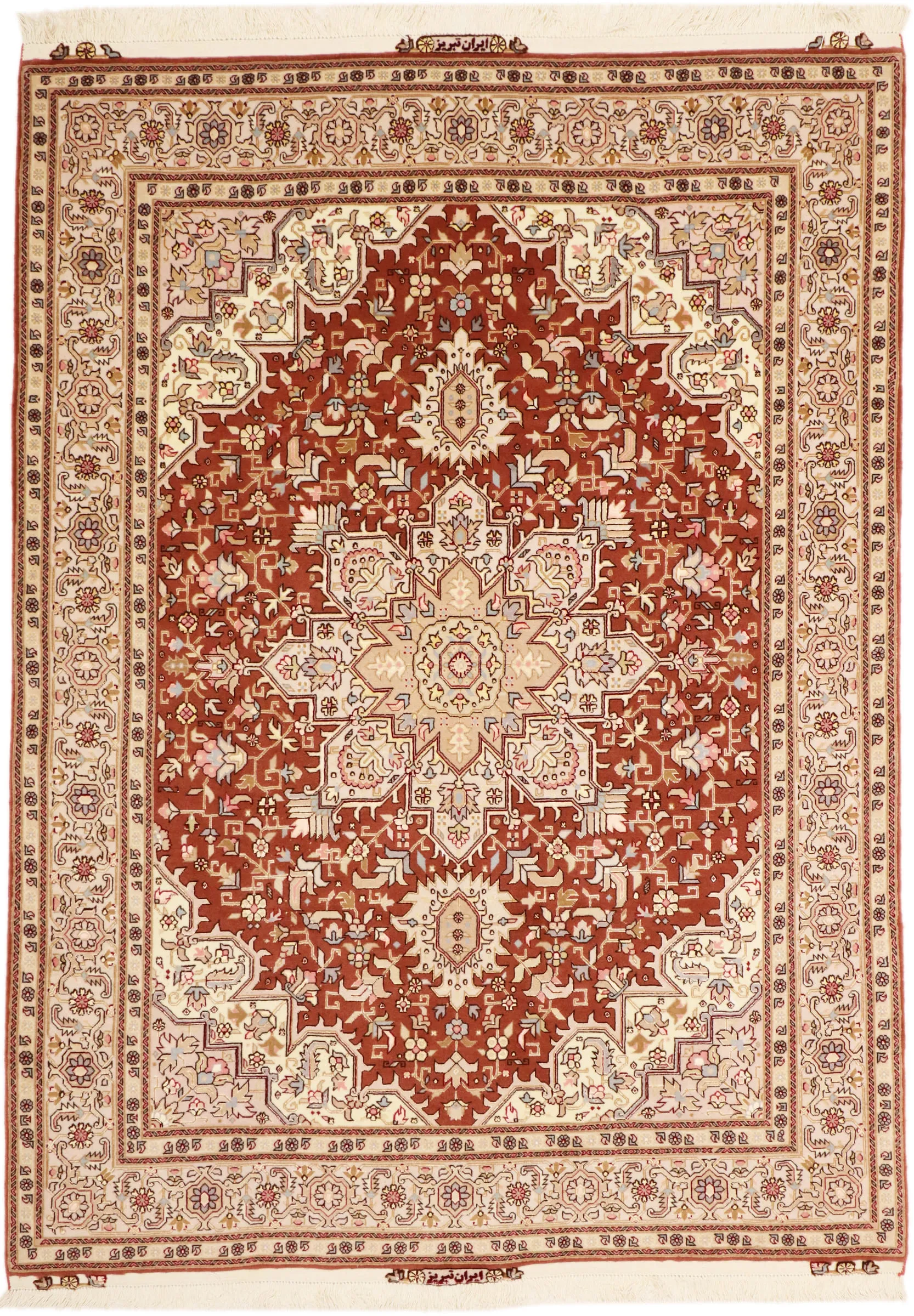
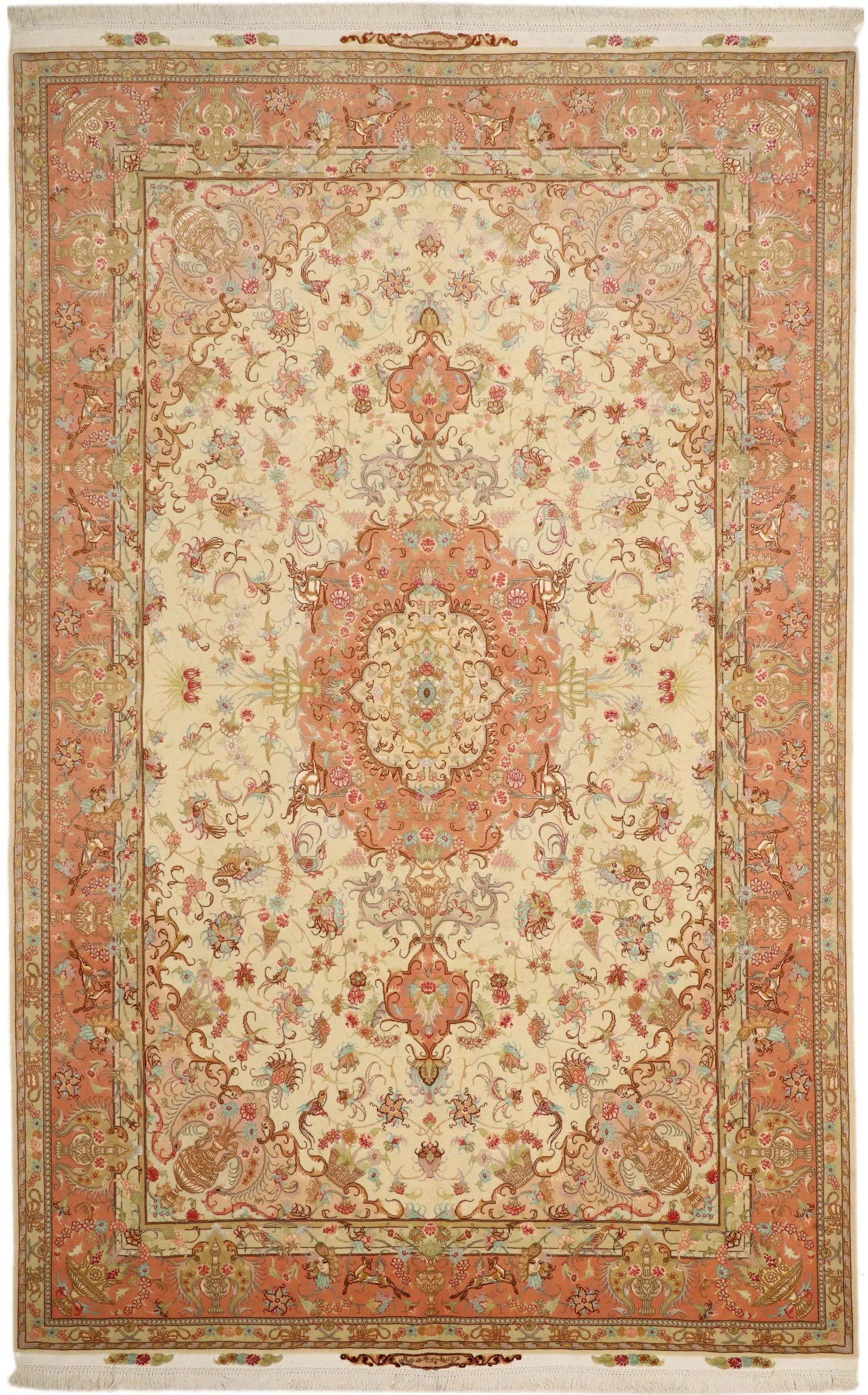
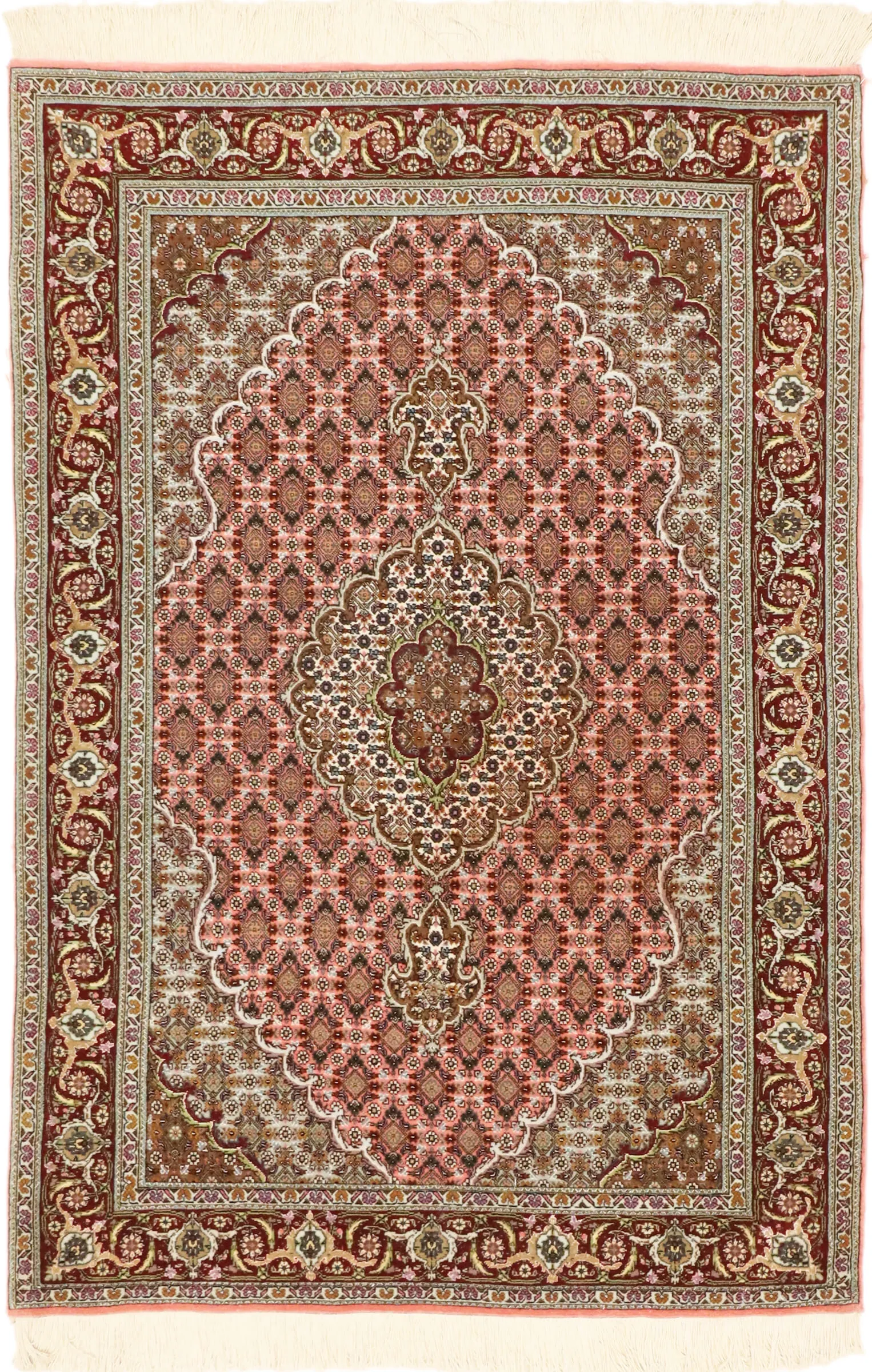
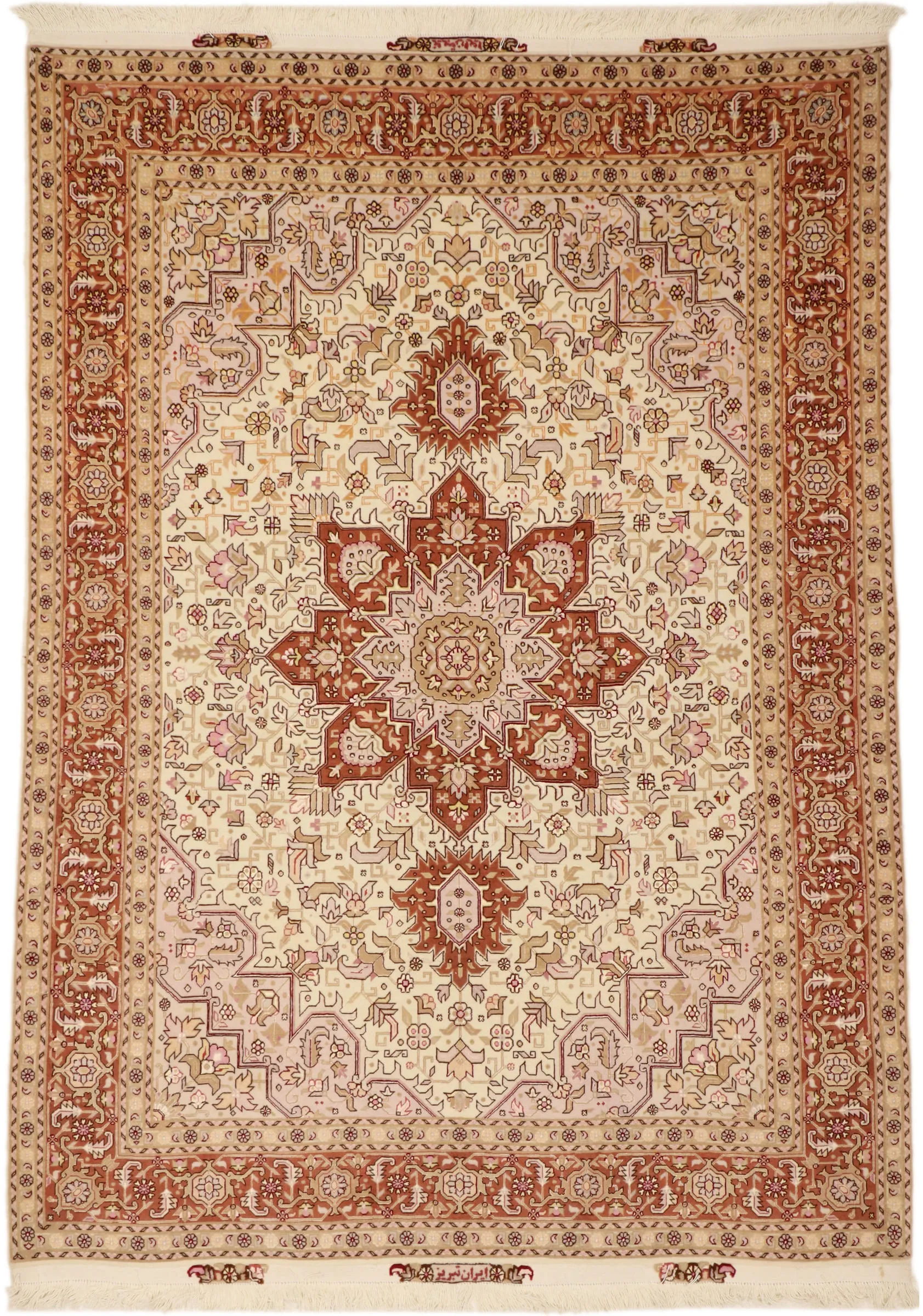
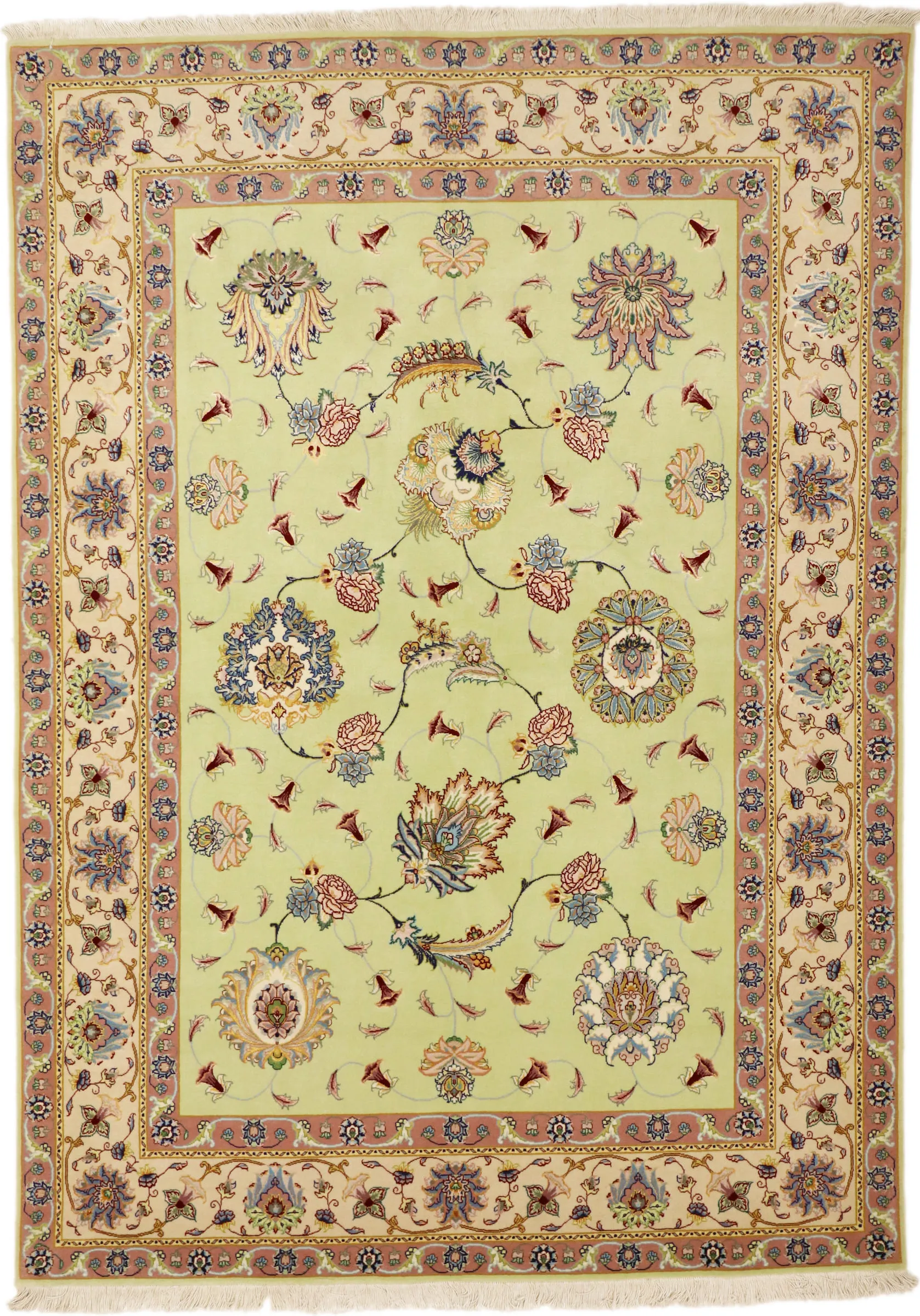
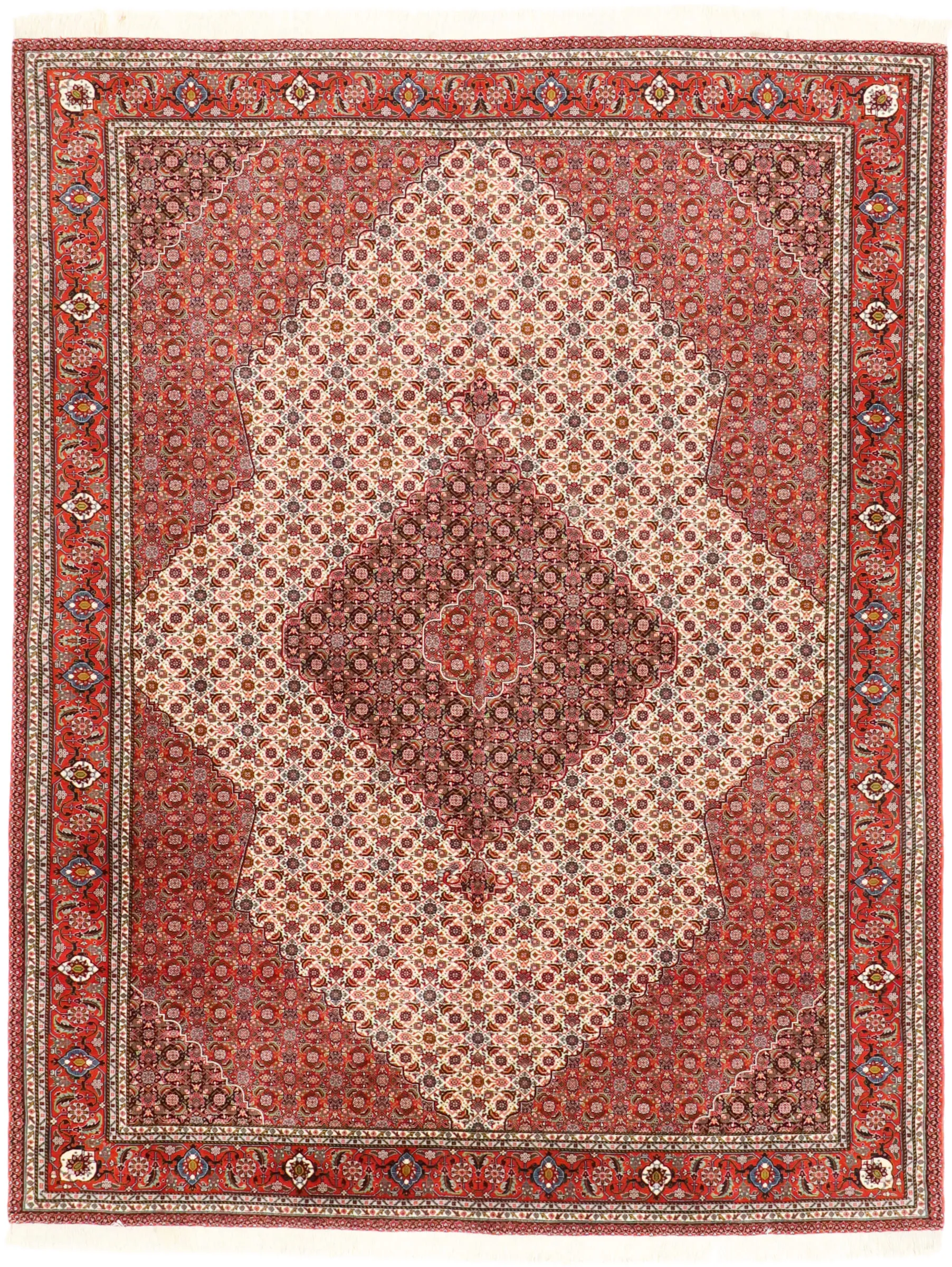
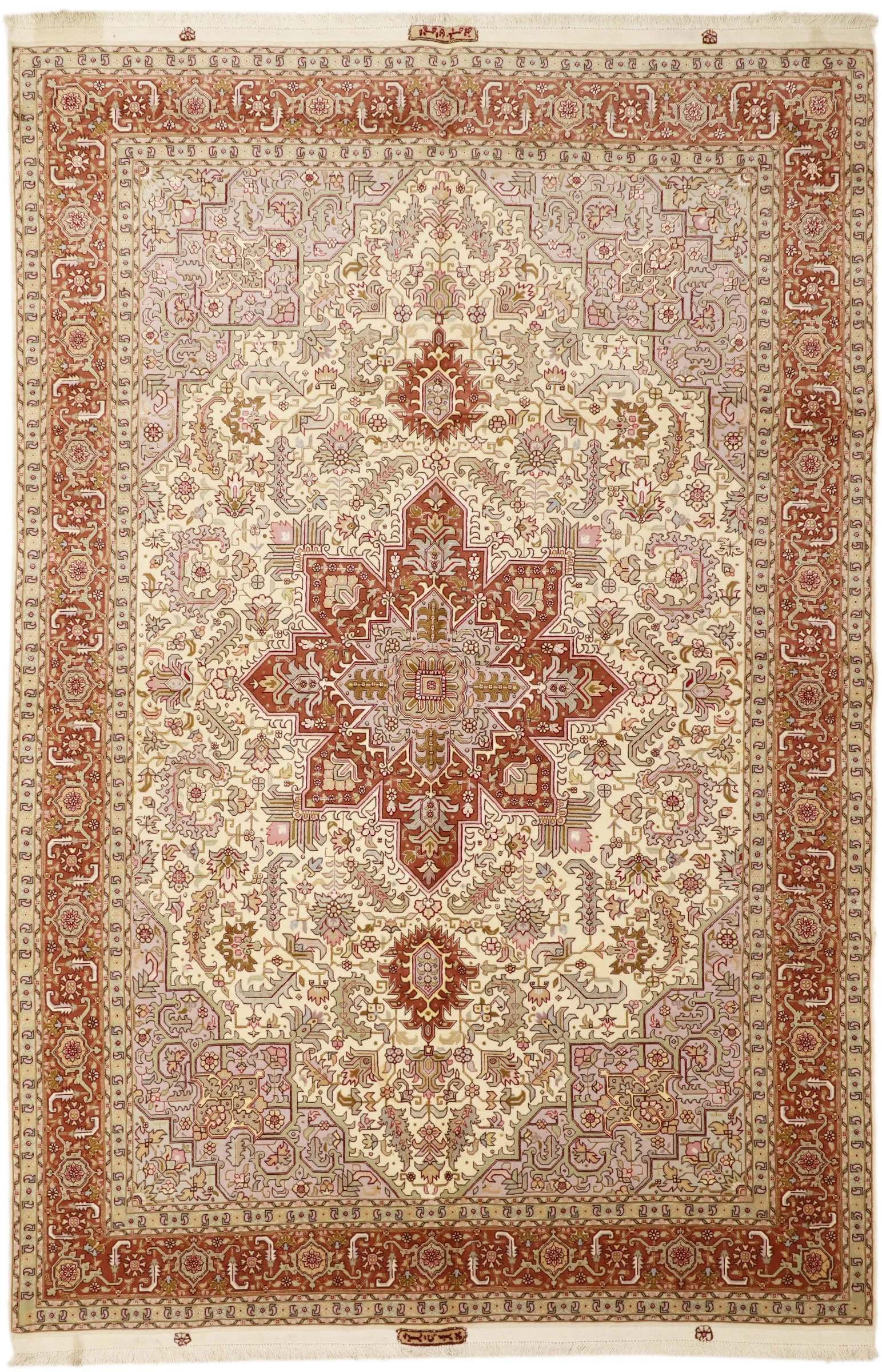
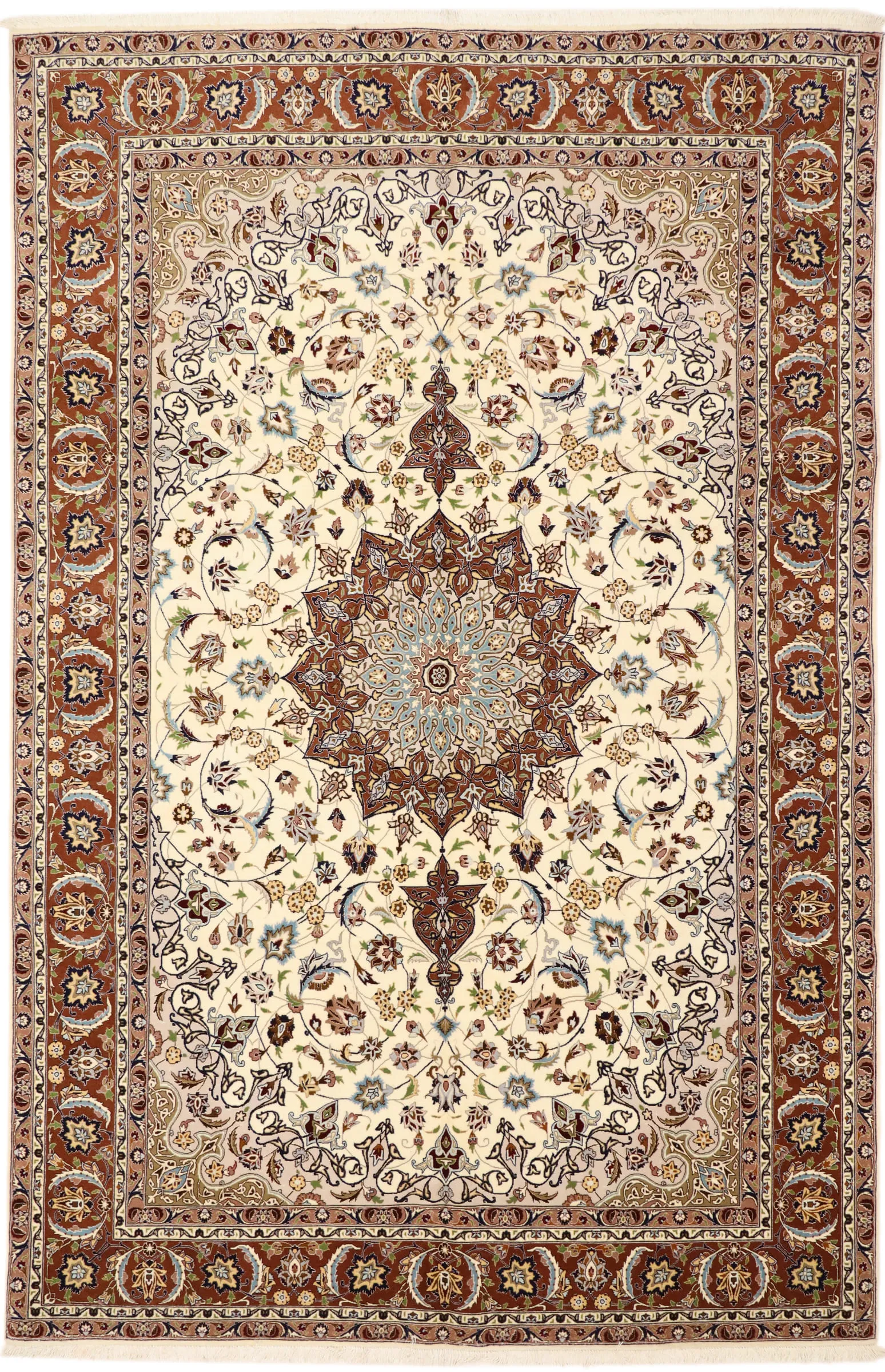
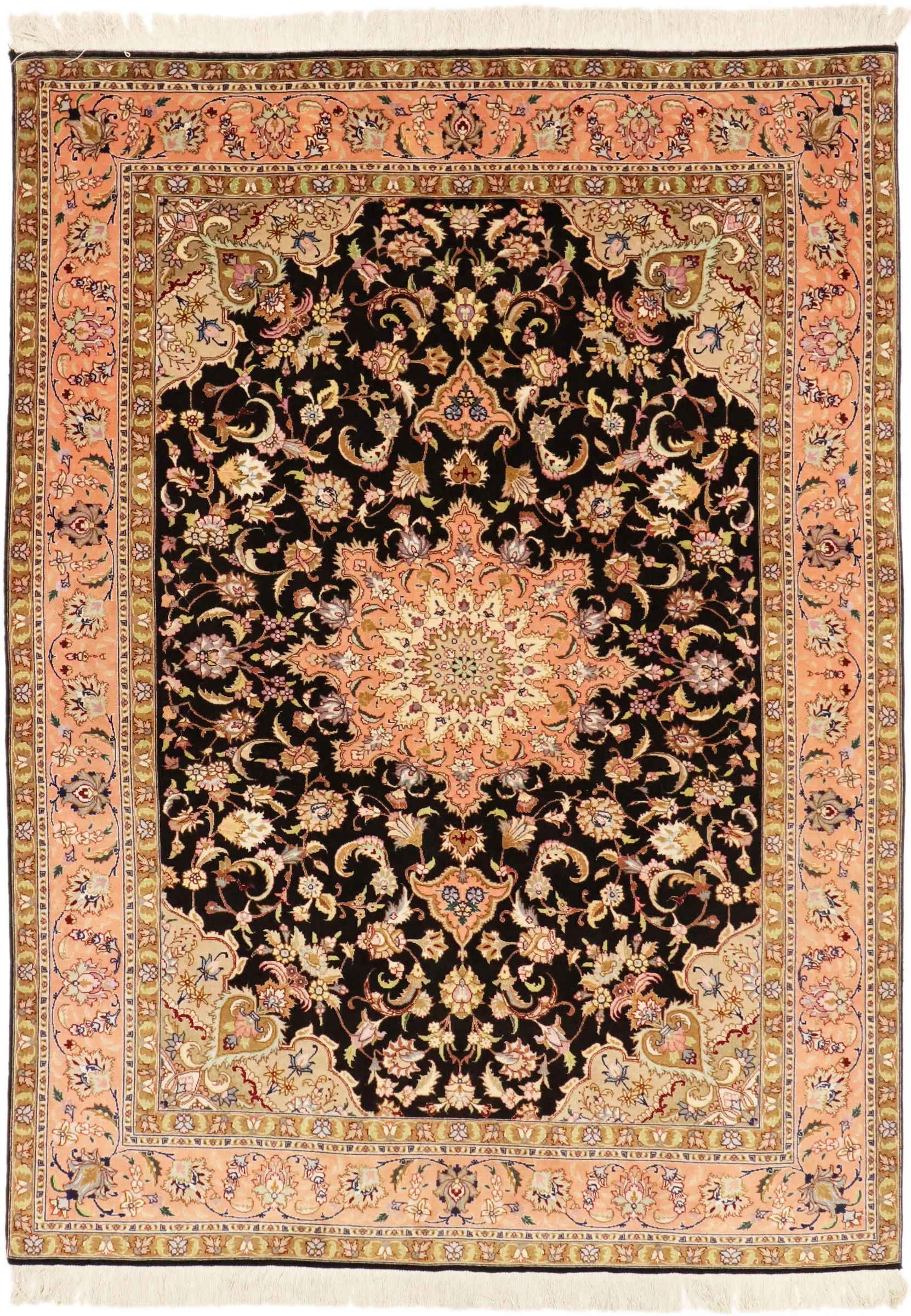
Known for their refined drawing and remarkable variety of designs, Tabriz Rugs range from elegant medallion compositions to floral and pictorial patterns. At Jakobson Carpets, you can buy selected hand-knotted one-of-a-kind pieces from this important Persian weaving tradition. Hand-knotted Tabriz Rugs come from the historic rug-making city of Tabriz in north-western Iran and are among the best-known classical Persian rugs. Their design language is exceptionally broad, from central medallions and finely worked floral vines to garden layouts and, in some pieces, detailed figurative scenes. Depending on the individual rug, the pile may be made from high-quality wool with carefully placed silk highlights, while knot density and fineness vary by quality. Clear contours and balanced proportions make Tabriz Rugs easy to combine with both traditional furniture and contemporary interiors. As individually hand-knotted pieces, they bring warmth, structure and authentic Persian craftsmanship into living and dining spaces.
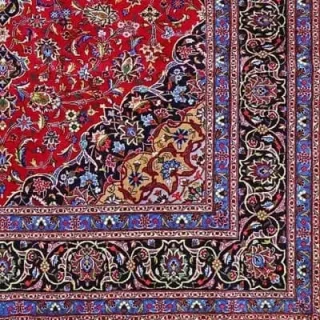
Tabriz is one of the most versatile Persian rug-making traditions. Classic central medallions sit alongside floral compositions, garden designs and figurative scenes; depending on the individual piece, the overall effect can range from calm and balanced to highly detailed and distinguished.
This guide explains the characteristic features and materials of Tabriz rugs, as well as the traditional Raj measure of fineness. It also shows how size, pattern structure and colour interact in living rooms, dining rooms and bedrooms.
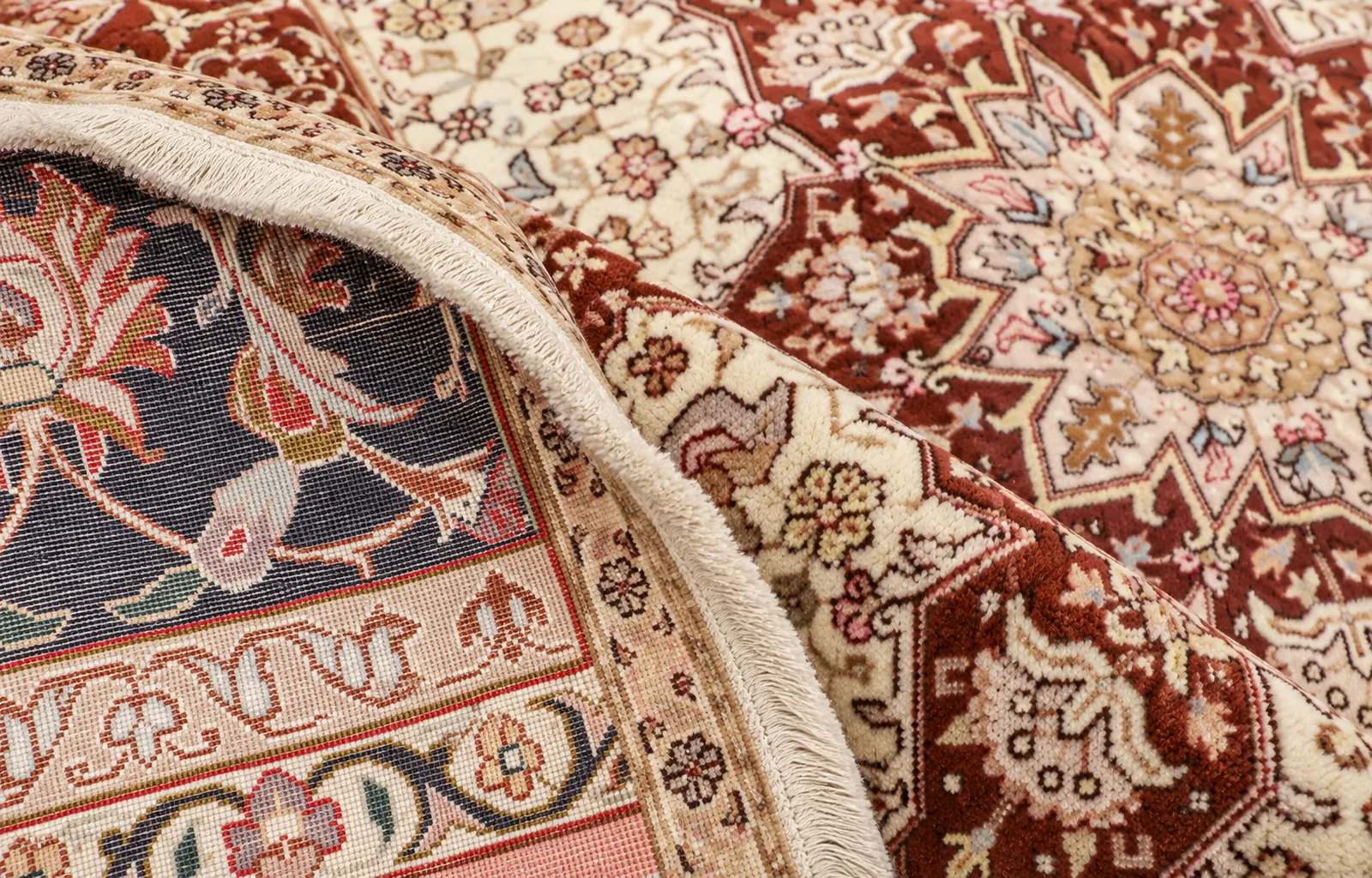
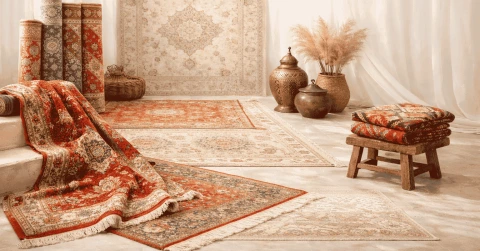
There is no single pattern that defines every Tabriz rug. In fact, the remarkable breadth of design is one of the hallmarks of this provenance. Central medallions, finely structured borders and floral vines are common, while garden layouts, animal motifs and figurative scenes also appear.
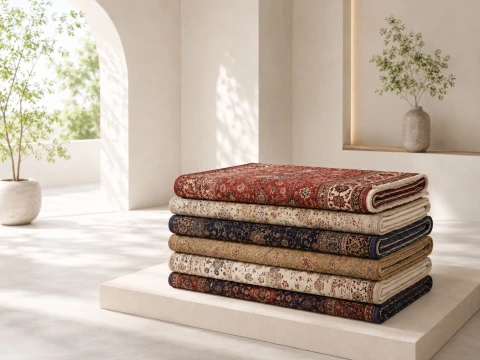
The overall effect depends strongly on the individual piece. Some rugs use calm, balanced colour palettes, while others feature stronger contrasts and very dense ornamentation. High-quality wool often forms the pile, while silk highlights can accentuate selected contours and motifs.
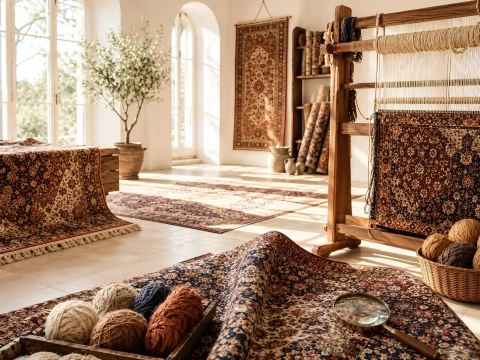
In the Tabriz tradition, fineness is often expressed in Raj. Raj refers to the number of knot rows within a regional unit of length. When comparing similarly constructed rugs, a higher Raj figure generally indicates finer knotting and therefore the potential for greater detail in the design.
The Raj figure helps place a rug’s fineness within the Tabriz tradition. It is most useful when comparing rugs of similar construction and should not be viewed in isolation.
Finer knotting allows for more precise curves, small blossoms, figures and complex borders. A high knot density alone, however, does not automatically make an individual rug higher in quality.
Wool provides a comfortable and durable surface. Silk details can emphasise fine elements, contours and reflections of light, giving the design greater visual refinement.
The pattern visible on the reverse, even tension, pile, edges, material quality and condition are all part of assessing a rug’s quality, alongside its stated fineness.
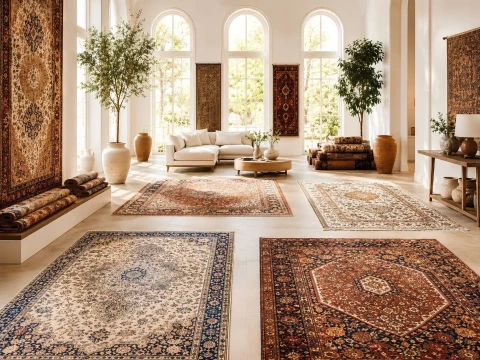
Because Tabriz rugs offer such a wide variety of patterns, they can be used in many different ways. A pronounced central medallion creates a clear focal point, while all-over designs, garden patterns and finely distributed floral motifs often remain more flexible beneath furniture. The key is to match the scale of the pattern and the size of the rug to the proportions of the room.
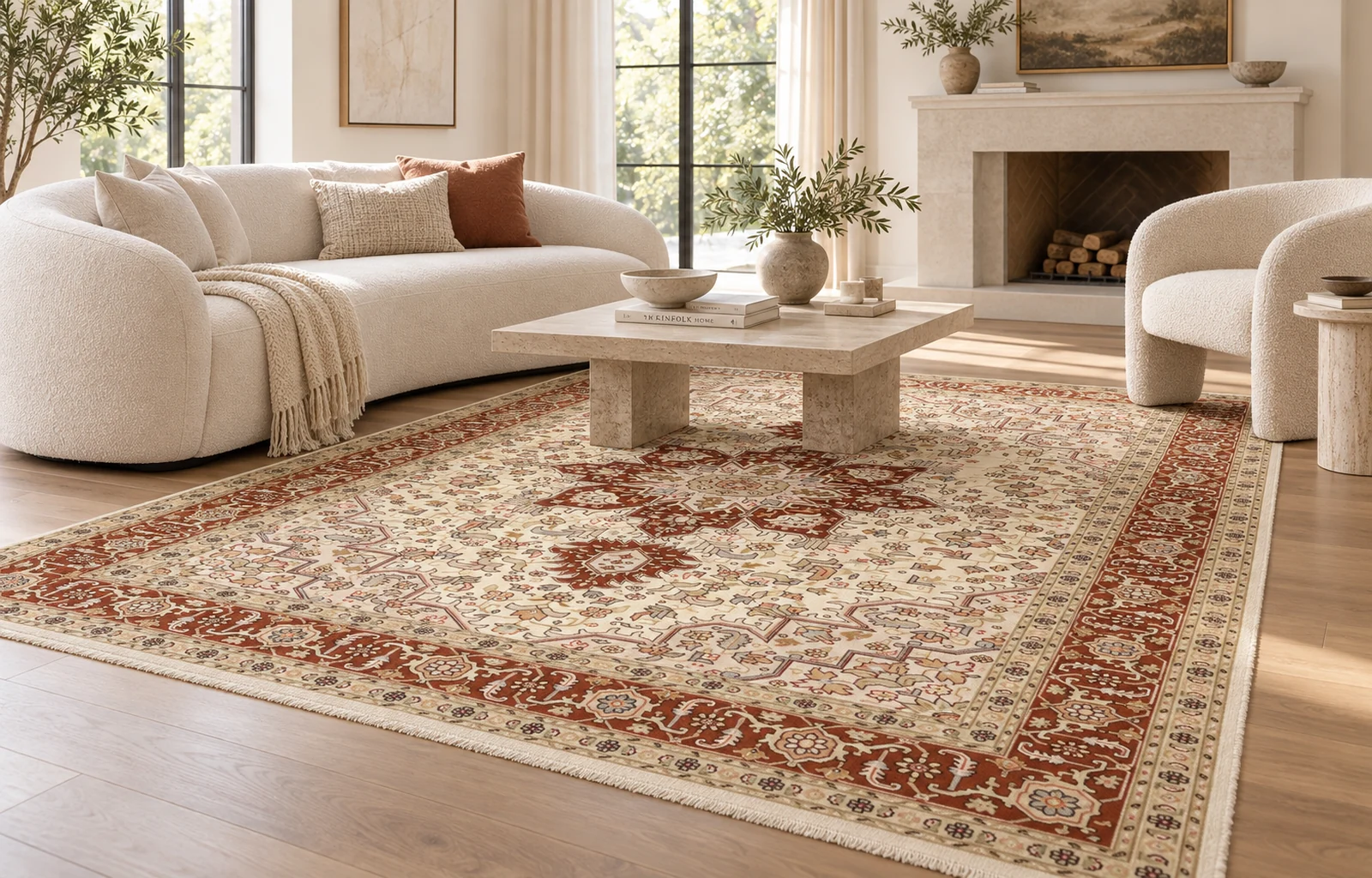
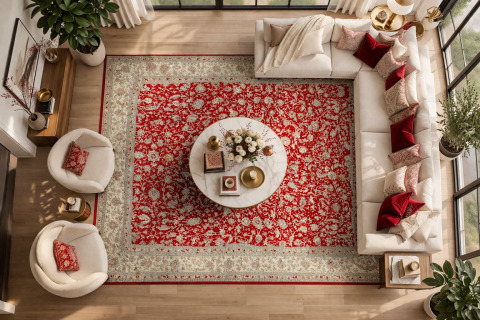
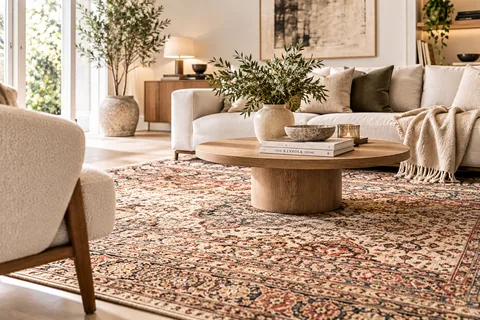
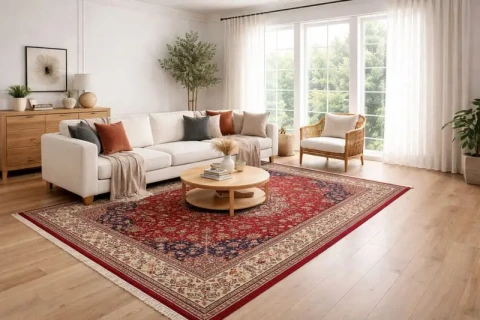
In the living room, a Tabriz rug can visually bring the seating area together while also serving as a design focal point. With a central medallion, the centre should ideally remain at least partly visible rather than disappearing completely beneath the coffee table or sofa.
Understated furniture and natural materials allow even highly detailed patterns to stand out beautifully. A balanced look is often achieved when at least the front legs of the sofa and armchairs rest on the rug.
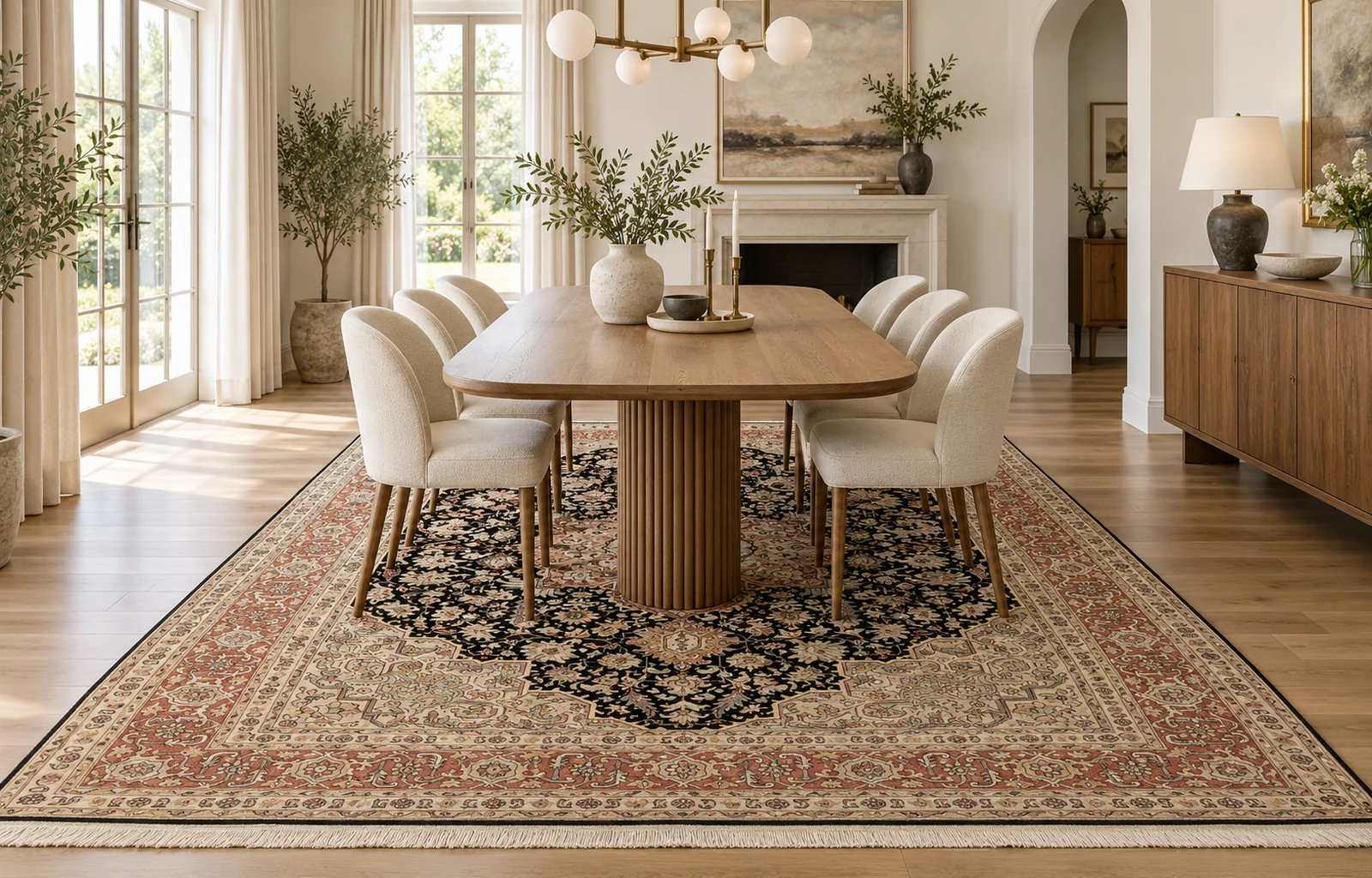
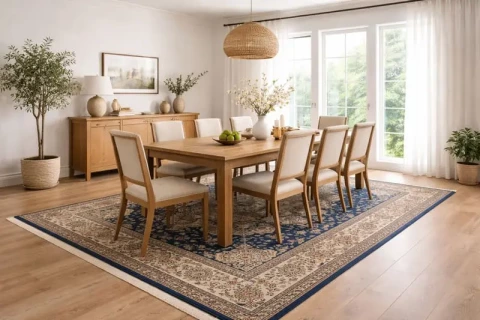
Beneath a dining table, the rug should extend far enough for the chairs to remain on it as far as possible when pulled back. As a useful guide, allowing around 60 to 70 cm of additional rug on each side often works well.
With a pronounced central medallion, the table may cover part of the main design. All-over or garden patterns are often especially flexible beneath large dining tables because their effect does not depend on a clearly visible centre.
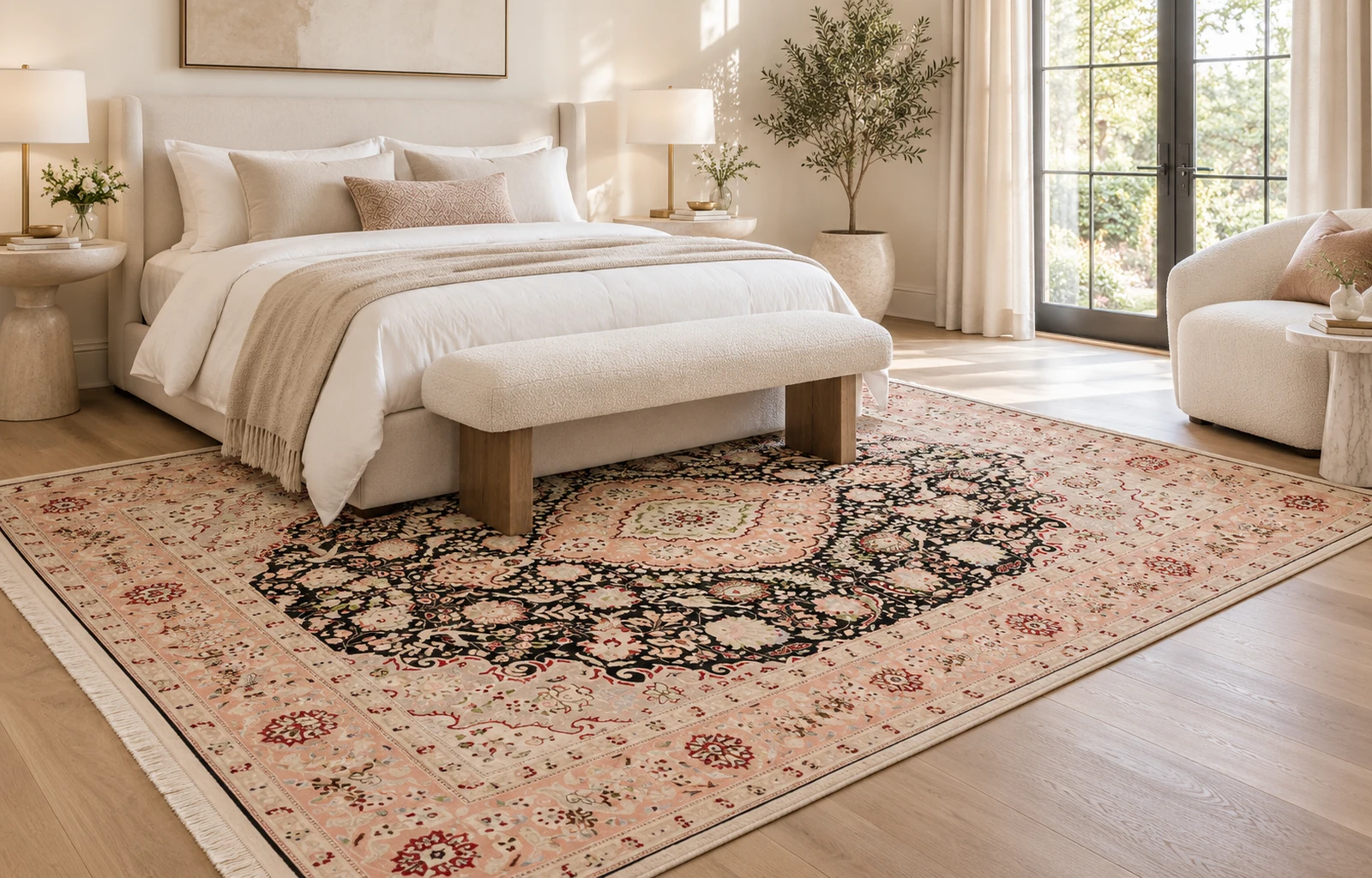
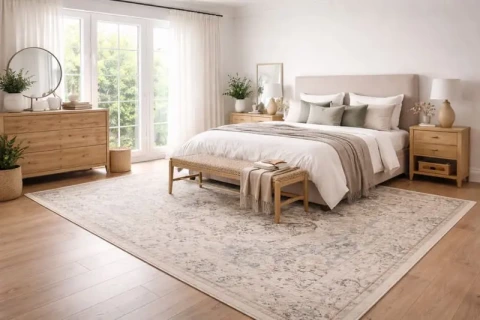
In a bedroom, a finely drawn Tabriz can add warmth and structure without making the room feel busy. Colour palettes that pick up existing wood, beige, grey or natural tones often create a particularly balanced effect.
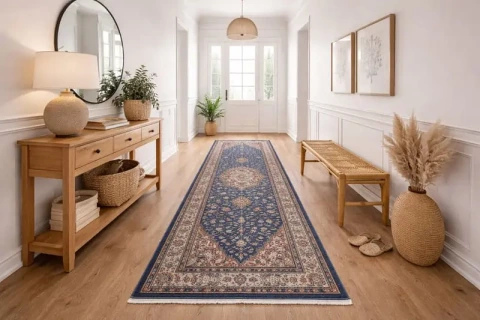
A generously sized rug beneath the bed creates a calm overall surface and a comfortable area underfoot. In smaller rooms, a more compact rug or runners may work better so that enough of the pattern remains visible.
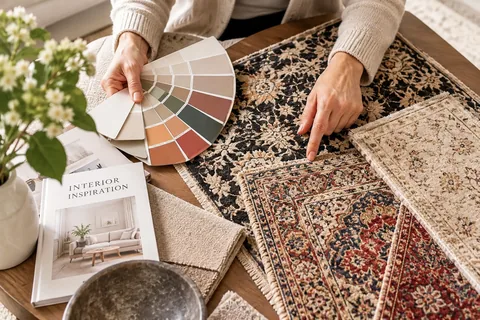
With Tabriz rugs, the structure of the pattern deserves just as much attention as the size. A strong medallion needs enough visible floor area, while evenly distributed floral or garden designs can work well even in more heavily furnished rooms. It can therefore be helpful to mark out the intended rug area in the room before buying.
The rug size should connect the furniture with the proportions of the room. A rug that is too small can make intricate designs feel busy or visually disconnected.
Medallion, all-over, floral and figurative designs each create a distinctly different presence in the room. The direction of the pile and the light can also noticeably change colour intensity and contrast.
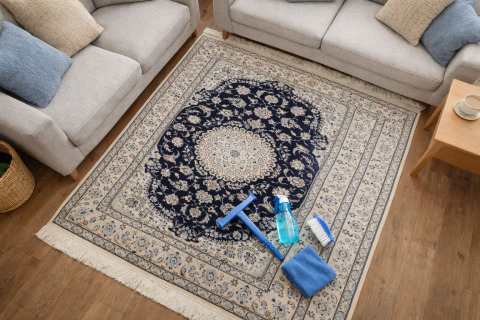
For more frequently used areas, the pile, materials and condition should also be considered. Regular gentle vacuuming and prompt, careful treatment of stains help preserve the rug over the long term.
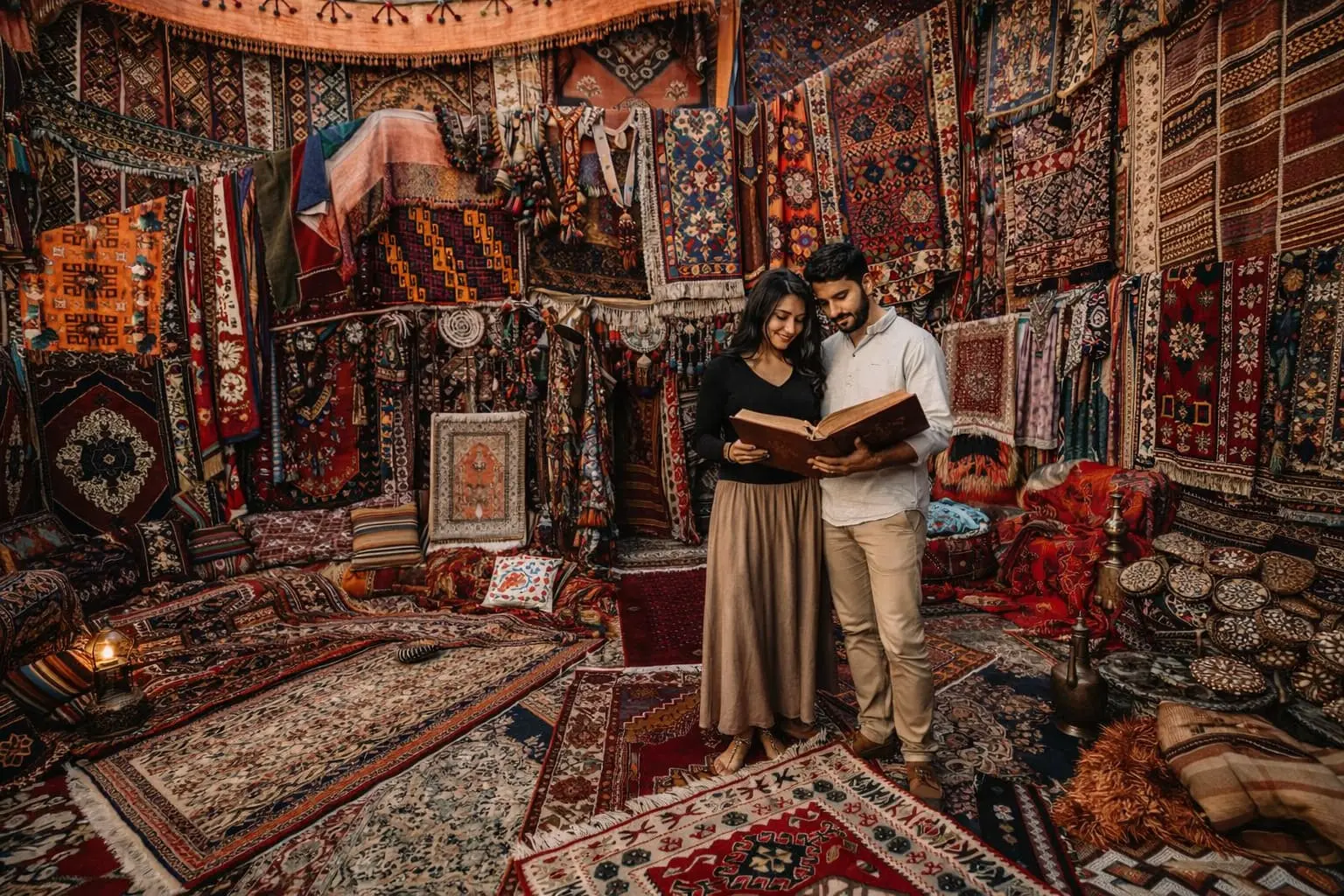
For centuries, Tabriz in north-western Iran was an important centre of trade and culture. By the early modern period, elaborately designed rugs from north-western Persia were already closely associated with the development of large medallion compositions, floral ornament and figurative designs.
Its position on important trade routes also brought different artistic influences together. This diversity remains a hallmark of the Tabriz tradition today. You can learn more about the historical context in our History of Oriental Rugs.
Since 1995, Jakobson Carpets has stood for hand-knotted rugs, careful selection and personal advice. This gives you the opportunity to assess the fineness, pattern, colour effect and size of each individual piece in the comfort of your own home.
View the rug comfortably at home and assess how it works in the room for which it is intended.
You have enough time to compare the size, colour and pattern without unnecessary pressure to make a quick decision.
The three-year warranty applies exclusively to hand-knotted rugs in accordance with the stated warranty terms.
For hand-knotted rugs with a purchase value of €300 or more, you automatically receive a Certificate of Authenticity. It documents the provenance, materials, knotting technique, dimensions and other key characteristics of the individual piece.
Key answers about provenance, Raj, materials, patterns, room effect and care.
Tabriz rugs belong to a long-established Persian knotting tradition from the city of Tabriz in north-western Iran. For centuries, the city was an important centre of trade and rug making.
Raj is a traditional measure of fineness describing the number of knot rows within a regional unit of length. With comparable construction, a higher Raj figure generally indicates finer knotting. Materials, workmanship and condition must still be considered as well.
The pattern language is particularly diverse. Central medallions, floral vines and structured borders are common, while garden motifs, animal depictions and figurative scenes also appear.
Yes. Depending on the individual piece and quality, a wool pile may be combined with silk details. Silk is often used to emphasise fine contours or selected ornaments.
Yes. In clean, contemporary interiors in particular, a classic Tabriz can create a deliberate contrast and a refined focal point. The colour palette, scale of the pattern and a rug size suited to the furniture layout are what matter most.
Regular, gentle vacuuming without aggressive rotating brushes helps protect the pile and structure. Spills should be absorbed as quickly as possible. For delicate silk details or heavier soiling, professional cleaning is the safer choice.