




-320.webp)
-320.webp)
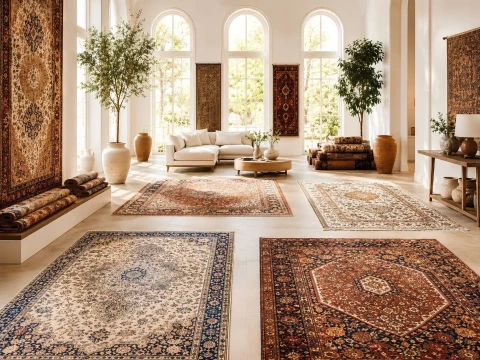
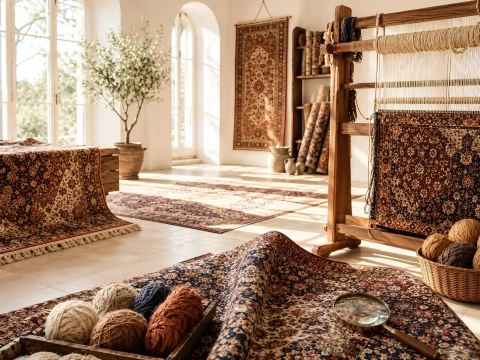
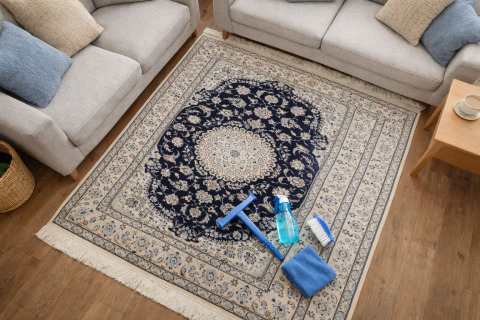

Sofa & Seating Area
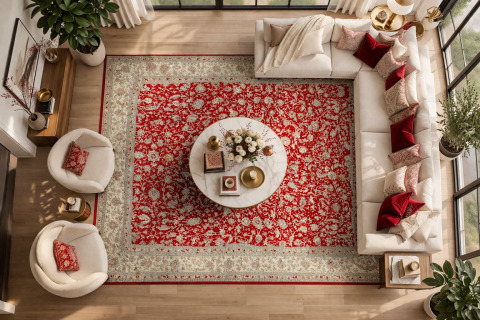
In the living room, the long side of the rug should usually run parallel to the sofa or the main axis of the seating area. At least the front furniture legs can sit on the rug to create one coherent living zone.
 Free shipping & returns
 31-day return policy
Free shipping & returns
31-day return policy
Free shipping & returns
31-day return policy
Free shipping & returns
31-day return policy
Free Shipping & Returns
31-Day Return Policy
31-day return policy
Free shipping & returns
31-day return policy
Free shipping & returns
31-day return policy
Free shipping & returns
31-day return policy
Free Shipping & Returns
31-Day Return Policy

Rectangular Oriental rugs are among the most versatile rug shapes, using clear proportions to connect furniture and bring balance to a wide range of interiors. At Jakobson Carpets, you can buy selected hand-knotted one-of-a-kind rugs in different sizes, colours and patterns. Whether you prefer a classic Persian rug, a softly coloured Ziegler or a geometric Oriental rug, the rectangular shape works especially well in living rooms, dining rooms and bedrooms. It can sit beneath a seating area, in front of a sofa, under a dining table or as a stand-alone focal point within the room. Borders, central medallions and finely structured all-over patterns are particularly well balanced on rectangular rugs, while hand-knotted wool qualities combine traditional craftsmanship with a clear sense of order. Choosing the right size and proportions is especially important so the rug connects furniture and space naturally while allowing its individual design to stand out.
The rectangular rug shape can be aligned particularly clearly with furniture axes, room edges and typical floor plans. It can bring a seating arrangement together, frame a dining table generously or visually integrate a bed into a calm, coherent surface.
This guide explains how length and width work together, which sizes suit different room situations and how material, pattern, border and placement influence the effect of a rectangular Oriental rug.
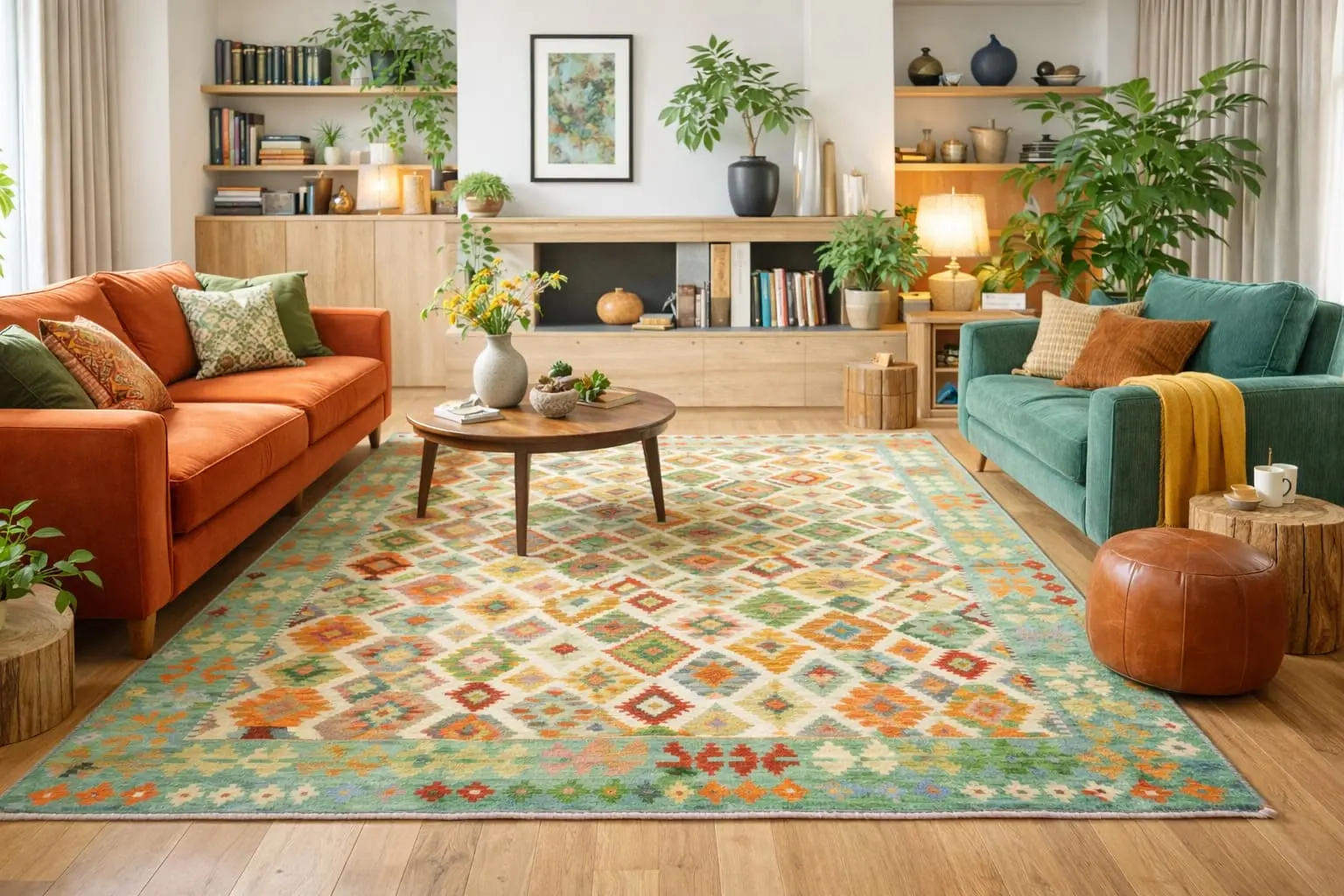
With a rectangular rug, not only the overall size matters, but also the relationship between length and width. A balanced format follows the main axis of the room and makes furniture groups feel more clearly connected.
Measure the area together with the furniture that should be visually included. Whether 170 × 240, 200 × 300 or 250 × 350 cm feels appropriate always depends on the room and the furniture layout.
The clear geometry of a rectangle works especially well when rug edges and furniture are deliberately aligned. Not every piece of furniture needs to sit fully on the rug; a coherent shared orientation matters more.
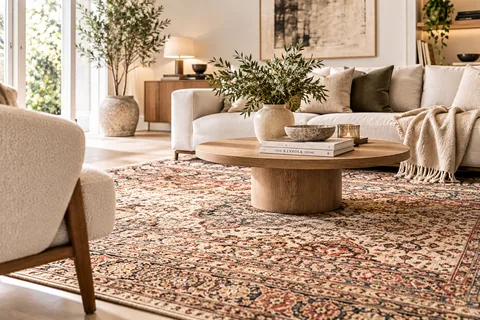
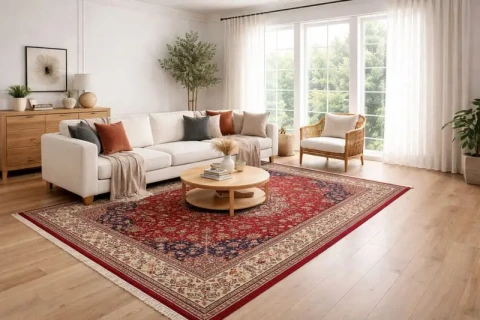
In the living room, the long side of the rug should usually run parallel to the sofa or the main axis of the seating area. At least the front furniture legs can sit on the rug to create one coherent living zone.
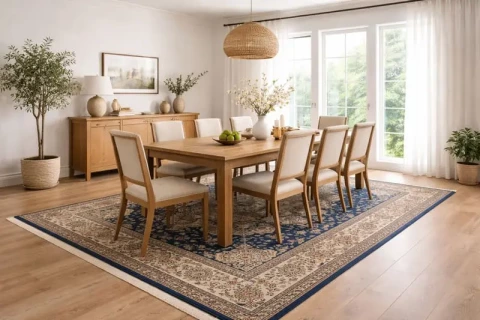
Beneath a rectangular dining table, a rectangular rug looks especially balanced when it extends clearly beyond the table on all sides. Ideally, chairs should remain on the rug even when pulled back.
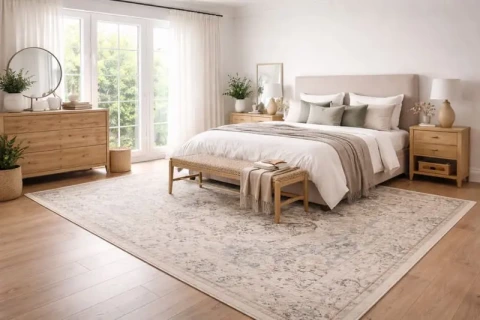
In the bedroom, the rug can sit crosswise beneath a larger part of the bed or frame the bed and bedside tables more generously. What matters is a visibly balanced rug area at both sides and the foot of the bed.
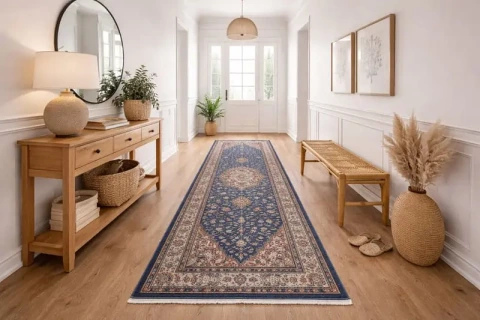
A rectangular one-of-a-kind rug can also sit freely in the room and define its own zone. In that case, its edges should be deliberately aligned with wall lines, a sideboard or other architectural axes.
Rectangular formats are among the most versatile rug solutions in the home. Depending on the room, however, size, placement and desired effect can differ considerably—from a generous focal point to a calm surface beneath a bed or dining table.
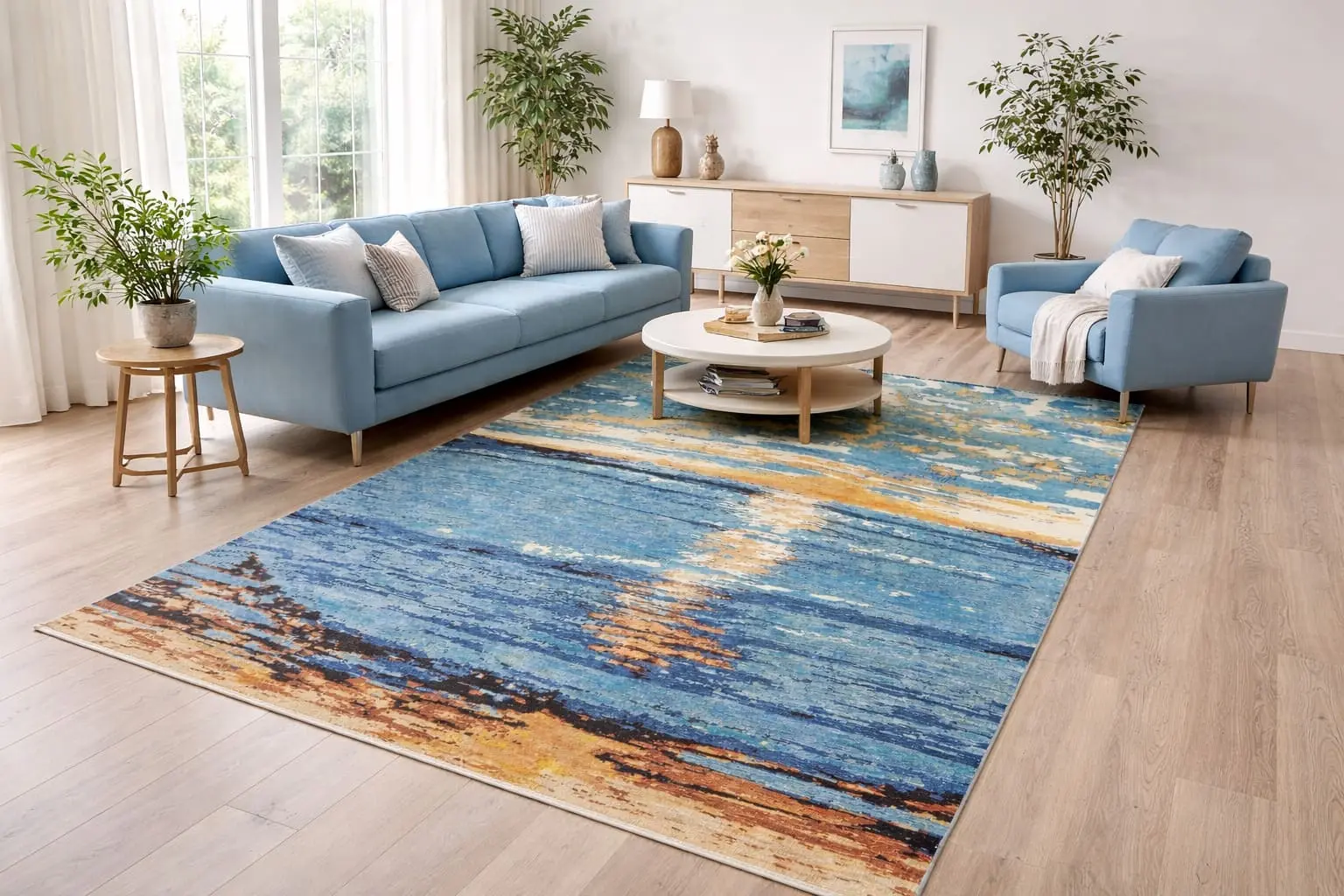
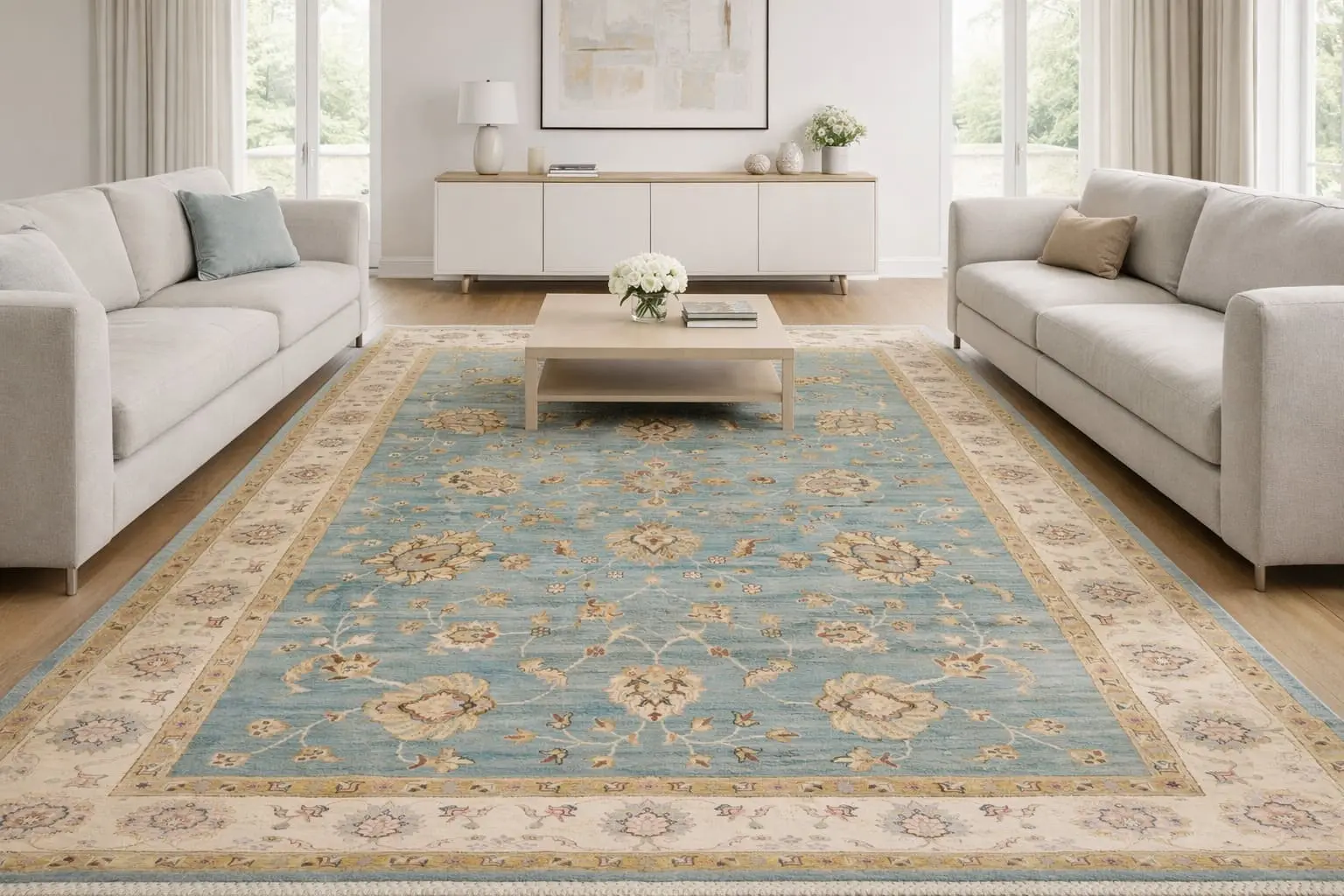
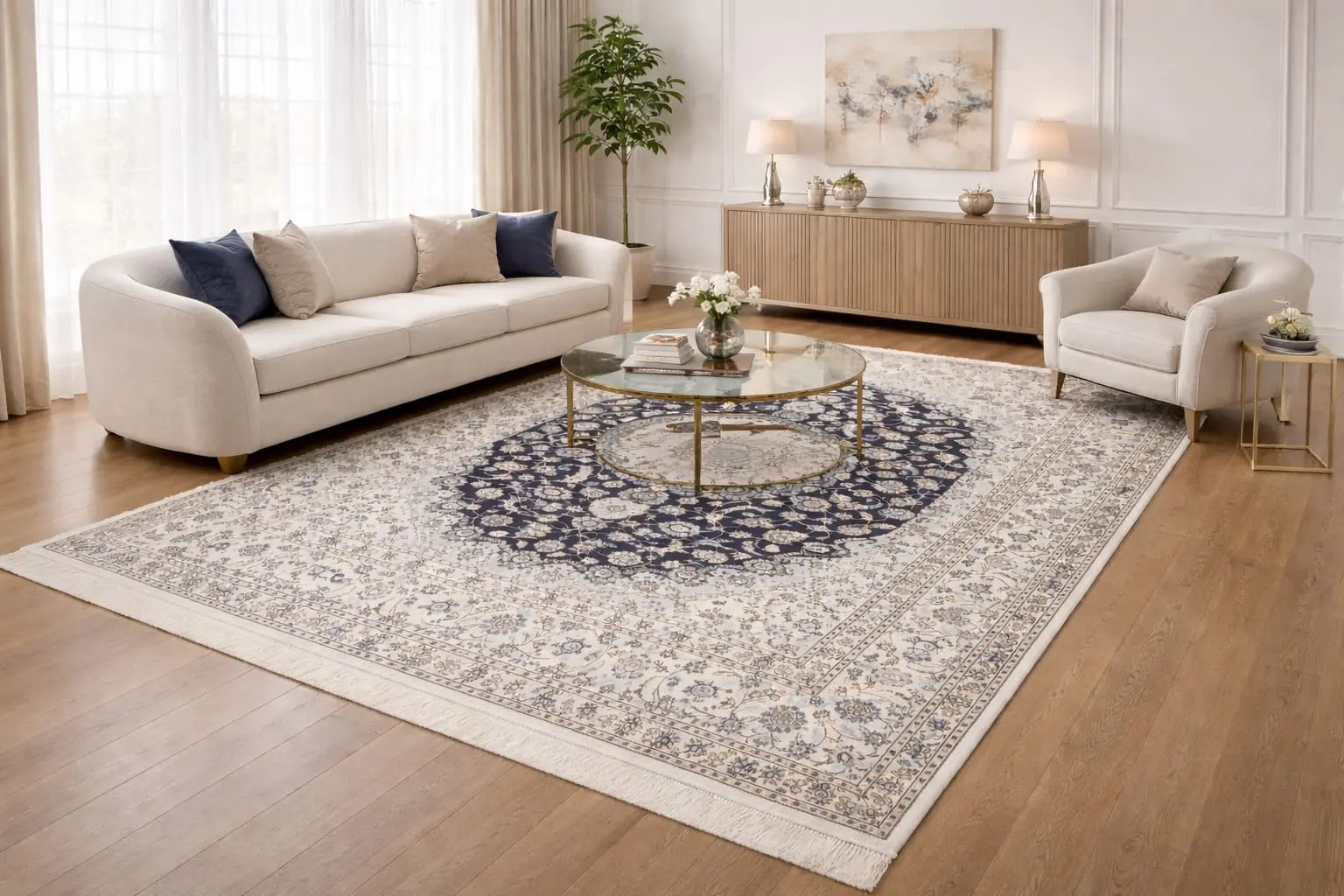
In the living room, the rectangular shape often follows the width of the sofa and creates a clear area for sofa, armchairs and coffee table. Generous sizes usually feel calmer than a rug that sits only narrowly beneath the coffee table.
Modern Oriental rugs, Ziegler rugs and more restrained designs can emphasise the clean geometry even further. With classical patterns, the rectangular shape helps keep the border and central field clearly legible.
Beneath a rectangular table, the same basic shape can look particularly harmonious. The rug should bring table and chairs together as one dining group and provide enough surface for chairs when they are pulled back.
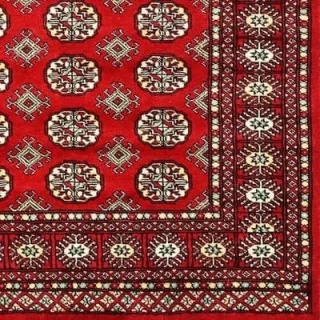
Afghan and Pakistani rugs introduce a different visual language with geometric or classically inspired patterns and show how versatile the rectangular shape can be with timber, metal or contemporary dining furniture.
In the bedroom, a rectangular rug can sit crosswise beneath the bed and remain visible at the sides and foot. This visually frames the sleeping area and creates a comfortable textile surface underfoot in the morning.
Persian rugs with medallions, floral drawing or fine all-over patterns can look especially balanced in a bedroom when the visible patterned area and the bed width are deliberately coordinated.
The rectangular shape is neutral enough to suit very different rug styles. Whether it feels classical, modern, understated or expressive depends mainly on material, pattern structure and colour contrast.
Pure wool provides warmth, a pleasant feel and everyday practicality. Silk or silk highlights can enhance detail and lustre, while handwoven kilims feel especially clean and light because of their flat structure.
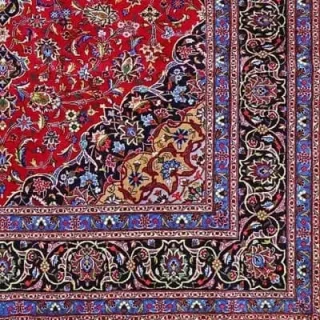
With classical Persian and Oriental rugs, the rectangular shape supports the composition of border, central field and medallion. Central motifs should ideally not disappear completely beneath large pieces of furniture.
All-over, floral and geometric patterns are especially flexible because their effect does not depend on one visible centre point. They therefore work well beneath seating groups, dining tables or partly beneath a bed.
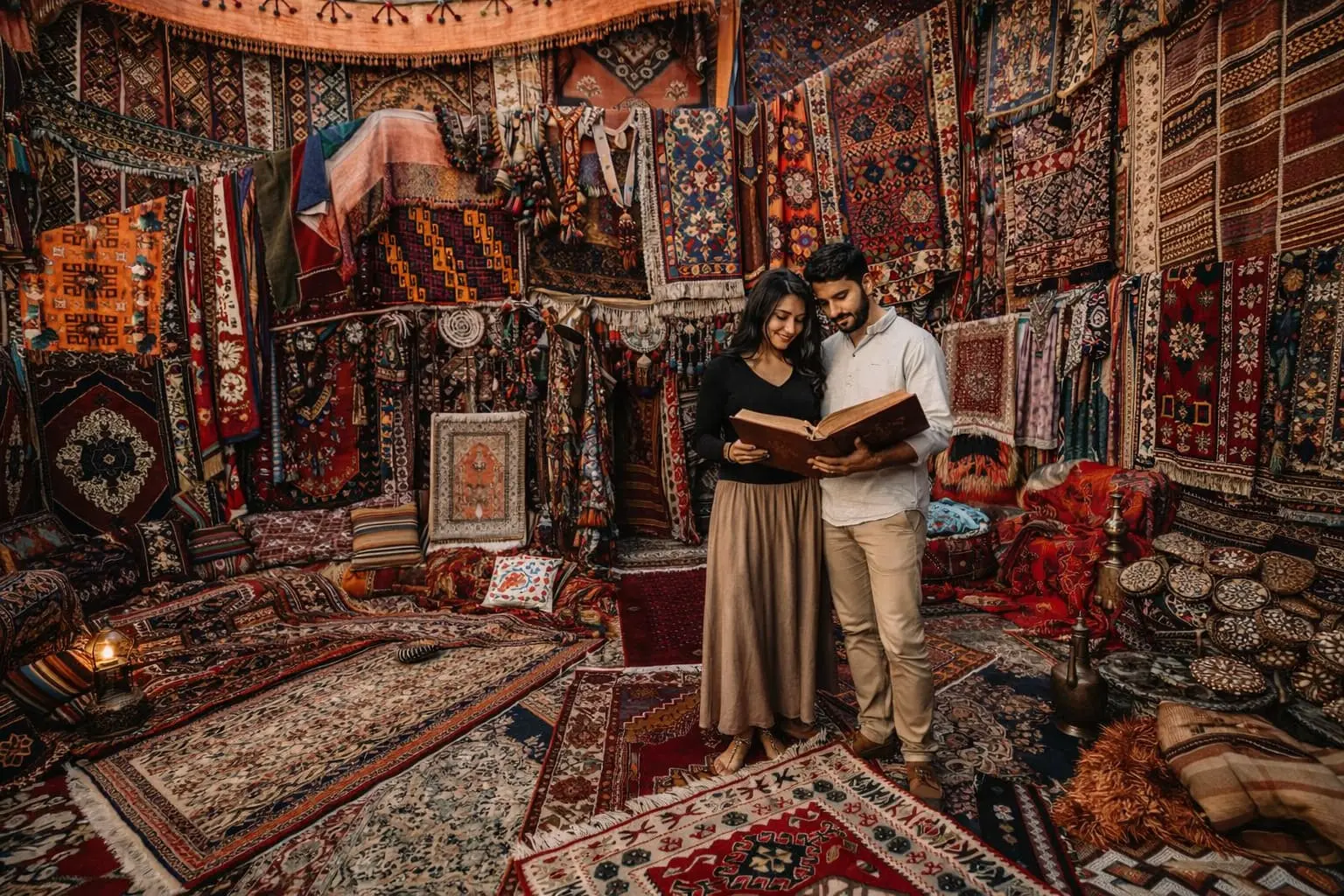
Rectangular rugs feature prominently in many traditional knotting and weaving cultures because borders, central fields, medallions and repeating ornaments can be arranged particularly harmoniously along clear longitudinal and transverse axes.
This basic shape still works particularly well with typical furniture and room proportions today: sofas, beds, dining tables and sideboards also tend to follow straight lines. In this way, the rectangular form connects traditional design with modern room planning. For more historical background, see our history of Oriental rugs.
Since 1995, Jakobson Carpets has stood for carefully selected hand-knotted and handwoven rugs, personal advice and transparent information on dimensions, materials and origin. With rectangular formats in particular, it is worth judging the effect at home together with the furniture, flooring and light.
View the rug comfortably at home and see how it works in the space for which it is intended.
You have ample time to compare size, colour and pattern without unnecessary pressure.
The three-year warranty applies exclusively to hand-knotted rugs in accordance with the stated warranty terms.
For appropriately marked hand-knotted rugs with a purchase value of €300 or more, you receive a Certificate of Authenticity. It records key details about the individual rug, including origin, materials, knotting technique, dimensions and other essential characteristics.
Key answers about sizes, proportions, room choice, furniture placement, patterns and materials.
Rectangular rugs range from small accent sizes to very large room-sized formats. Typical reference sizes include around 170 × 120 cm, 240 × 170 cm, 300 × 200 cm or 350 × 250 cm. The actual furniture and room area should always determine the final choice.
It usually looks most harmonious when its long side runs parallel to the sofa and at least the front legs of the sofa and armchairs sit on the rug. In larger rooms, the entire seating group can stand on the rug.
Yes. A rectangular dining table and rectangular rug create especially clear, calm geometry. The rug should be large enough for chairs to remain fully on the rug where possible, even when pulled back.
The rug often lies crosswise beneath a larger part of the bed and remains visible on both sides and at the foot. Alternatively, a larger size can frame the bed and bedside tables together.
Medallions and borders benefit from the clear symmetry of the rectangular shape. All-over, floral and geometric patterns are especially flexible when furniture covers part of the rug.
That depends more on room and use than on the shape itself. Pure wool is versatile and durable, silk feels especially refined, and handwoven kilims stand out for their flat, lightweight structure.