Free shipping and free returns
3-year warranty
31 day money back guarantee
Free shipping & returns 31-day return policy
SUMMER SALE 26 · save an extra 10%
Free shipping & returns 31-day return policy
SUMMER SALE 26 · save an extra 10%
Currency
EN · EUR
Language
Currency

Persian Rugs

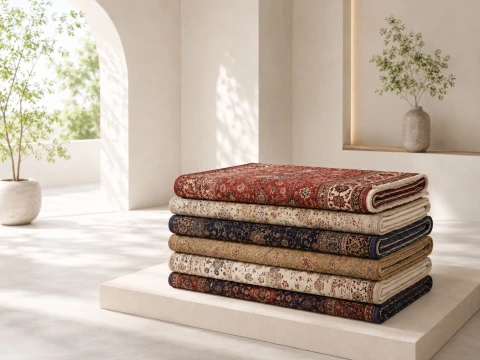
Authentic Persian rugs combine centuries-old weaving traditions, distinctive motifs and richly nuanced colours with exceptional craftsmanship. Originating in Iran, they reflect the individual character of renowned weaving centres such as Tabriz, Nain, Isfahan, Kashan and Qom. If you are looking to buy a Persian rug, provenance, materials, knotting and condition are among the most important qualities to consider. Fine wool, precious silk and intricately composed medallion, floral or all-over designs give each piece remarkable depth and individuality. Explore hand-knotted Persian rugs as distinctive one-of-a-kind pieces for both classic and contemporary interiors.

Choose colour
Guide & Buying Advice

Persian Rugs – Provenance, Quality & How to Choose

If you are looking to buy a Persian rug, pattern and colour are only part of the picture. Provenance, materials, knotting, condition, size and intended use all influence how a piece looks, how well it stands up to everyday use and how naturally it fits into a room.

This guide helps you assess authentic, hand-knotted Persian rugs with confidence – from authenticity and provenance to materials, craftsmanship, the right size and the effect a rug creates in a room.

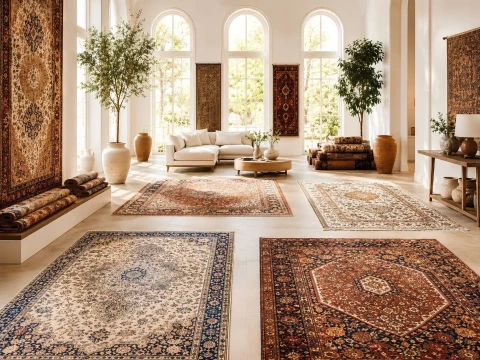
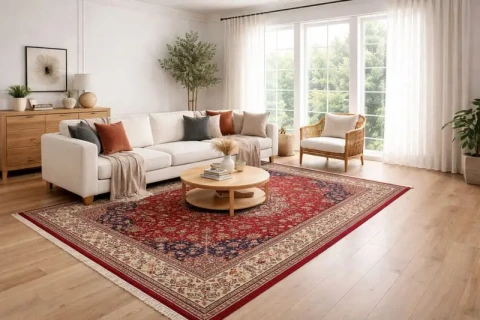
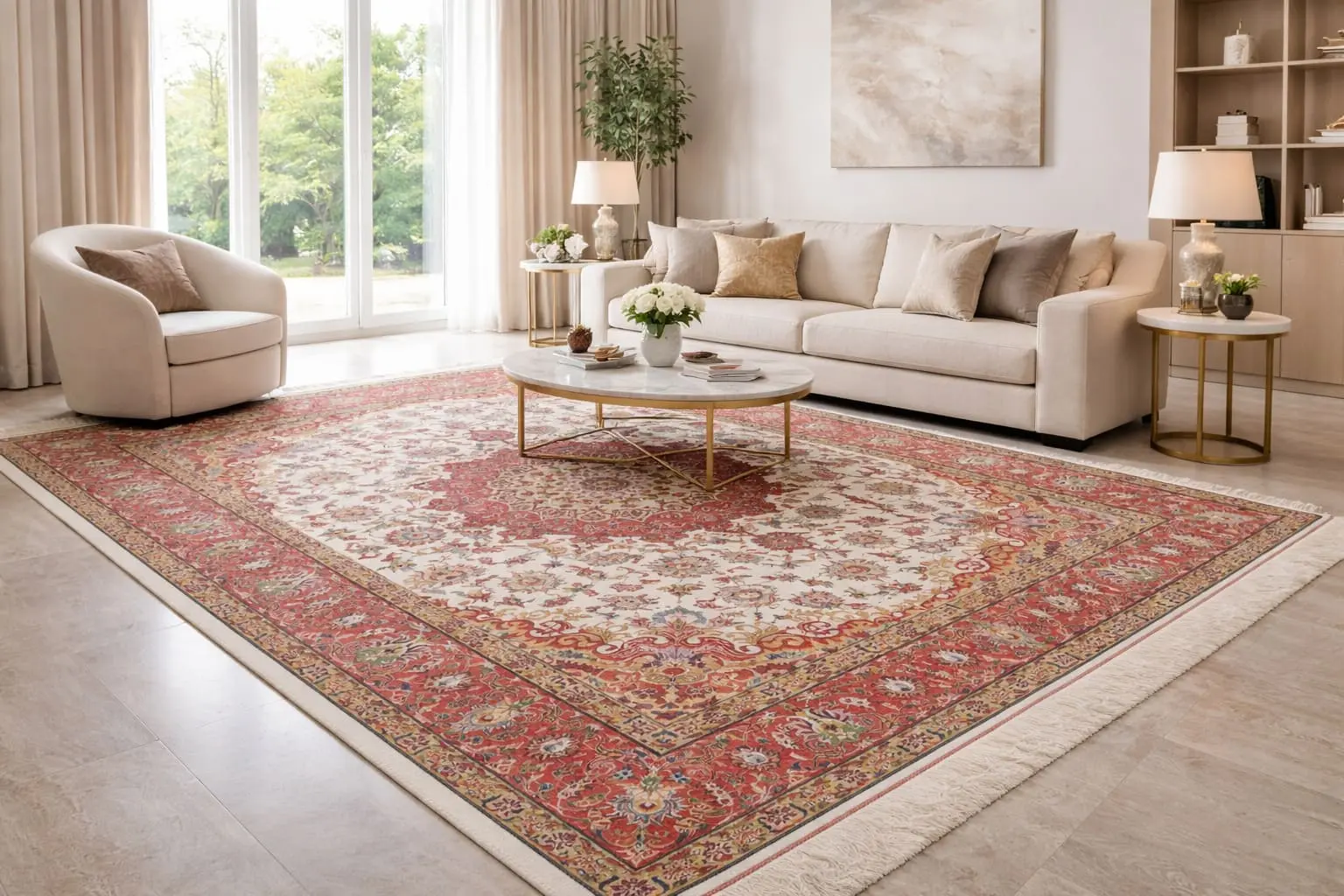
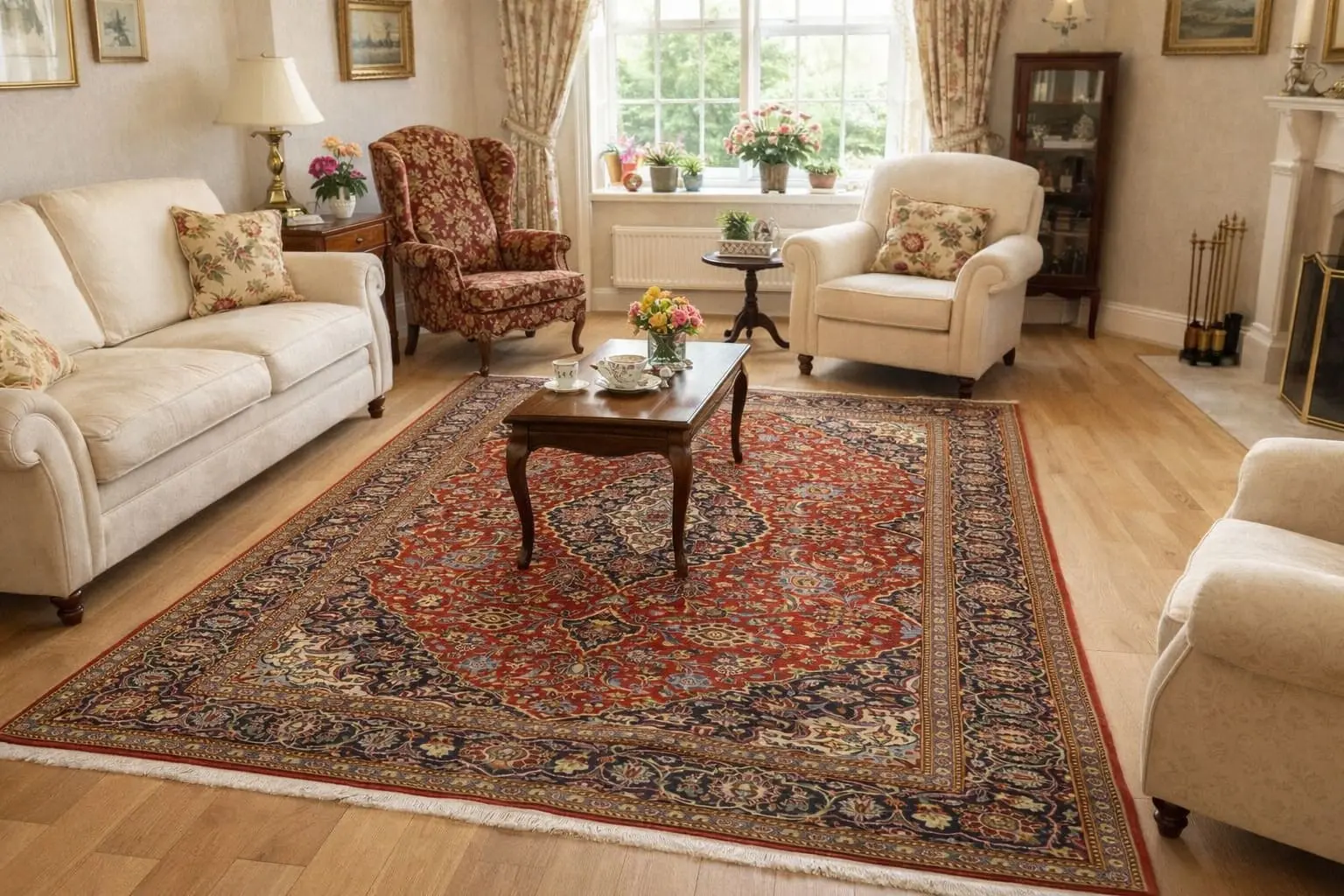
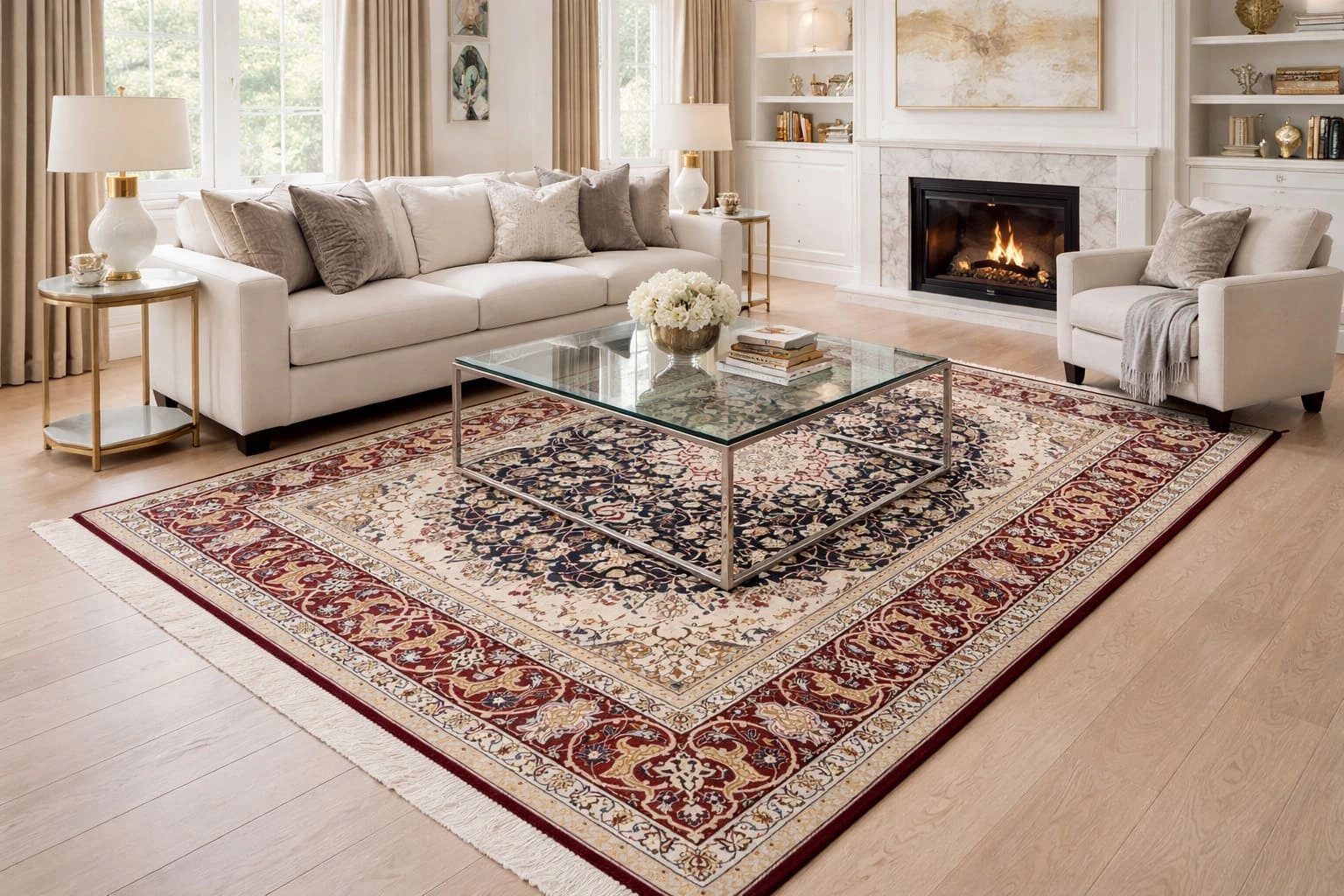
Hand-knotted Persian rug in an elegantly furnished living space
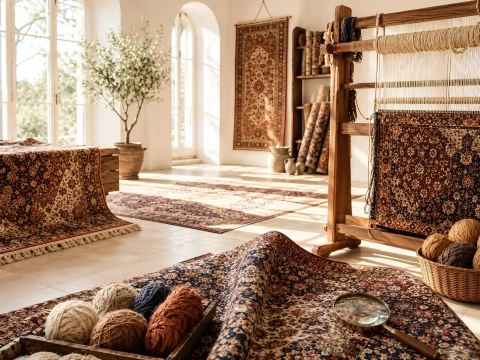
Recognising genuine craftsmanship

What defines an authentic Persian rug?

A Persian rug is a traditionally hand-knotted rug made in modern-day Iran. Renowned weaving centres such as Qom, Isfahan, Kashan, Nain and Tabriz each developed their own distinctive patterns, colour palettes and knotting traditions.

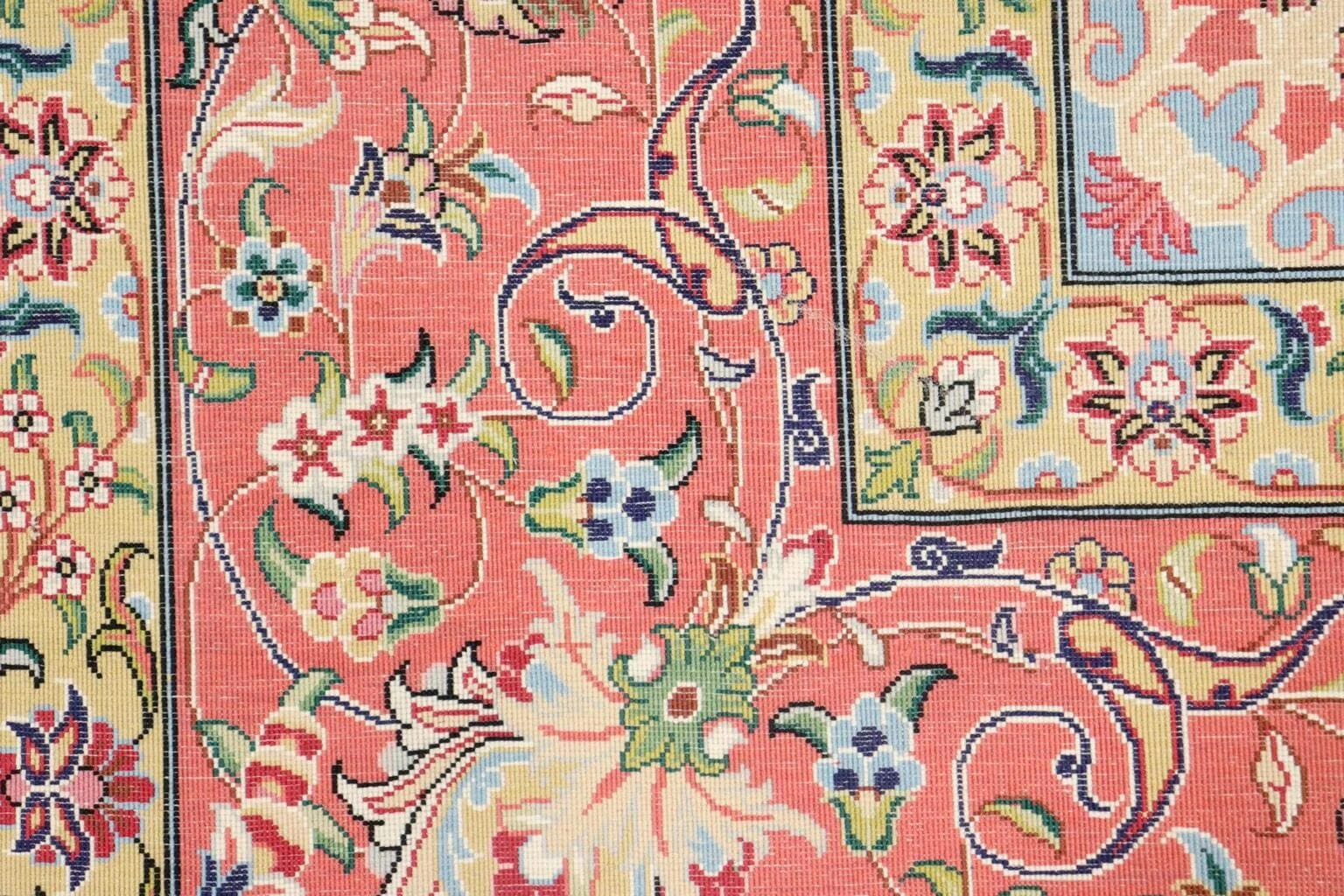
On the reverse of a hand-knotted rug, the structure of the individual knots remains visible. The fringes form part of the rug’s foundation rather than being sewn on afterwards. Small irregularities can be a natural sign of handcraftsmanship without reducing quality. Subtle shifts in colour within an area – known as abrash – can also occur in traditionally dyed wool, although abrash on its own is not proof of authenticity.

  • The pattern can be traced on both the front and the reverse.
  • Pure new wool, cotton and silk influence texture, lustre and fineness.
  • Provenance influences colours, borders and the structure of the design.
  • Every hand-knotted Persian rug is a unique, individual piece.
Provenance shapes character

Important Persian rug provenances

The provenance of a Persian rug influences its materials, patterns, colour palette and craftsmanship. The following weaving traditions illustrate the remarkable diversity of Persian rug making – from the finest silk to expressive classic medallion designs.

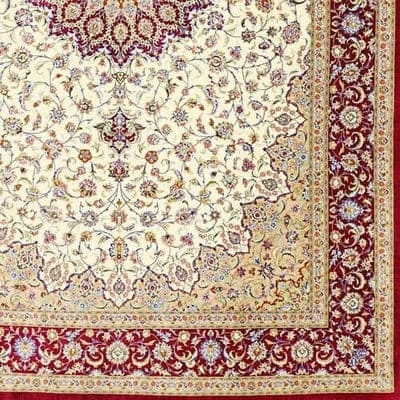
Finely knotted Qom silk rug with an intricate Persian design
Fineness and play of light

Qom silk rugs

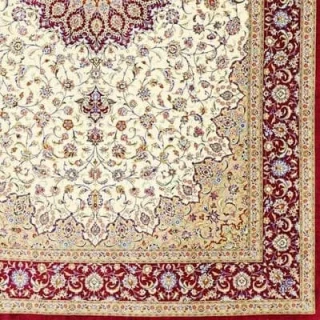
Qom is particularly renowned for exceptionally fine silk rugs. In pure silk pieces, both the pile and the warp can be made of silk, allowing for precise contours, densely worked motifs and a distinctive play of light.

When choosing a piece, consider not only the level of detail but also how the rug will be used. The delicate silk surface is especially well suited to quieter living areas where the rug can take centre stage as a work of craftsmanship.

Discover Qom silk rugs
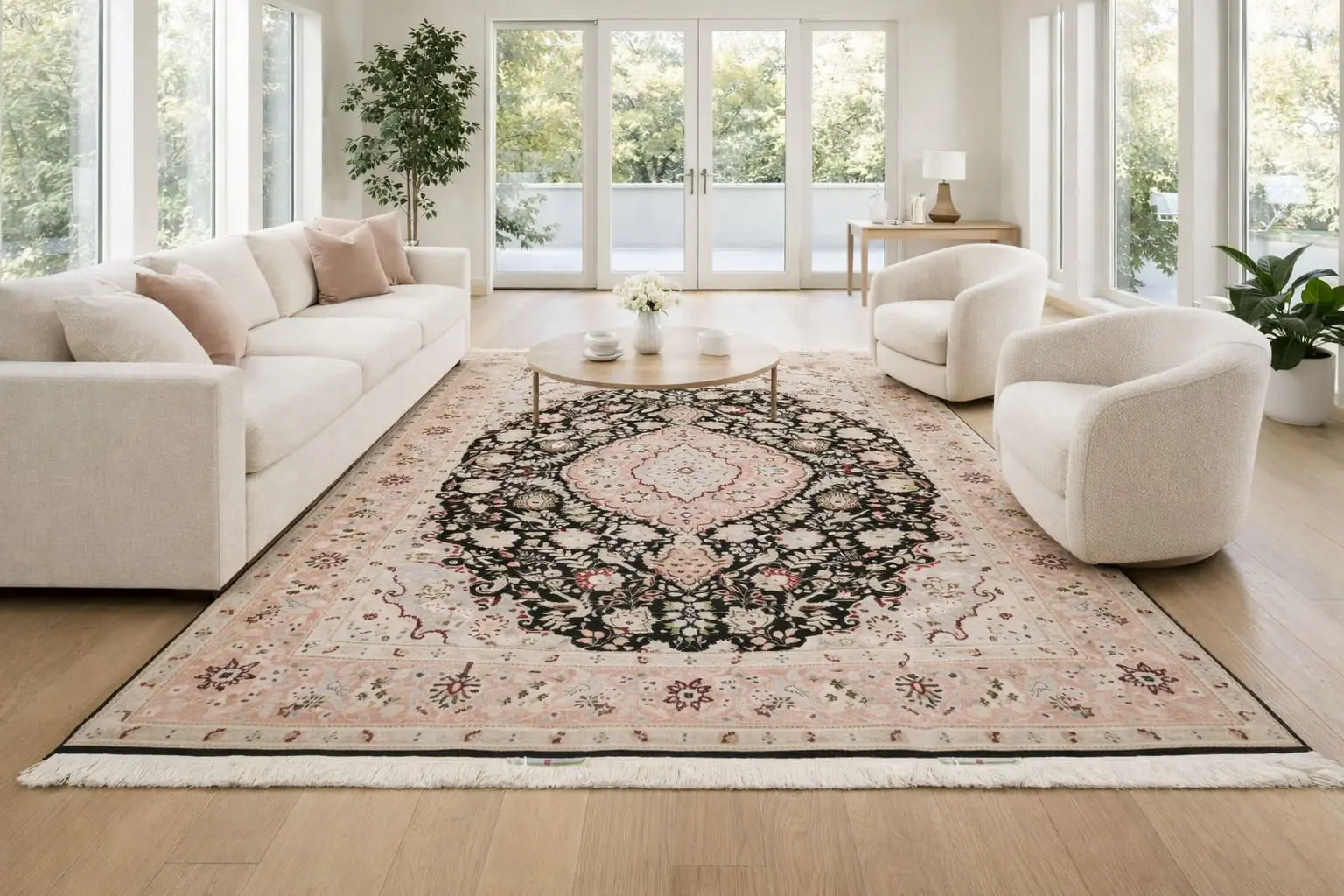
Isfahan Persian rug with fine ornamentation and a harmonious colour palette
Refined elegance

Isfahan rugs

Isfahan is one of Persia’s long-established city weaving traditions. Finely worked medallions, floral arabesques and balanced proportions are characteristic. High-quality pieces are often made with fine wool and may include silk details or a silk warp.

It is therefore worth looking closely at the material composition and the knotting of the individual rug. Both affect fineness, texture and the way the surface responds to light, alongside the provenance itself.

Discover Isfahan rugs
Hand-knotted Tabriz Persian rug with a precise, highly detailed design
Diversity from a renowned weaving centre

Tabriz rugs

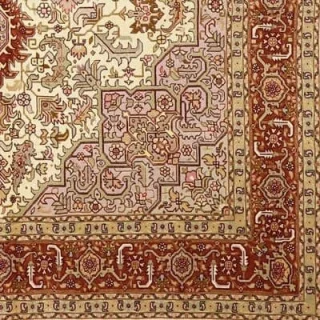
Tabriz is one of the best-known Persian weaving centres and offers an exceptionally broad range of qualities and styles. The fineness of Tabriz rugs is often expressed in Raj, but this figure should always be considered together with the materials, condition and workmanship.

From classic medallions and floral compositions to pictorial or exceptionally finely worked designs, Tabriz rugs can be selected according to the level of detail, colour effect and the presence you want the rug to have in the room.

Discover Tabriz rugs
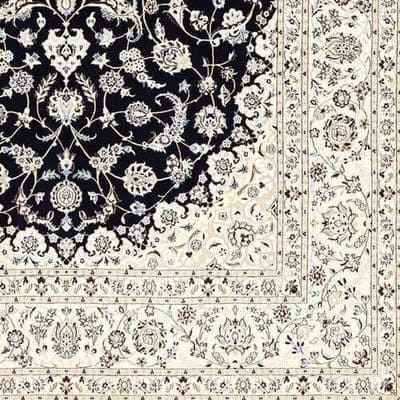
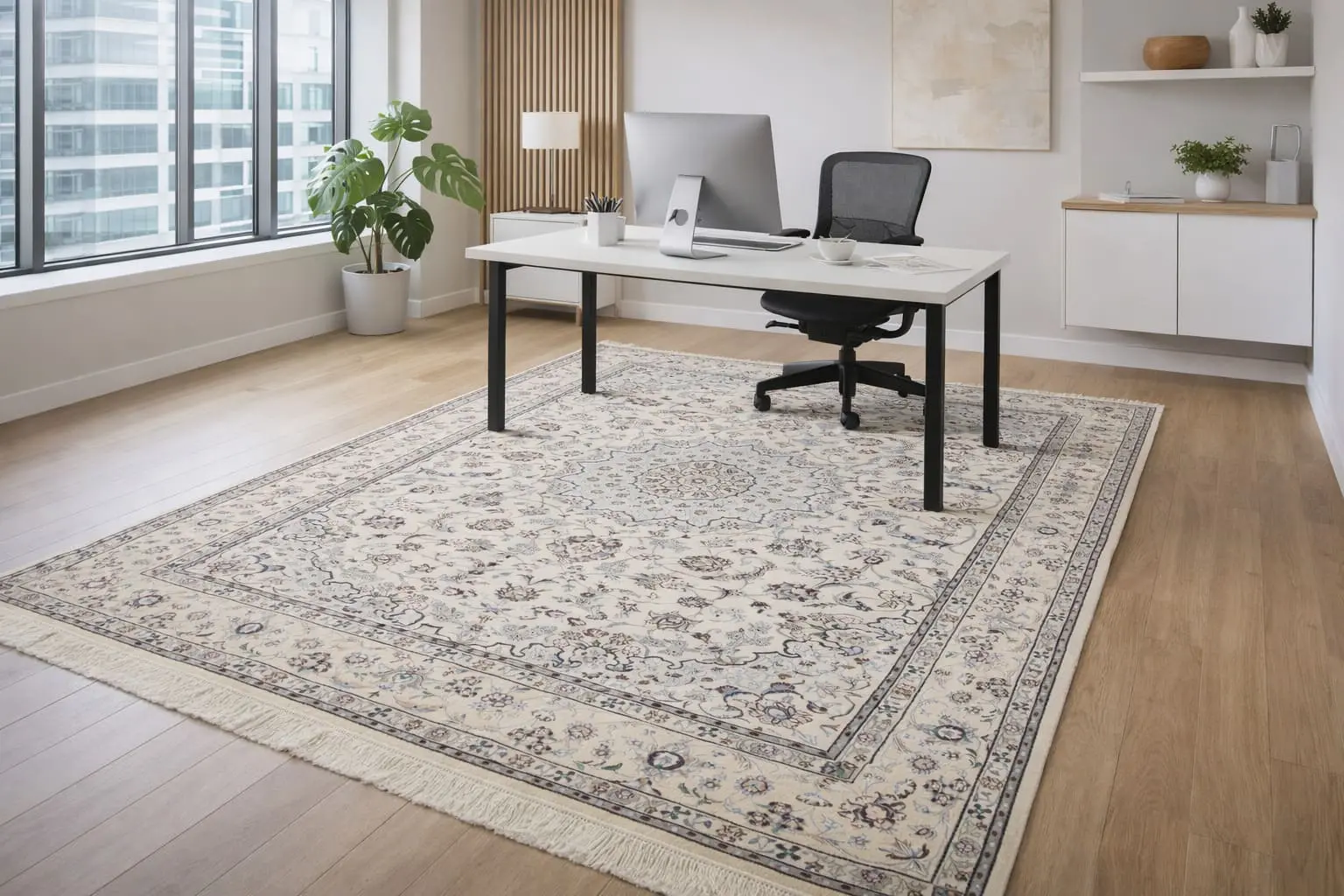
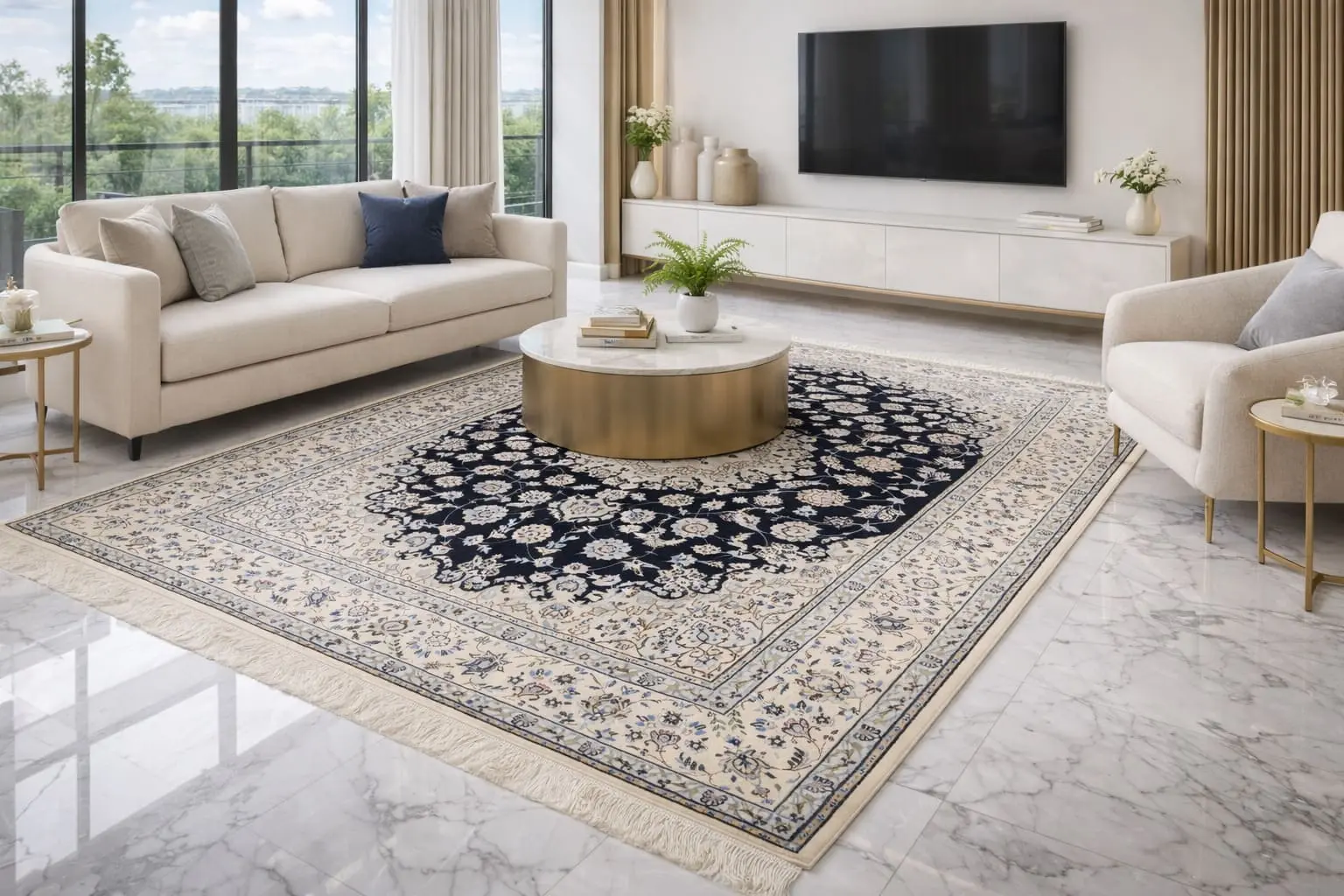
Light-coloured Nain Persian rug with fine detailing and blue ornaments
Light, calm colour palette

Nain rugs

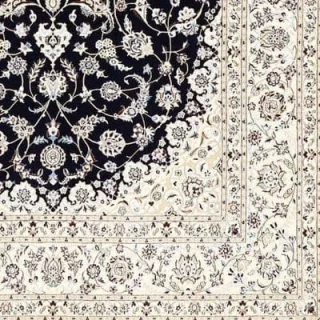
Nain rugs are known for light ivory and blue tones, fine drawing and frequent silk highlights. Classifications such as 6La and 9La help distinguish different levels of fineness; with otherwise comparable workmanship, 6La is generally more finely knotted than 9La.

Their restrained palette works especially well with light furniture, natural materials and modern interiors, allowing a classic design to add character without visually weighing down the room.

Discover Nain rugs
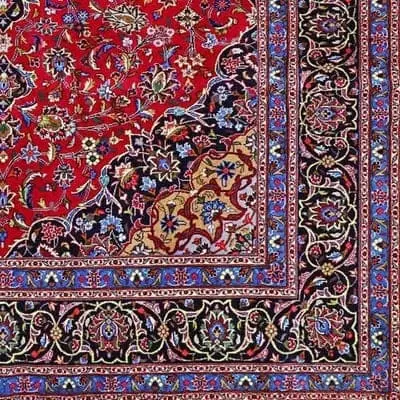
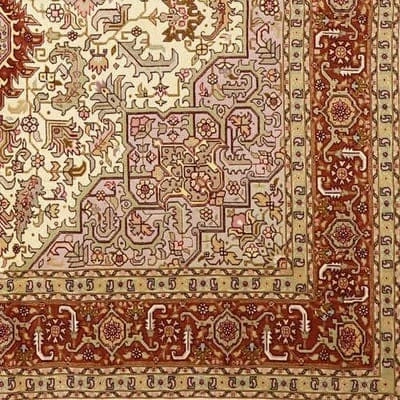
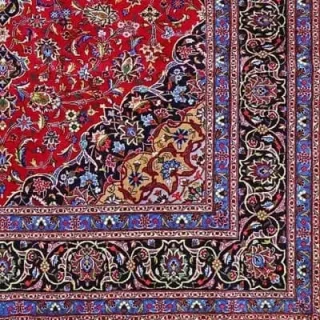
Kashan Persian rug with a classic medallion and warm colours
Classic warmth

Kashan rugs

Kashan rugs often feature classic medallions, floral ornamentation and warm shades of red and blue. Compared with very light or silk-dominated provenances, they generally create a stronger, more traditional presence in a room.

They are particularly well suited to living and dining areas where a clearly defined medallion, warm colouring and an expressive Persian design are intended to play a deliberate role in the interior.

Discover Kashan rugs
Assessing quality properly

Materials, knot density and craftsmanship

Knot density indicates how finely a design can be worked, but it is not the only measure of quality. Material quality, consistency of knotting, colour effect, pile, condition and the craftsmanship associated with the provenance should all be considered together.

01

Pure new wool

High-quality pure new wool is resilient, durable and pleasant to the touch. Depending on the construction, it is particularly well suited to living areas that are used regularly.

02

Silk

Silk allows exceptionally fine detailing and changes in lustre with the angle of the light and the viewer. Material composition and intended use should therefore always be considered together.

03

Knot density

A higher knot count usually allows for greater detail, but it is not a quality verdict in itself. Comparisons are most meaningful between rugs of similar provenance, construction and material type.

04

Craftsmanship

Clean edges, even tension, a well-balanced pile, the reverse and the overall condition of the rug together provide useful clues to the quality of its workmanship.

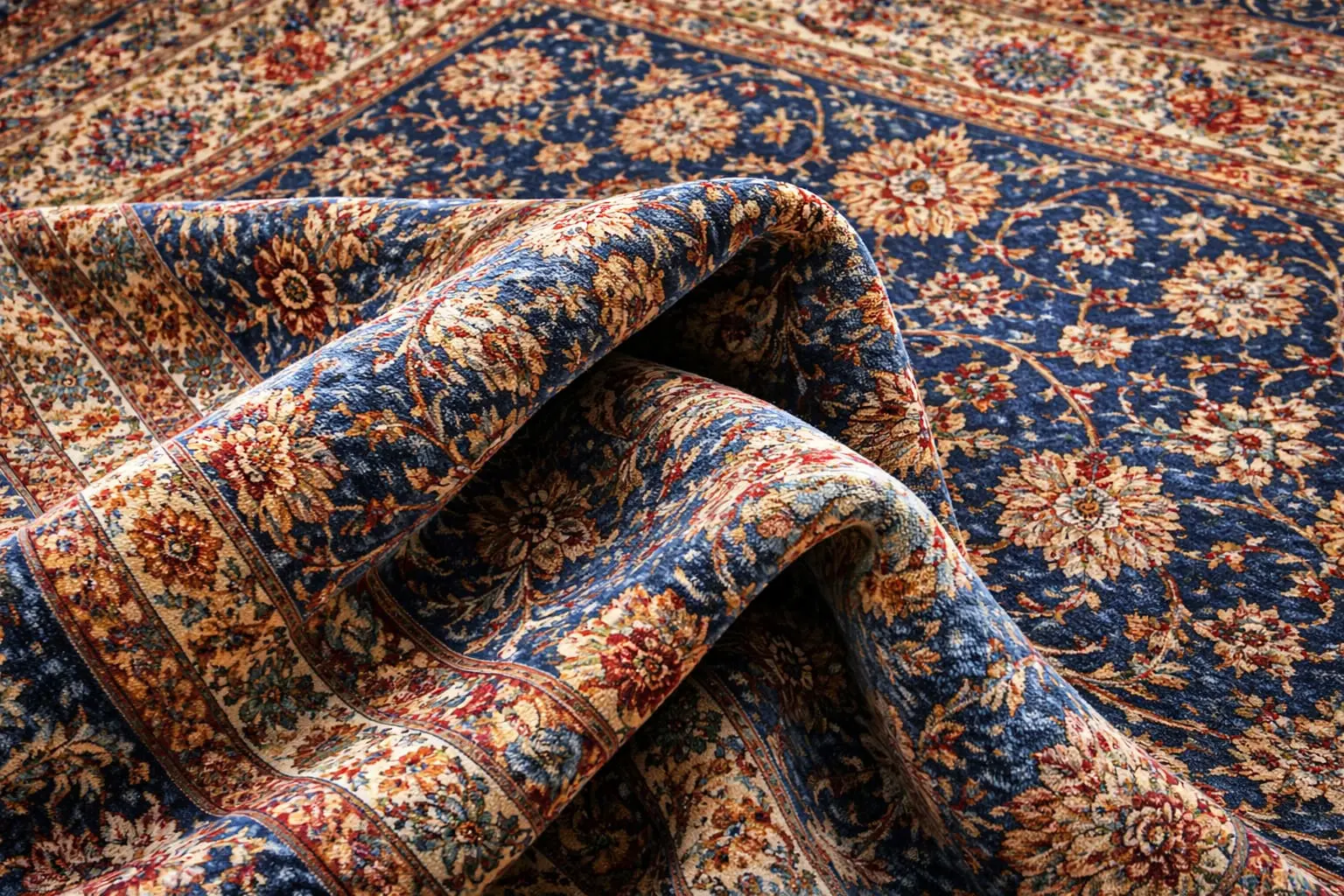
Close-up of the surface of a hand-knotted Persian rug
Fine knots and precise ornamentation on a Persian rug
Choose with confidence

Which Persian rug is right for your home?

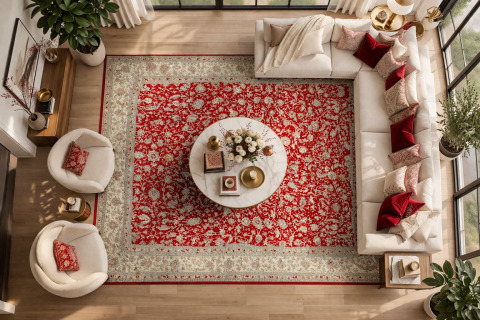
Alongside colour and pattern, size, shape, material and intended use determine whether a rug feels right in the room. Measure the intended area before buying and take into account both the position of your furniture and the space you need to move around comfortably.

01

Living room

The rug should visually bring the seating area together. A harmonious result is often achieved when at least the front legs of the furniture rest on the rug.

02

Dining room

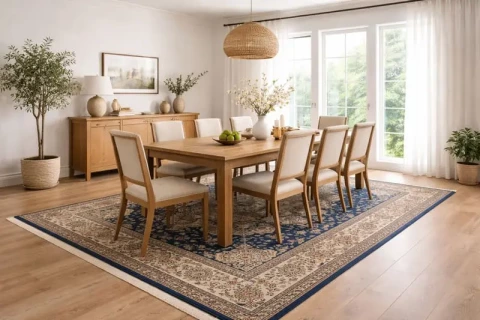
Allow enough space around the table for the chairs to remain safely on the rug when pulled back – usually around 60 to 70 cm on each side.

03

Bedroom

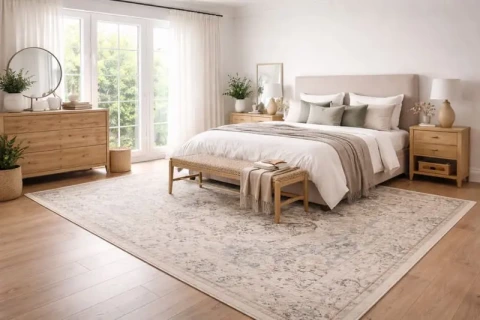
A large rug beneath the bed creates a calm, comfortable setting. Alternatively, two runners placed along the sides of the bed can add elegant, deliberate accents.

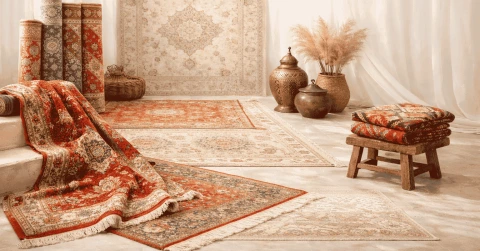
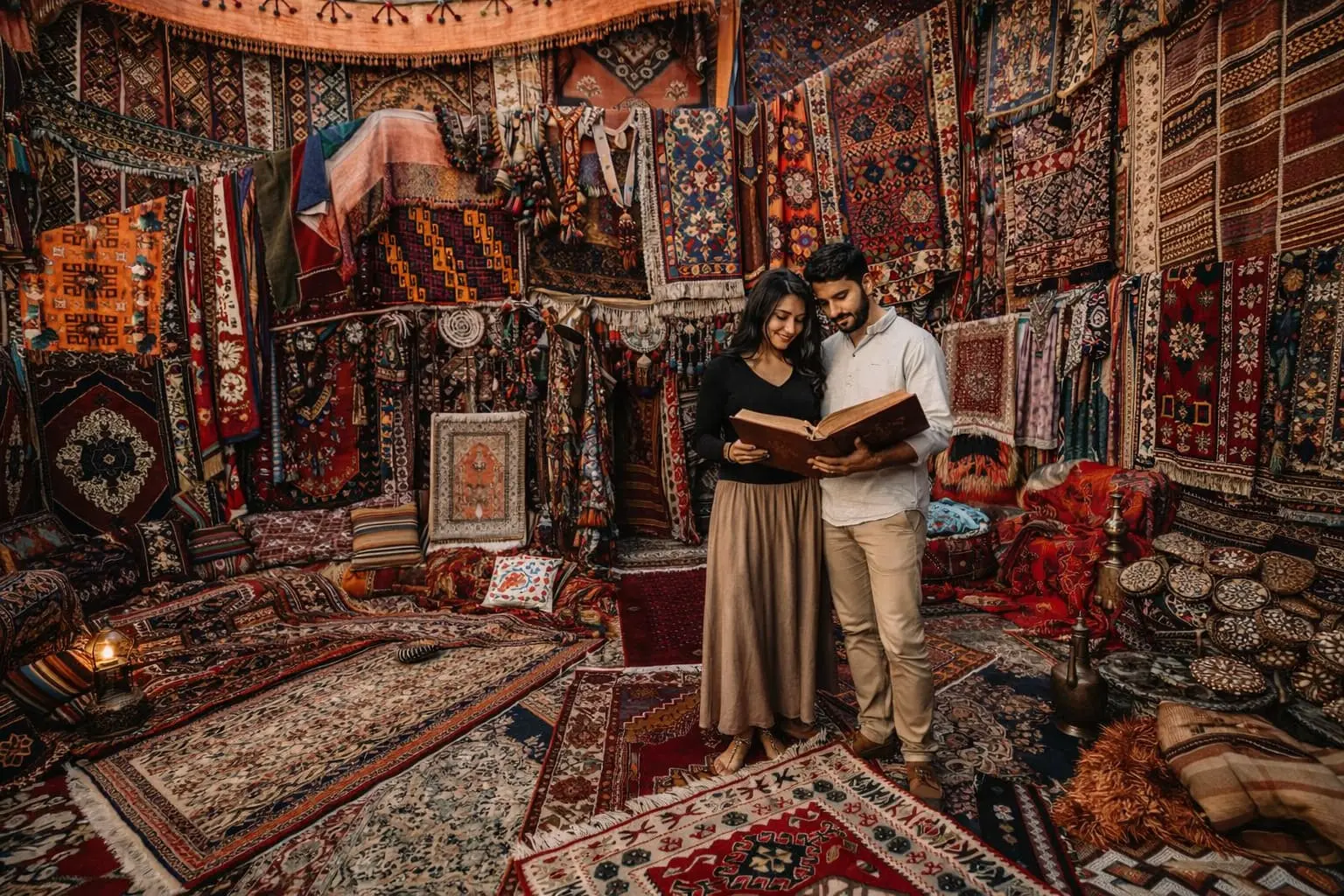
Historic Persian rug craftsmanship and traditional Oriental rugs
Culture and craftsmanship

The long tradition of Persian rugs

Over the centuries, Persian rugs developed into important expressions of culture and craftsmanship. Cities, villages and nomadic communities each created their own motifs, colour palettes and knotting techniques. Many designs were passed down through generations while continuing to be reinterpreted.

This combination of inherited knowledge, meticulous handcraftsmanship and individual design gives an authentic Persian rug lasting presence in the home. For a more detailed overview, see our page on the history of Oriental rugs.

Choose with confidence and at your own pace

Authentic Persian Rugs at Jakobson Carpets

Since 1995, Jakobson Carpets has stood for hand-knotted rugs, careful selection and transparent quality. When you buy a Persian rug online, you should have enough time and reassurance to make the right decision.

Free shipping & returns

You can view the rug comfortably at home and assess how it works in the room for which it is intended.

31-day return policy

You have ample time to compare and decide without unnecessary pressure.

3-year warranty

The three-year warranty applies exclusively to hand-knotted rugs in accordance with the stated warranty terms.

For eligible hand-knotted rugs priced at €300 or more, you will receive a certificate of authenticity with details of the rug’s provenance, materials, knotting technique, dimensions and other key characteristics of the individual piece.

In brief

Frequently asked questions about Persian rugs

Key answers about provenance, authenticity, quality, room setting and choosing the right size.

What is the difference between a Persian rug and an Oriental rug?

Oriental rug is the broader term for handmade rugs from different countries and regions. A Persian rug comes from modern-day Iran and belongs to one of the Persian weaving traditions.

How can I recognise a hand-knotted Persian rug?

The knot structure is visible on the reverse, the pattern can be traced from the back, and the fringes form part of the foundation weave. Small irregularities can be signs of genuine handcraftsmanship.

Is a Persian rug with more knots automatically better?

No. A high knot density allows for finer detail, but it is only one aspect of quality. Materials, craftsmanship, colour effect, condition and provenance are equally important.

Do classic Persian rugs work in modern interiors?

Yes. In clean, contemporary interiors, a Persian rug can add warmth, structure and a refined focal point. The restrained colour palettes of Nain or Isfahan rugs are particularly easy to combine with modern furnishings.

How do I find the right size for my Persian rug?

Measure the intended area together with the furniture. The right size depends on whether the rug is meant to bring a seating area together, accommodate a dining table and chairs, or deliberately define part of the room.

What determines the price of a Persian rug?

Price is influenced by factors including provenance, size, materials, fineness of knotting, workmanship, condition and the quality of the design. A high knot count alone therefore does not automatically make a rug higher quality or more valuable.